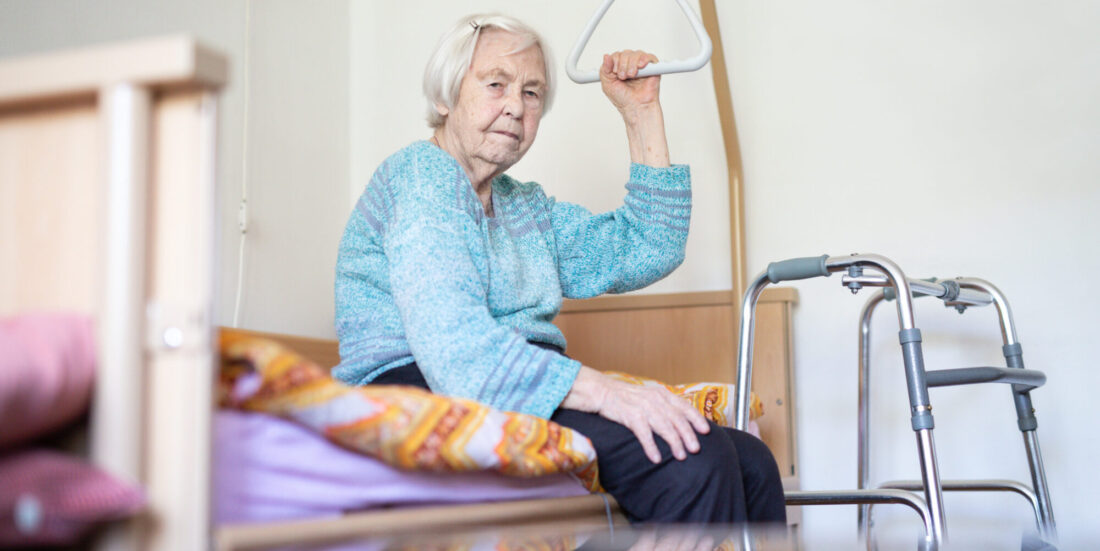
Almost half of all nursing home staff have witnessed elderly abuse by relatives
For the first time in Norway, more than three thousand nursing home employees shared what they have witnessed of violence and abuse from visiting relatives and friends.
In brief
A large Norwegian study shows that almost half of nursing home staff have observed violence or abuse by relatives toward elderly residents.
Psychological abuse, such as scolding, degrading behaviour, and derogatory comments, is the most commonly reported.
The risk of violence increases when relatives are exhausted. Previous research has shown that factors such as poor mental health, substance abuse, and financial dependence among relatives are strong risk factors for committing violence.
These figures come from the first major study in Norway to investigate violence and abuse directed at elderly people living in nursing homes that is committed by their relatives.
“I don’t think the findings are particularly surprising,” said Anja Botngård, associate professor at NTNU.
She asked more than 3600 nursing home employees from 100 nursing homes in Norway to share what they have witnessed of violence and abuse from visiting relatives.
The results showed that 45.6 per cent of nursing home employees had observed one or more cases of violence or abuse in the past year.
- You might also like: Elderly people with dementia being subjected to violence, abuse and neglect in their own homes
Risk increases with exhaustion
“The most frequently reported was psychological abuse, including shouting, arguing, derogatory remarks and other degrading behaviour. There are examples of other types of abuse as well, but they have been observed and reported by employees to a lesser extent. Let’s hope that it occurs just as rarely as it is reported, but it could be that it is reported less because it happens when no staff are there to witness it,” said Wenche Malmedal, an NTNU professor.
Ranked by percentage, here’s what nursing home employees reported:
- 44.8% had observed psychological abuse
- 8.4% had observed physical violence
- 2.7% had observed financial/material abuse
- 0.7% had observed sexual abuse at least once in the past year.

“Previous research has shown that factors such as relatives’ poor mental health, substance abuse, and financial dependence are strong risk factors for committing violence,” says Anja Botngård, Associate Professor at NTNU. Photo: Anne Line Bakken, NTNU
Relatives have no formal responsibility under Norwegian law for the care of elderly people living in nursing homes.
However, many elderly people live at home for a long time before getting a place in a nursing home. During this period, many relatives have to take on a significant caregiving burden. According to Botngård, when a family member moves into a nursing home, it can be difficult for their loved ones to let go of the responsibility they have been carrying for a long time.
“Some relatives may also feel that the elderly person is not receiving adequate care in the nursing home, and may therefore continue to feel a sense of responsibility,” said Botngård.
She believes this can lead to relatives taking on more caregiving duties than they actually have the capacity for, which in turn can increase the risk of abuse.
In addition, the burden of caregiving can affect the health and quality of life of the person providing the care.
Intimate partner violence can continue in nursing homes
A recent doctoral thesis, written by Gunn Steinsheim at NTNU, shows that when caregiving relatives become exhausted, the risk of them subjecting elderly people to violence and abuse increases. The thesis also shows that when elderly people with dementia act aggressively toward their relatives, it increases the risk of the relatives responding with aggression.
“Shouting and arguing between spouses or between parents and children can go both ways, but when one of them is ill and in need of care, a power imbalance arises between the person providing care and the person receiving it,” explained Botngård.
The study by Botngård and her colleagues only focuses on actions that staff have observed relatives carrying out.
“Based on our study, we cannot say why these actions happen. Previous research has shown that relatives’ poor mental health, substance abuse issues and financial dependence are strong risk factors,” added Botngård.
‘Relatives’ is defined as spouses, children, grandchildren and other people closely connected to the elderly person.
Botngård believes the study’s findings must be seen from a life-cycle perspective.
“People who have been subjected to domestic violence may find that the violence continues even though they have moved into a nursing home. Intimate partner violence and abuse from children or grandchildren are also realities in nursing homes. Nursing home staff have a duty to monitor and prevent it,” said Botngård.
An under-researched phenomenon
“The important thing for relatives is that the nursing home staff know how to deal with ageing and dementia, and that they have enough time and resources to provide quality care,” said Botngård. She also emphasized the need for staff to know how to recognize domestic violence and how to handle these types of incidents when they occur.
Botngård believes the study highlights a phenomenon that has largely been overlooked.
“In recent years, growing attention has been given to violence and abuse against elderly people living at home, and neglect in nursing homes. However, elderly people in nursing homes being subjected to violence and abuse by relatives is an under-researched phenomenon – both in Norway and internationally,” said Botngård.
She points out that further research is needed to understand why this occurs, so that effective measures can be developed to prevent these types of incidents.
References:
Botngård A, Eide AH, Mosqueda L, Blekken L, Malmedal W. Relative-to-resident abuse in Norwegian nursing homes: a cross-sectional exploratory study. BMC Geriatr. 2024 Nov 5;24(1):912. doi: 10.1186/s12877-024-05513-0. PMID: 39501198; PMCID: PMC11536973.
Gunn Steinsheim, Stretched to the Limit? Informal caregiver burden and elder abuse among home-dwelling persons with dementia, NTNU Open 2025