The cost of rain – who pays?
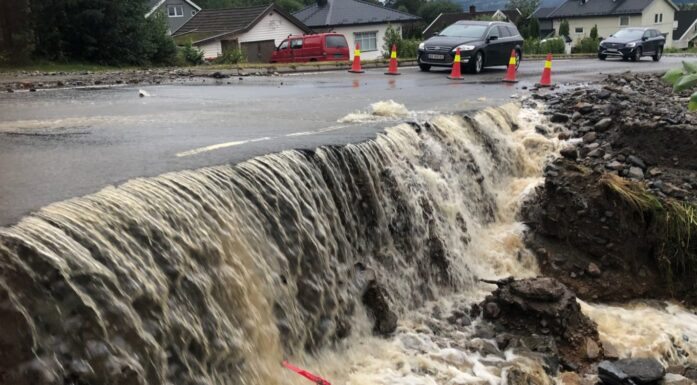
Rainstorms are increasing in Norway, as is urbanisation. Municipalities must plan differently and are asking how much residents are willing to pay.
We know that nature-based solutions are well suited to handling stormwater. Reopening streams, green roofs, permeable pavements and green infiltration solutions are good examples.
The SUrbArea collaborative project is developing methods and tools that municipalities can use to determine mitigation measures that have the greatest socio-economic effect. On both immediate and long-term.
“The tools will calculate direct damage costs, indirect market costs and non-market effects of flooding and of the measures that are implemented,” says Edvard Sivertsen, project manager and a senior research scientist at SINTEF.
Non-market impacts, for example, include aesthetic qualities, recreational opportunities and an increased sense of security. In other words, everything that does not have a direct price tag.
Factors used to calculate direct damage costs include insurance damage data and reconstruction costs.
What are residents willing to pay for?
Citizen surveys are used to collect data on non-market impacts.
The goal is to map what people are willing to pay for nature-based solutions and to establish which factors will be decisive. For example, how do people value economic security, or not having to worry about damage risk? And to what extent do the various measures contribute to economic security or security against damage?
The survey also maps the extent to which people value the environmental qualities of open streams and plantings. How much do new recreational opportunities and aesthetic qualities mean to the local community or area?
“Experience has shown that people are very concerned about their local environment and are willing to pay quite a lot for improvements that directly affect them,” says Henrik Lindhjem at the consultancy firm Menon Economics, who is responsible for the survey.
“The fact that we are now investigating people’s willingness to pay for security in combination with environmental qualities is new. The answers will be particularly interesting in light of climate change, which may result in more rain and stormwater damage.”