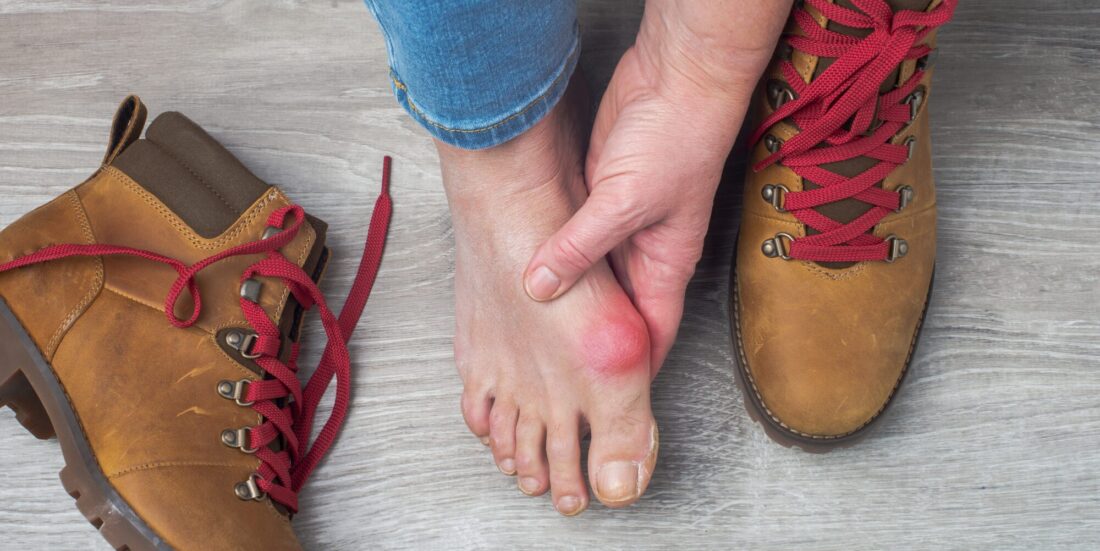
New method produces perfect images of misaligned big toes
Hallux valgus (‘bunions’) has been troubling people ever since the invention of shoes. Today, two in ten have misaligned, often painful big toes. For many, surgery is the last resort.
In brief
- For some people, hallux valgus (bunions) can be so painful that surgery is the only option.
- Monitoring the condition over time requires repeated X-rays.
- X-ray equipment is expensive, and not all hospitals can afford it.
- Researchers have developed an AI model capable of generating anatomically accurate, X-ray-like images.
- This could reduce the need for X-ray examinations and make diagnosis more accessible in places where the necessary equipment is unavailable.
This summary was written by the article's author, not by AI.
Patients require x-rays of their bog toes before surgery. Several images are required as the development of hallux valgus needs to be monitored over time.
The equipment is often expensive and not all hospitals can afford it. A group of researchers has developed an AI model that can create x-ray-like, anatomically accurate images of the foot.
In the long term, this could mean that patients can avoid some x-ray examinations. Diagnostic imaging also becomes more accessible in places where equipment is unavailable.
Artificial but accurate images of the skeleton

Professor Di Wu. Photo: NTNU.
“We have developed a machine-learning method that makes it possible to preserve the actual skeletal structure of the foot when the model creates an x-ray-like image,” says Di Wu, Associate Professor at the Department of ICT and Natural Sciences at NTNU in Ålesund.
The method is not simply about recreating the most realistic possible image of a misaligned big toe. It also places considerable emphasis on preserving information about the skeletal structure of the foot itself. The technology is similar to that used by many AI tools that generate images.
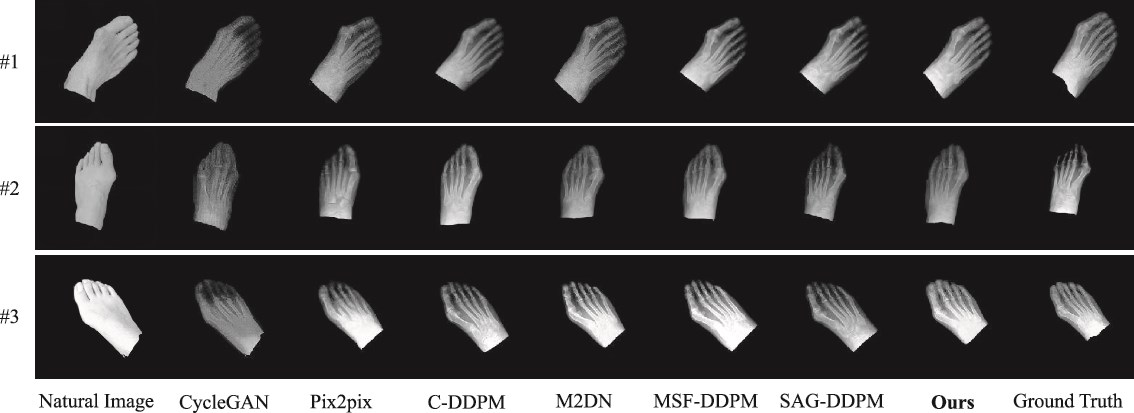
Wu and her colleagues also developed two measurement methods to check whether the AI-generated images are anatomically accurate. The image below shows mild (#1), moderate (#2) and severe (#3) hallux valgus.
“Our tests showed that our method produced both better image quality and a more accurate representation of the foot skeleton than other methods used to generate new digital images,” says Wu.
Where AI meets diagnostic imaging
The researchers call the method a skeletal-constrained conditional diffusion model (SCCDM). In the above image the method is labelled ‘ours’.
SCCDM is specifically designed to generate anatomically accurate images of hallux valgus. The research lies at the intersection of medical imaging and artificial intelligence.
Images of hallux valgus need to be taken while the patient is standing and bearing their own weight. The AI method could be particularly useful when conventional x-ray examinations cannot be performed or when the necessary equipment is unavailable.
- Related content: new safety footwear eliminates pain – and the need for painkillers
Toes out of alignment
According to Di Wu, the results also suggest that an ordinary photograph of the foot could be used as an additional source of information for AI-assisted screening, medical assessment and treatment planning.
Toes that point inwards can range from being a purely cosmetic issue to causing considerable pain and discomfort. The protruding joint at the base of the big toe can cause pain and problems with footwear. The big toe can become misaligned, overlap the neighbouring toe and change the way people walk. This can in turn place uneven strain on the knees, hips and back. Surgery can correct the deformity.
Further testing needed
“Some doctors have suggested that this could be used for early-stage screening for hallux valgus, rather than for clinical diagnosis,” says NTNU researcher Di Wu.
The technology is still at the research stage. The AI-generated images are not intended to replace actual x-rays or clinical assessments – at least not yet.
“More work involving larger and more diverse patient groups will be needed before that can happen,” says Wu.
- Read also: Regular walking prevents chronic back pain
Wealthy people with crooked toes
Hallux valgus, also known as bunions, has been troubling people for a long time. The physician Galen of Pergamon, who lived from AD 129 to 200, provided one of the earliest anatomical descriptions. In 1781, the first book describing the condition was published. It was written and illustrated by Nicholas-Laurent Laforest, personal chiropodist to King Louis XVI and Queen Marie Antoinette.
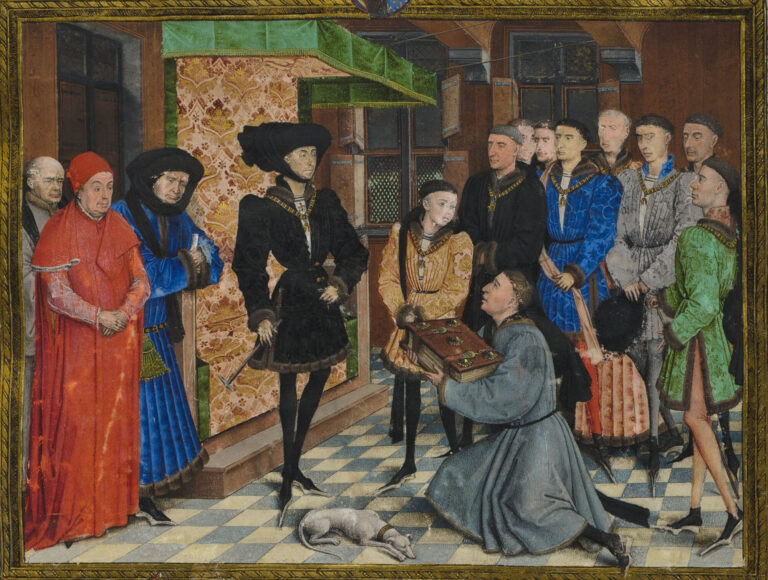
Check out those shoes. Shoes shaped like carrots have seemingly been considered stylish since time immemorial. The Dutch painter Rogier van der Weyden (c. 1400–1464) also captured the footwear fashions of his time in this painting. Illustration: Royal Library of Belgium/Wikimedia Commons
In England, archaeologists found an unusually high number of misaligned big toes in skeletons dating from the 14th and 15th centuries. During this period, tight, almost carrot-shaped shoes were fashionable. Researchers examined 177 skeletons from different burial sites used by poor, ordinary and wealthy people. The highest prevalence of hallux valgus was found at the most prestigious site, an Augustinian friary. As many as 43 per cent of those buried there, who were probably members of the clergy, had misaligned big toes.
By 1463, shoes had become so extremely pointed that King Edward IV introduced a law prohibiting anyone below the rank of lord from wearing shoes with toes extending more than two inches beyond the foot itself.
Most common in Oceania
Researcher Di Wu points to a 2023 meta-analysis based on studies involving more than 186 million people. It estimates that nearly two in ten people worldwide – 19 per cent – have hallux valgus.
Prevalence varies between regions as follows:
- Oceania – 29 per cent
- Asia – 22 per cent
- Europe – 18 per cent
- North America – 16 per cent
- Africa – 3 per cent
The prevalence is estimated at 24 per cent among women and 11 per cent among men. Among people aged 20–60, 12 per cent have hallux valgus, compared with 23 per cent of those over the age of 60. According to Di Wu, various studies also suggest that the condition may be under-researched in many regions.
Reference:
Midi Wan; Pengfei Li; Yizhuo Liang; Di Wu; Yushan Pan; Guangzhen Zhu; Feng Qu; Hao Wang. Hallux valgus diagnosis on X-rays with skeleton-guided diffusion. The Computer Journal. https://doi.org/10.1093/comjnl/bxaf153