She wants to replace the fear of failure with the joy of learning
Groundbreaking research on psychological safety has made professor Amy C. Edmondson an academic superstar – and earned her an honorary doctorate from NTNU.
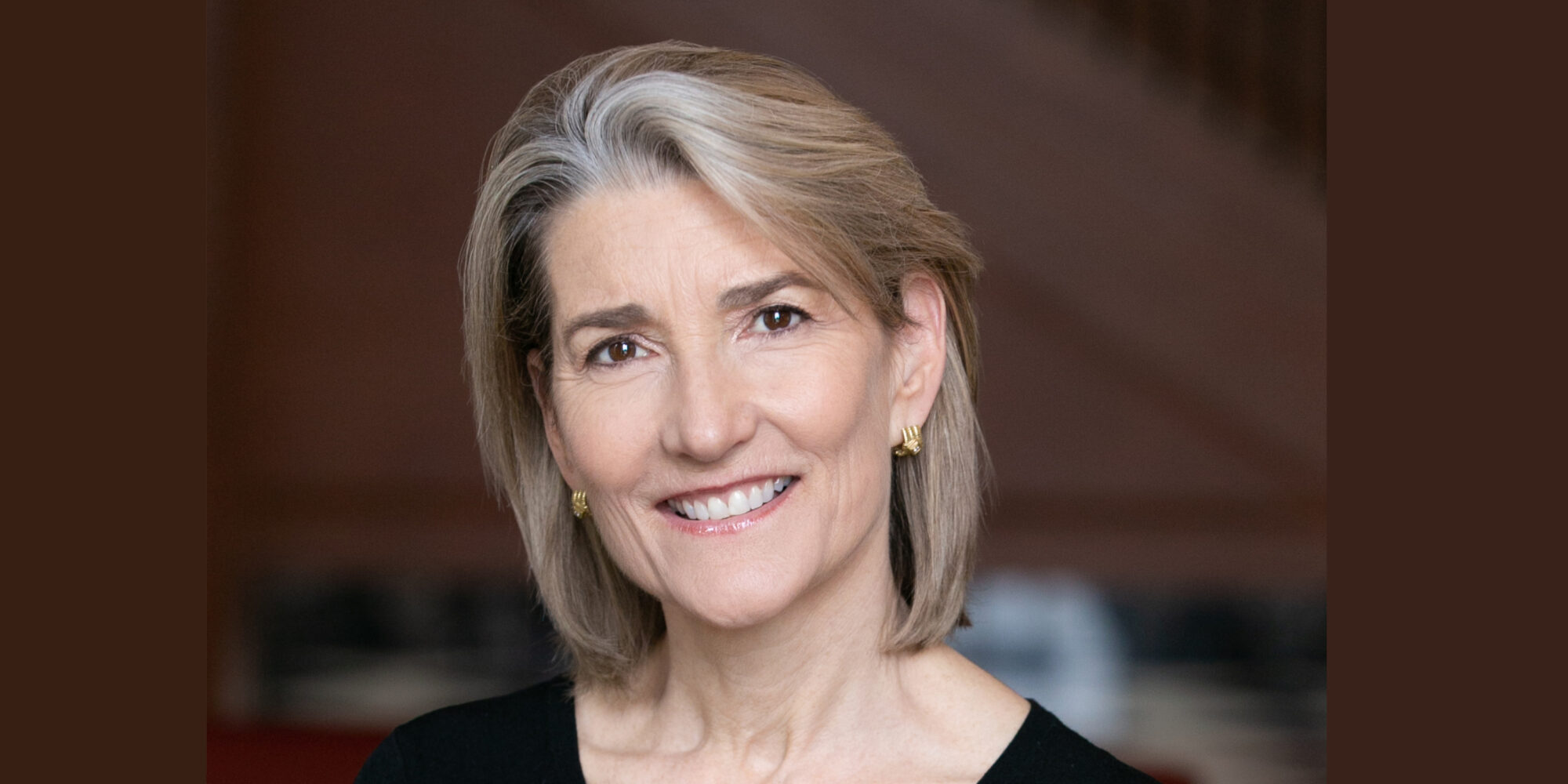
Harvard professor Amy C. Edmondson is passionate about helping people learn to fail in the right way. She believes setbacks and disappointments can help us move forward.
“What drives my work is curiosity about how people can collaborate to achieve ambitious goals, especially in complex, uncertain, high-stakes environments,” explains Edmondson, during an online interview with Gemini.
Edmondson has a Ph.D. in Organisational Behaviour from Harvard Business School, where she is the Novartis Professor of Leadership and Management. The American researcher has pioneered the concept of psychological safety in the workplace. Her eighth book, Building a Fearless Organization: A Fieldbook for Psychological Safety, is due to be published in November.
For several years, Edmondson has topped the Thinkers50 ranking of the world’s most influential living management thinkers.
Failure can lead to progress
On Friday 13 November, the visiting professor will be awarded an honorary doctorate by NTNU. She will also host a guest lecture on the same day, entitled Thriving in the Face of Uncertainty: The Science of Failing Well.
The lecture continues in the theme of her award-winning book Right Kind of Wrong: The Science of Failing Well.
In the 2023 book Edmondson challenges the idea that we should simply “embrace failure”, arguing that this approach is too simplistic.
“We should pay attention to failing because it is an unavoidable feature of progress in an uncertain world. It is simply a given that failure will occur. The question is whether we learn from it,” says Edmondson.
“Not all failures are alike. Some are preventable and should be prevented through better systems, clearer processes, and more careful execution. But others are not preventable and in fact they’re desirable.”
- You may also be interested in: From running rats to brain maps: A Nobel odyssey
Think like a scientist
Desirable failures occur when people venture into unfamiliar territory, try something innovative or attempt to solve a problem for which no clear answer exists.
More people should think like scientists, Edmondson believes. Scientists are trained both to accept failure and to embrace the lessons that can emerge from testing unproven ideas.
“It is natural to want to avoid failure. But when we avoid failure, we also avoid discovery and accomplishment,” she says in a video on the BigThink website.
“The only way to succeed in any endeavour worth trying, is to be willing to experiment, to try new things, knowing full well that many of them will yield failures.
“We have to embrace those kinds of failures because that’s where great advances and even joy come from,” she emphasises.
The researcher challenges people to ask: What happened? What did we believe? What did we overlook? What can we change? In this way, they can treat mistakes as valuable insights.
The workplace paradox
Today’s knowledge economy owes a debt to Edmondson’s model of a fear-free workplace culture. She says her work has always been driven by one practical question: How can organisations become better at learning?
Edmondson also explores how leaders can make organisations more effective and successful in a rapidly changing world.
“For much of my career, I have been struck by a simple paradox: organisations depend on people’s knowledge, judgment, and willingness to speak up, yet in many workplaces it is difficult for people to share concerns, questions, mistakes, dissenting views, or new ideas.
“That gap has enormous consequences—for worker safety, learning, innovation, and performance.”
What is the state of psychological safety?
Asked whether workplaces are moving in the right direction when it comes to psychological safety, she replies:
“On the positive side of the ledger, psychological safety has become part of the mainstream business conversation. Today, most leaders understand that people need to be able to ask questions, raise concerns, admit uncertainty, and learn from mistakes. This is real progress.”
“On the concerns side, awareness is not the same as effectiveness. In many workplaces, people know the term “psychological safety,” yet have not done the hard work to create the conditions where people truly speak candidly and engage in high-quality conversations. This is particularly acute when there are status differences, tight deadlines, or performance pressure.
“In that sense, the work is far from done,” she says.
Healthy, psychologically safe workplaces
The Harvard professor admits that she is somewhat concerned that the concept of psychological safety is too often misunderstood. People frequently assume that it means being nice, avoiding disagreement or accepting low standards. In reality it is about creating an environment that encourages openness, high standards, learning and strong performance.
“The healthiest workplaces are characterized by psychological safety and psychological ownership (or ‘accountability’). In such environments, people feel safe to speak up, and committed to doing excellent work.”
Replace shame with learning
Her new book aims, among other things, to provide practical tools for creating psychological safety in teams across all types of organisations.
Edmondson hopes her books will help people replace the fear and shame often associated with failure with an approach characterised by humility, curiosity and a desire to learn.
Deeply honoured to receive an honorary doctorate
Edmondson says she is deeply honoured to receive an honorary doctorate from NTNU.
The professor describes the university as an institution with a strong commitment to science, technology, learning and making a positive contribution to society.
“These are values I try very hard to embody and serve. I believe that an honorary doctorate is the highest and most meaningful academic honor one can receive as a scholar; it represents recognition from the scholarly community. Having my work recognised by NTNU fills me with pride and gratitude,” she says.
Amy C. Edmondson was nominated by Professor Alf Steinar Sætre of the Department of Industrial Economics and Technology Management (IØT).
She has visited NTNU and IØT five times over the past decade and held an adjunct professorship at the department from 2017 to 2019.