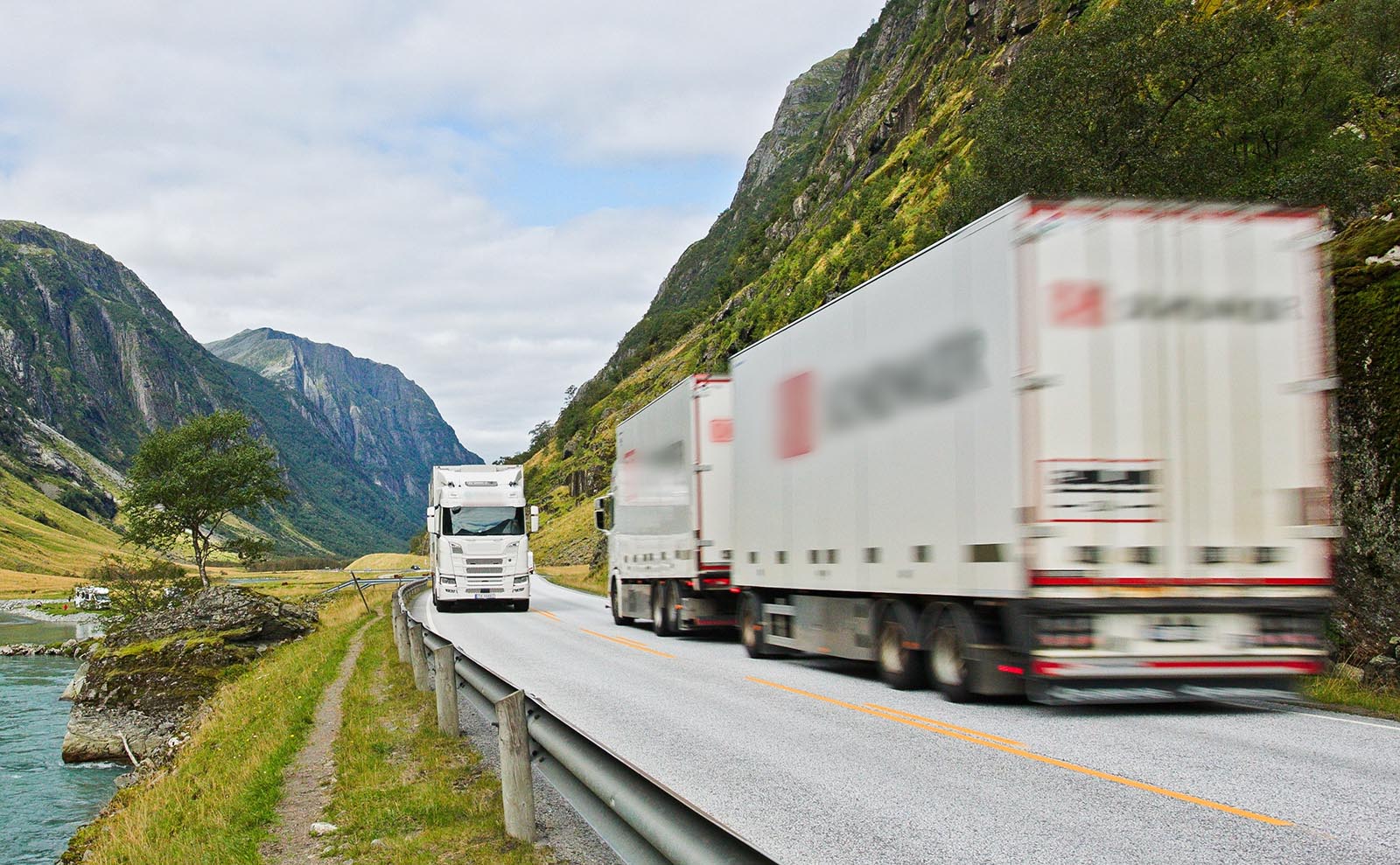
A new study from NTNU’s Industrial Ecology Programme reflects on the proportion of greenhouse gas emissions from transportation, compared with food production.
“What matters is what we eat, not whether the food was grown here in Norway or imported,” says researcher Kristin Langsrud.
Langsrud is one of the researchers who has examined the volume of greenhouse gases that Norwegian food consumption generates.
In a new study, researchers compared the climate footprint of imported food with that of Norwegian-produced food.
The study shows that food produced in Norway accounts for 42% of everything we eat (by weight), yet it is responsible for 65% of the total climate footprint.
This discrepancy is due both to the types of food we produce and the emissions associated with that production.
“What we see is that the highest emissions are linked to what we produce here in Norway. That is because a large share of our domestic production consists of climate-intensive food products, such as meat and dairy,” says Langsrud. “In addition, we have somewhat less favourable conditions for producing many of the food items, like vegetables, that result in lower emissions.”
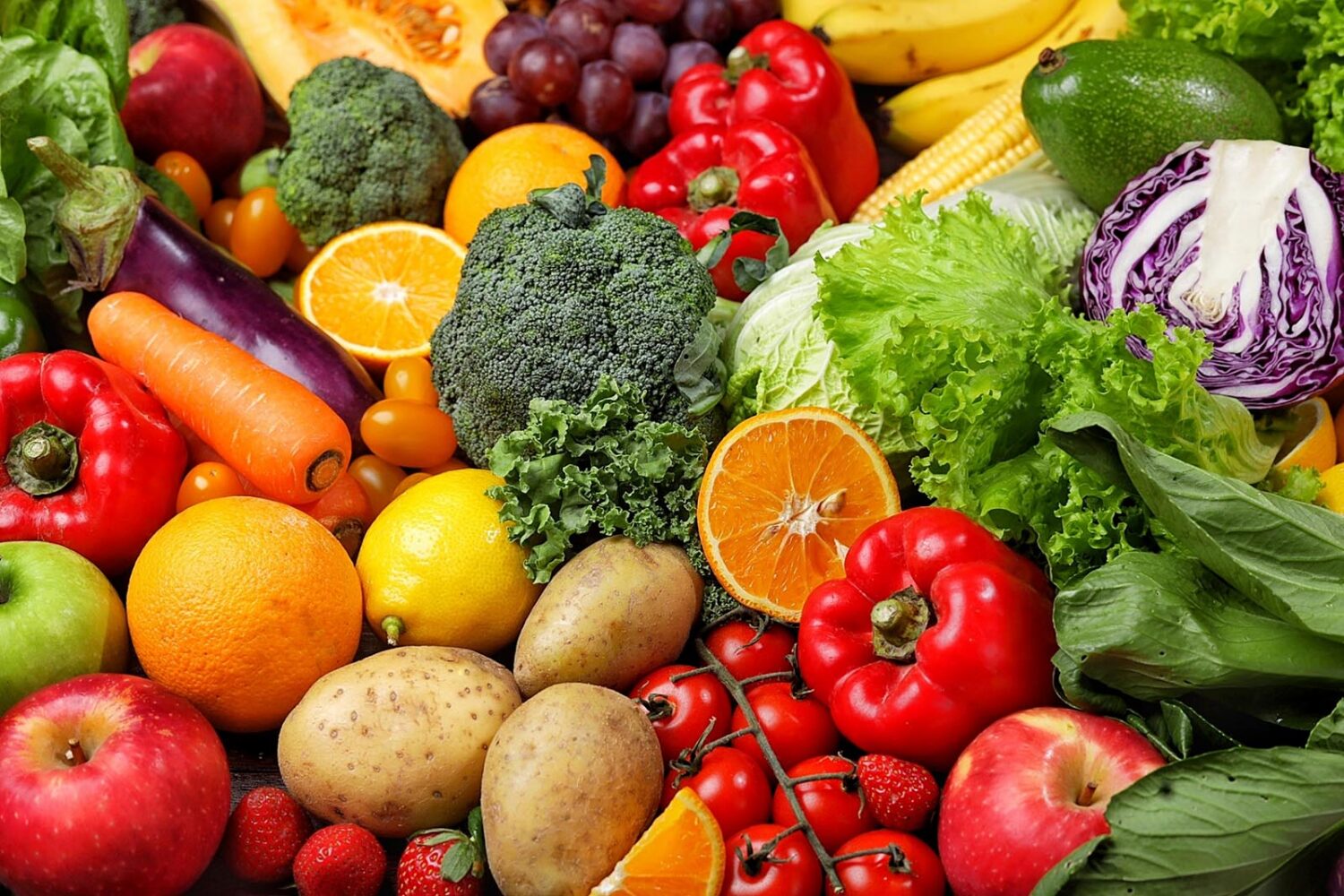
Replacing red meat with plant-based proteins could reduce the climate footprint of our food consumption by more than a third, according to a new study from NTNU. Photo: Shutterstock, NTB
Largest emissions occur before goods are shipped
It is not difficult to understand that the climate and soil conditions in other parts of the world are better suited for producing grains and vegetables. But the goods still need to be transported. So, what do those emissions tell us?
“It’s a common assumption that transport generates significant emissions. However, when we examine every stage of the production chain, we find that the vast majority of emissions are linked to what happens on the farm – before the goods are shipped out.”
The study shows that transport accounts for only 3.8% of the total greenhouse gas emissions from all food consumption in Norway.

Research fellow Kristin Langsrud. Photo: Linnea Søvik
ALT: Photo of Kristin Langsrud, taken outdoors.
CAPTION: Research fellow Kristin Langsrud. Photo: Linnea Søvik
“In general, transport plays a minor role. Better growing conditions in other countries often offset the emissions associated with transport. This makes imports, on average, slightly more climate-friendly than domestic production in Norway – although the difference is small,” says Langsrud.
Agriculture in Norway requires inputs in the form of energy, equipment, and land. For certain food products, this results in higher greenhouse gas emissions compared to production in other countries. In addition, grazing animals like cattle and sheep produce emissions of the greenhouse gas methane.
“The production of meat and dairy products is inefficient in this context. These are living animals that require large amounts of feed. Then there’s the issue of methane emissions – an area where cattle and sheep fare particularly poorly. When we look at total emissions per kilogram of food produced, the production of beef ranks the worst,” says Langsrud.
Red meat: a major climate offender
The study shows that if plant-based protein replaced all red meat in a person’s diet, total climate emissions from food consumption could be reduced by more than a third (34%).
Beef alone accounts for 23.8% of the total emissions resulting from food consumption in Norway.
“Reducing the consumption of beef would therefore be one of the most effective climate actions we could take regarding what ends up on our plate.”
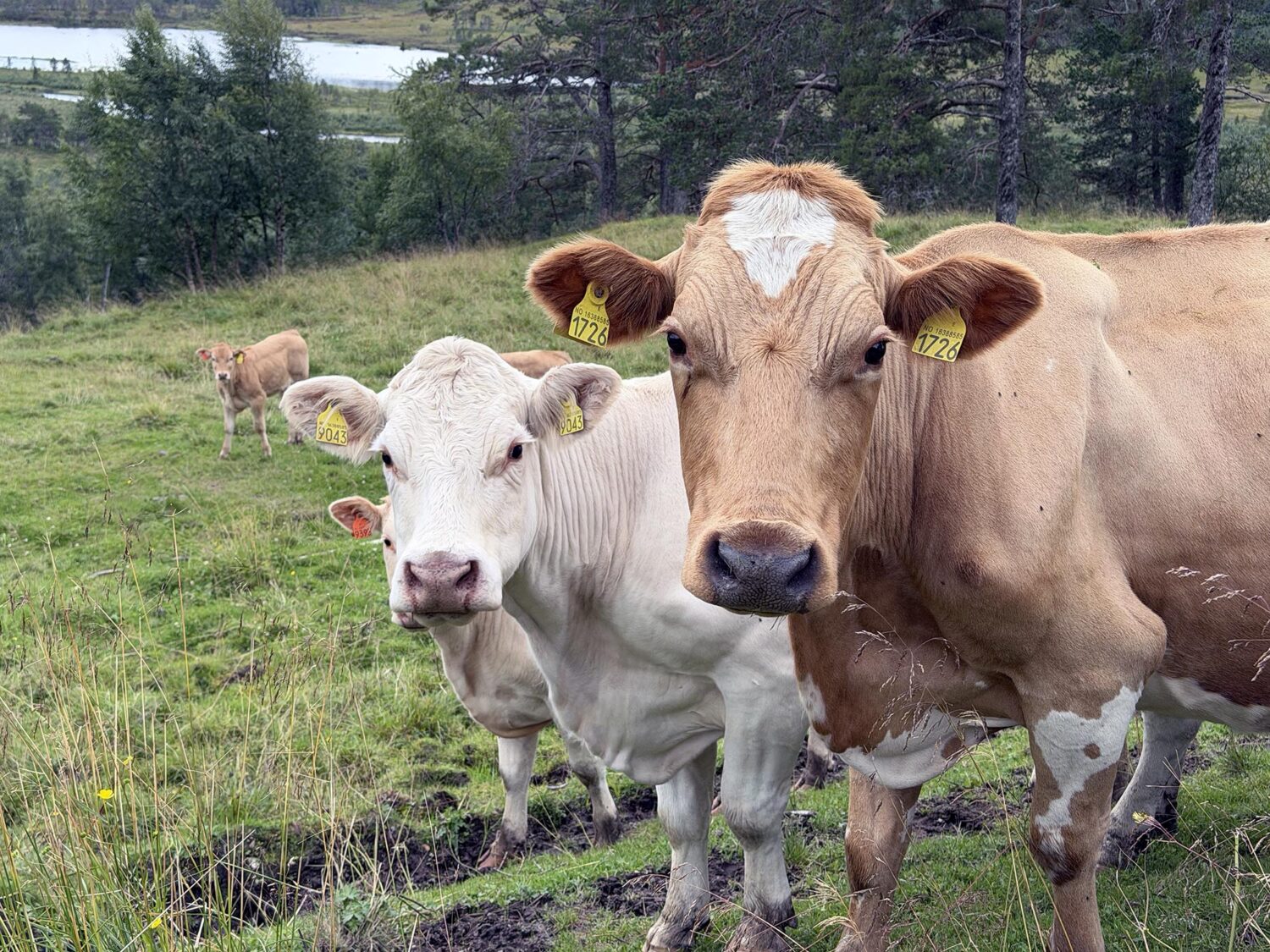
The climate benefits when we have steak and ground meat on the menu less frequently. Photo: Nina Tveter
Higher emissions from food consumption than from driving
Researchers examined various scenarios in the study: one where nearly all the food consumed in Norway was produced domestically, and another where everything was imported. The calculations indicate that near-total Norwegian self-sufficiency could increase the climate footprint by 4%. Conversely, if we were to import everything we eat, the climate footprint could be reduced by 1.5%.
“This is, of course, a theoretical calculation intended to show what is most effective when it comes to cutting emissions. In practice, these scenarios are not realistic; however, they demonstrate that the greatest potential for emission reductions lies in what we eat, rather than where the food comes from,” says Langsrud.
Currently, Norwegian food consumption accounts for approximately 11.6 million tonnes of CO2 equivalents per year (CO₂ equivalents are a common metric for the extent to which various greenhouse gases contribute to global warming). By comparison, emissions from all road traffic in Norway amount to 6.9 million tonnes.
“Food accounts for a large share of greenhouse gas emissions. In Norway, it accounts for 15% of consumption-based emissions. I believe that if we are to stay within the two-degree target, then any reduction is a positive step,” says Langsrud.
At the same time, she emphasizes that greenhouse gas emissions are not the only factor that determines whether something is environmentally friendly.
“We can look at this from a lot of different perspectives. How does agriculture affect biodiversity? What about the use of water or land? There are many environmental factors. Greenhouse gas calculations are often a good indicator, but not always.”
Langsrud also points out that there are many reasons to be self-sufficient – for instance, in terms of emergency preparedness and security.
“So, I believe it will be important moving forward to determine how we can make Norwegian food production more climate friendly.”
Research:
Live Ragnhildstveit Stiansen, Kristin Langsrud, Marcos Djun Barbosa Watanabe, Francesco Cherubini: Climate change impacts of food consumption in Norway and the influence of domestic production, imports, and dietary shifts. Journal of Cleaner Production, 14 October 2026.