Researchers at NTNU can now delve deeper into the connection between gut’s living organisms – or microbiota – and cancer, thanks to the Trøndelag Health Study (HUNT).
In the fourth wave of the HUNT study, 13,000 participants contributed to the research by providing stool samples.
“This is one of the largest studies in the world involving stool samples from a randomly selected members of the population,” explains Guro Giskeødegård, a professor at NTNU’s Department of Public Health and Nursing.
Giskeødegård studies the relationship between gut microbiota and cancer. The goal is to understand the mechanisms underlying the development of the disease and to identify markers that can be used to detect cancer – ideally as early as possible.
Valuable before and after data
The 13,000 participant samples now offer entirely new opportunities for researchers.
“Many studies that have collected samples from both healthy individuals and people with cancer reveal a clear difference: people with cancer have different types of bacteria present than do healthy individuals. The problem is that these samples are collected only after the patient has already received a cancer diagnosis.”
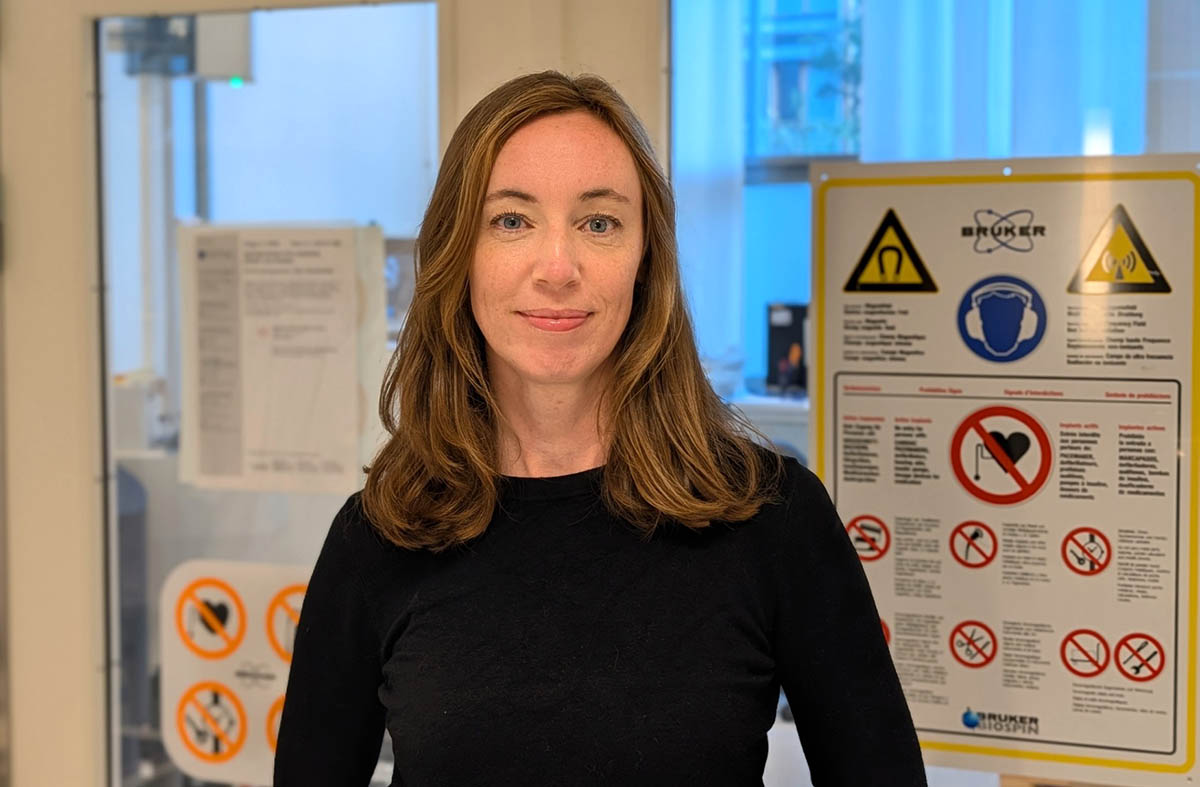
Guro F. Giskeødegård is a professor at NTNU’s Department of Public Health and Nursing and a researcher at the HUNT Centre for Molecular and Clinical Epidemiology. Photo: NTNU
At that stage, the disease may have already affected the immune system. The patient might have begun treatment, and the gut microbiota may have already changed.
“That’s why we need samples collected before the patient developed cancer. And the HUNT data provide exactly that,” says Giskeødegård.
Can we uncover new associations?
Researchers can now examine individuals who were cancer-free at the time they provided a stool sample, link this information to the Cancer Registry of Norway, and track who subsequently developed cancer. How much time had passed, and what type of cancer did they develop? Is there something specific within an individual’s gut microbiota that might shed light on the development of cancer?
“We’re working on these questions now, and we’ve already made some very exciting discoveries,” says Giskeødegård. “The question is whether we can replicate results from other researchers, and whether our extensive dataset will allow us to uncover new associations that previous studies have failed to reveal.”
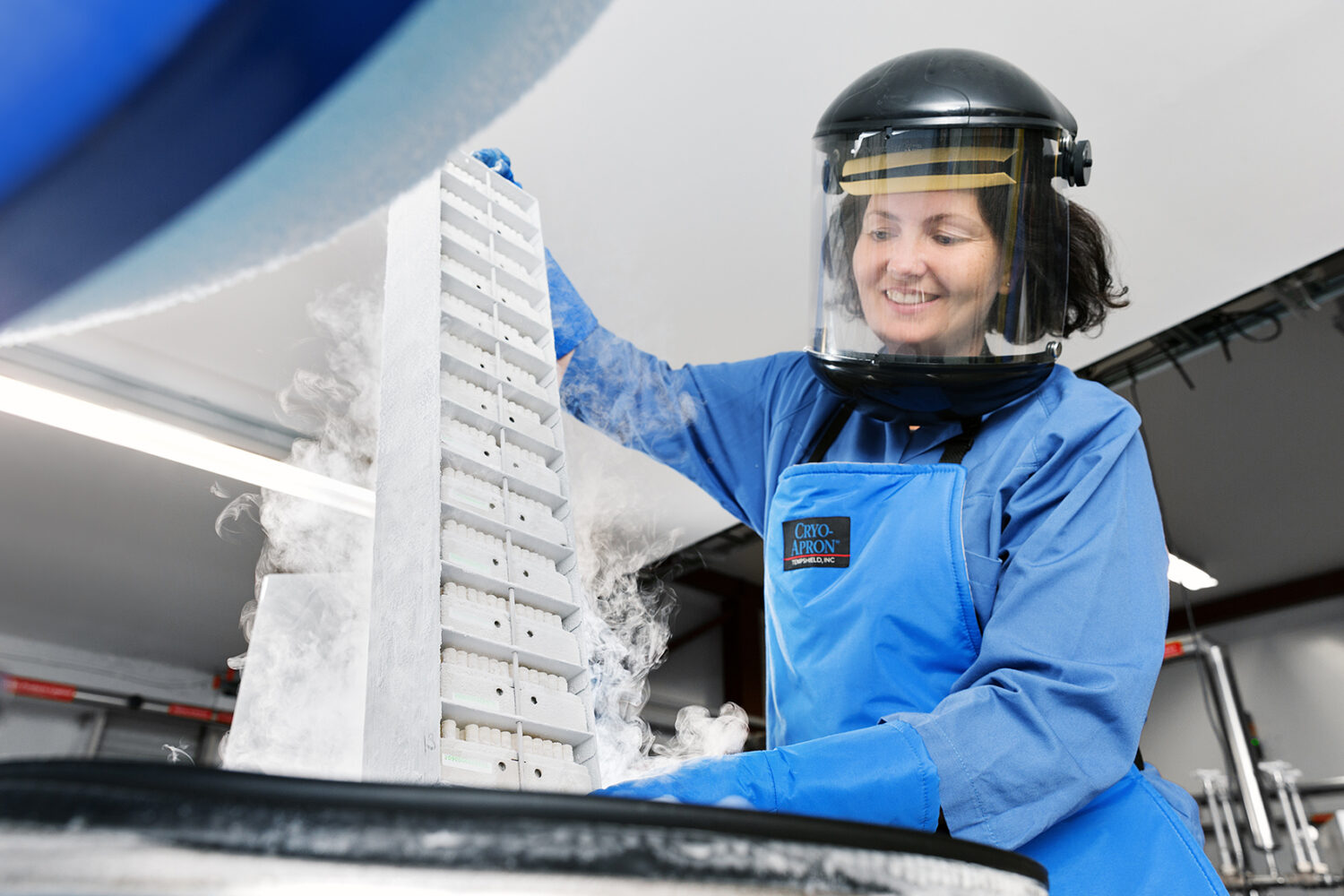
All types of samples from participants in the health study are preserved. Here, biological material is stored in liquid nitrogen at minus 180°C. Photo: Geir Mogen
Still a lot to learn about gut microbiome associations
At the same time, researchers cannot yet say whether the gut’s ecological system – the microbiome – is the actual cause of the cancer.
“That is the next question we need to ask. That’s why we have ongoing studies examining lifestyle and diet, and how all these factors influence the microbiome,” says Giskeødegård.
The question is whether individuals can influence their own risk of disease by what they eat. Despite a flood of dietary advice, very little is known for certain about this, according to the researchers.
“However, if we were to discover that a specific bacterium is highly beneficial – and capable of preventing cancer – then we would need to consider how to promote that bacterium. Conversely, we would also want to look at how to avoid harmful bacteria. Diet and lifestyle become important in that context.”
Several studies show correlations
Previously, researchers at HUNT have used the data to examine the link between our genes and how they affect our microbiome. Marta Moksnes is a researcher at NTNU’s Department of Public Health and Nursing. She highlights the specific method used to analyse the gut microbiota within the HUNT data, called metagenomic sequencingMetagenomic sequencing is an advanced DNA technology used to analyse all genetic material (DNA and RNA) directly from a mixed environmental sample..
“This method provides a highly detailed picture. We have been able to observe the total composition of bacteria, viruses, and fungi in each individual participant – not just which groups of bacteria are present,” says Moksnes.

Marta Riise Moksnes is a researcher at NTNU’s Department of Public Health and Nursing, and a senior adviser at the HUNT Research Centre. Photo: Anne Line Bakken, NTNU
Moksnes’ results were published earlier this year in the prestigious journal Nature Genetics and showed that body weight influences our gut microbiota. The researchers also discovered links to other conditions, such as coeliac disease and haemorrhoids.
At the same time, the extent to which genes influence the composition of the gut microbiota remains uncertain.
“However, we do see that genes influence the environment in which bacteria live. They affect what we eat – like being lactose intolerant. What you eat in turn influences what is available as nourishment for your gut microbiome,” says Moksnes.
Cultivating tumoroids
When gut bacteria break down the food we eat, they produce chemical substances called metabolites. We are entirely dependent on many of these; however, some metabolites can also influence the development of cancer.
“We are still a good bit away from being able to claim a direct causal link between gut bacteria and cancer. But many exciting studies are currently underway that point to such connections,” says Giskeødegård.
So, how can we determine whether these metabolites play a role in the development of cancer in humans? One method involves cultivating organs and cancer cells outside the body. This allows researchers to observe the direct effects of both bacteria and metabolites on cancer cells, without the need for experiments on humans or laboratory animals.
Åsmund Flobak is a professor at NTNU’s Department of Clinical and Molecular Medicine, a senior consultant at the Cancer Clinic at St. Olav’s Hospital (Trondheim University Hospital), and a senior researcher at SINTEF. Photo: Geir Otto Johansen
Åsmund Flobak is one researcher keen to pursue this work, provided that the necessary funding is secured. He serves as a senior consultant in The Cancer Clinic at St. Olav’s Hospital and is a professor at NTNU. He works with personalized cancer treatment and aims to determine whether bacteria found in or around a tumour can influence how cancer cells respond to treatment.
“We can use so-called tumoroids for this treatment. Tumoroids are living tissue samples—essentially small, three-dimensional models cultivated from the cancer tissue of an individual patient,” explains Flobak.
- You might also like: Living longer with personalized chemotherapy – despite incurable cancer
Researchers intend to test the interaction between tumoroids and bacteria in several ways.
“One option is to expose the tumoroids to substances secreted by the bacteria, such as metabolites. Another is to cultivate bacteria and tumoroids within the same system, while keeping them physically separated by a membrane. This allows them to influence one another through molecules that are secreted and diffuse across the membrane, without the bacteria themselves being able to pass through,” Flobak says.
Finally, examining what happens when the bacteria come into direct contact with the tumoroids is another possibility.
“In this way, we can try to determine whether any observed effect is due to bacterial products, more indirect signalling, or the actual physical contact between the bacteria and the cancer cells,” says Flobak.
A saliva sample might be enough
At NTNU’s Department of Circulation and Medical Imaging, Professor May-Britt Tessem conducts research on prostate cancer. She is hoping for funding as well. Her plan is to cultivate tumoroids from a patient’s own prostate tissue and study their direct impact on cancer cell growth, signalling pathways, and treatment response.

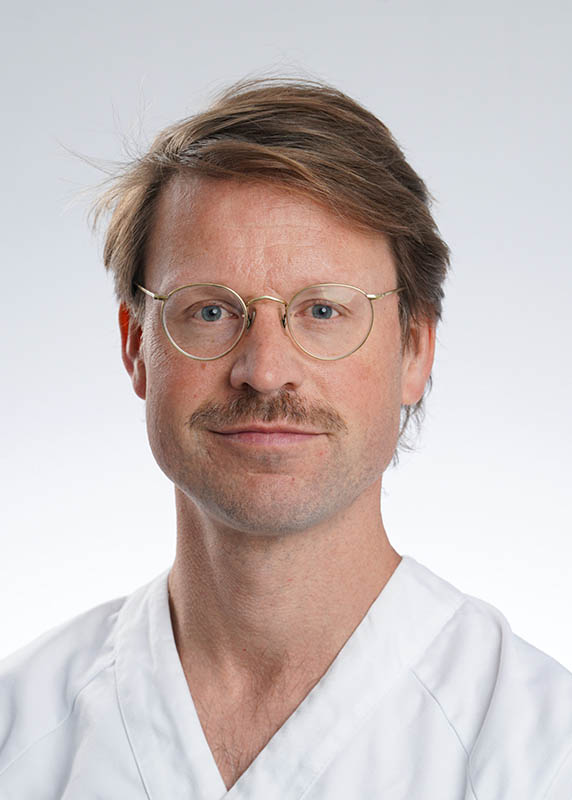
May-Britt Tessem is a professor at NTNU’s Department of Circulation and Medical Imaging. Photo: NTNU
“This research could provide insight into the role of gut organisms as a potential driving factor in prostate cancer, and in the long term, might open up new therapeutic or diagnostic targets,” says Tessem.
She emphasizes that they are in the very early stages of successfully culturing prostate tumoroids directly from patient tissue.
“However, we have a 100 percent success rate across 14 patients,” she notes.
This is basic research. However, the researchers envision that it could benefit future cancer patients – and not only through better treatment.
“We hope the research will provide us with tools to diagnose cancer at an earlier stage than is currently possible,” says Giskeødegård.
Perhaps, eventually, all that will be necessary is a saliva sample at the doctor’s office – or a good, old-fashioned blood test.
“We also have bacterial flora in our saliva, which is an area that has been even less researched. And we know that bacteria produce metabolites that circulate in the bloodstream. In that case, we could use a blood test,” says Giskeødegård, while noting that there is still a long way to go.
Research:
Eui-Jeong Han, Ji-Seon Ahn, Yu-Jin Choi, Da-Hye Kim, Jong-Soon Choi, Hea-Jong Chung: Exploring the gut microbiome: A potential biomarker for cancer diagnosis, prognosis, and therapy. DOI: 10.1016/j.bbcan.2024.189251
Moksnes, M.R., Coward, E., Nethander, M. et al. The HUNT study identifies host genetic factors reproducibly associated with human gut microbiota composition. Nat Genet 58, 530–539 (2026). https://doi.org/10.1038/s41588-026-02502-4