Norwegian security patent in use at all USA border crossings
Recording and storing millions of fingerprints is a high-risk operation. Scientists are constantly searching for new and better security solutions to protect your information.


Recording and storing millions of fingerprints is a high-risk operation. Scientists are constantly searching for new and better security solutions to protect your information.
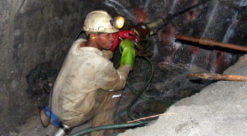
A wireless network of sensors aimed at preventing explosions in mines is an innovation of worldwide significance that is being developed by a Norwegian-African cooperative project.
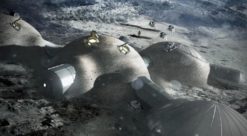
Norwegian researchers are looking into how a snake robot might carry out maintenance work on the International Space Station (ISS), study comets, and explore the possibility of living and working in lava tunnels on the Moon.
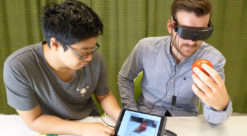
A scientist and a student team have developed the Colorophone system, which translates colour into sound.
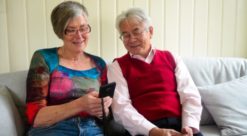
Using a smartphone is not easy for older people who have problems with fine motor skills or mild disabilities. So a resourceful engineer enlisted the help of some researchers and took things into his own hands. Now a completely different type of phone will soon be on the market.
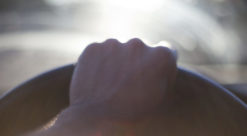
Universal adoption of the ISA speed warning system in Norway could reduce both the average speed of vehicles and their emissions, concludes a recent SINTEF report. Lower speeds also lead to fewer fatalities and serious injuries on the roads.
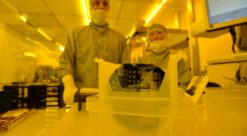
A team of Norwegian, French and Australian researchers is the first in the world to succeed in quantifying the effects of radiation on individual cancer cells. This means that radiation therapies can now be tailored to individual tumours and thus be more effective.
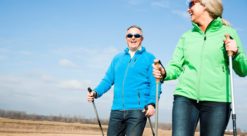
The company Noen AS runs courses for its helpers to enable them to establish close relationships with their dementia patients. The aim is to increase the patients’ quality of life. Researchers have developed an IT tool to help the company demonstrate that its approach is on the right lines.
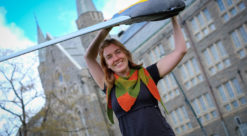
How do you get a plane-like drone to land with no runway? You use math, of course!
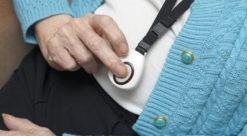
Medical alert systems are going to enable you and I to live longer at home. Researchers have recently been looking closely at these systems with a view to improving them.
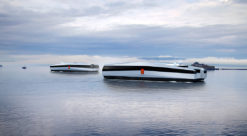
The Trondheim Fjord in Norway will be the world’s first technological playground for pilotless vehicles that move below, on and above the water’s surface.

People with cystic fibrosis (CF) need help to ensure they are getting correct nutrition and the right amount of enzymes. They also need constant reminders. Researchers are now developing a digital support device to promote autonomy, but are finding that this is no easy task.
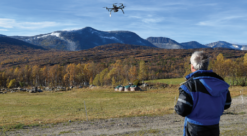
Looking for sheep can be done a lot more effectively than today. A drone may be a farmer’s next tool in finding their lost lambs.
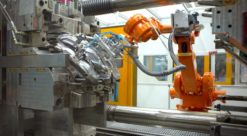
Sensors, data and analyses all help to give advance warning of critical situations developing on production lines. This can reduce downtime by 50 per cent.

Are you sick of your phone’s battery dying after only a few hours? NTNU researchers are hard at work on improving the technology.
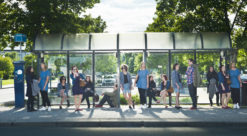
Soon you won’t have to worry about how to pay your bus and train fares. All you need is your mobile phone or a bank card.
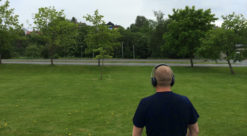
They’re going to build a new road right outside your living room window. The authorities have sent you a ‘noise map’, but what you really need is to hear what the traffic noise will sound like. Well, soon you can.

Consumers may soon have a guarantee for the quality of meat they’re paying for.
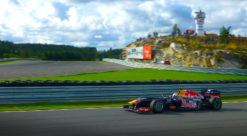
A 3D camera developed in Norway may be the first in the world that can film in all directions.
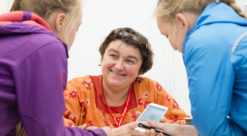
People suffering from cystic fibrosis (CF) are unable to absorb sufficient fats and proteins from the food they eat. But an app is on the way that will help them control their illness.
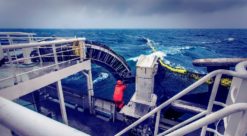
Robots equipped with machine vision enable us to classify catches on board vessels with high levels of accuracy – saving fishing crews time and money.

Øyvind Brandtsegg has composed a piece that plays for seven consecutive years based on how gigantic antennas on the Earth rotate to find the most powerful stars in space.

According to a Norwegian study, ‘likes’ on Facebook are providing a new type of humanitarian support and social responsibility.
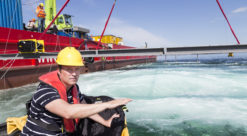
Oil and gas companies are worried about gas discharges at the sea bed. Recent field experiments can now quantify the volumes of gas reaching the sea surface and how they spread in the atmosphere.