Residents must participate in the development of our future communities
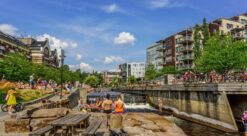
In Palma de Mallorca in Spain, researchers are planning to use VR headsets to encourage resident participation in a community project.


In Palma de Mallorca in Spain, researchers are planning to use VR headsets to encourage resident participation in a community project.
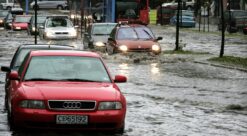
If we are to avoid our cities becoming ‘heat magnets’ one day, and overwhelmed by flooding the next, we have to incorporate wetlands and ditch systems into our urban infrastructure.
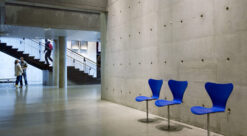
Everlasting concrete is here! It requires no maintenance, and its manufacture emits 80 per cent less CO2 than current products. And just recently, its inventors have been awarded a research prize for their achievement.
Densely-packed housing makes urban areas vulnerable to overheating, pollution and dangerous wind gusts. The effects of climate change can aggravate these problems, but we can also work to prevent them. This can be done by simulating microclimates.

Recycling is the guiding principle behind the new Voldsløkka school and Culture Centre. Pupils are taking part in an art project as their contribution to the research project called ARV.
Even in Norway, more people than ever are cycling in winter. But what types of cycle paths are best for the cyclist, the bike, the path itself and the environment?
Many Norwegian homes can only be heated using electricity. The authors of this blog argue that in the event of an extended power outage, energy-efficient homes will stay warm for much longer than those built according to the minimum regulatory requirements.

Skiers can gain on their competitors by having a detailed plan of what to do on the uphills. Timing their push at exactly the right moment is key to avoid expending too much effort.
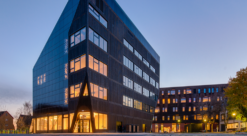
The ZEB Laboratory has been utilised both as an office building and a sustainable construction laboratory for about two years. It was designed to be the world’s most ambitious ‘climate-adapted building’ and up to now it has been a great success.

Christian John Engelsen at SINTEF is teaching the world to recycle demolition rubble to make new concrete. Anything and everything can be recycled, he says. What takes time is getting people on board.

Singles and couples with children who have moved away from home are the group most positive to alternative living arrangements, while families with children living outside the city centres are the least interested.

Energy consumption in buildings can be reduced by predicting their actual heating needs.
If only the Norwegian building and construction industry would embrace a little more digitalisation, this alone would enable Norway to achieve its 2023 emissions target agreed with the EU.
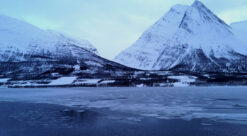
Norwegian fjord and coastal ice represent a potential security threat, as it may cut off entire communities from the outside world.

Is it safe to use treated wastewater to irrigate lawns and vegetable crops? This is the question now being addressed by researchers and the water industry.
How to know whether building materials are fit for reuse? A new guide can tell.
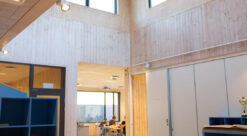
Did you know that light is a factor that affects both learning and the psychological development in school children? The right kind of light can boost performance in reading, writing and maths, and suppress restlessness and aggression.
It is difficult to recycle artificial turf and there are no obvious deposit-return systems for these plastics on the market. But researchers are now looking to find a solution to the problem.
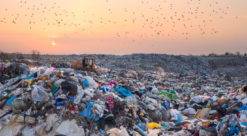
Using non-recyclable plastic waste as an alternative to coal may prevent huge volumes of plastic from being discarded into the oceans – and will also reduce CO2 emissions. This is the conclusion of a recently completed pilot project headed by SINTEF in Vietnam.
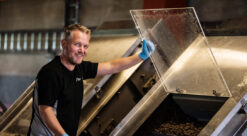
A shortage of phosphorous is driving the price of artificial fertilisers through the roof. But a new and eco-friendly wastewater decontamination process has enabled a company in Hamar in Norway to kill two birds with one stone.
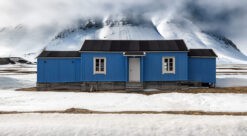
The cultural heritage of Svalbard is unique. It reflects human life and activity in a harsh and fragile environment. Researchers are now working to preserve it for posterity.
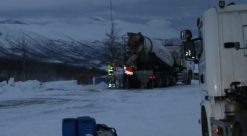
Keeping concrete warm during transport between the mixing plant and construction site results in a better, cheaper and more eco-friendly product. A new type of concrete mixer truck can result in less wastage and better quality of this important building material.
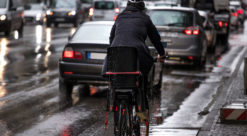
New research is showing that a combination of perceived risk and worry determines the forms of transport chosen by pedestrians and cyclists.

The circular economy can boost profits in the water management sector, and at the same time provide farmers both in Norway and around the world with cheaper fertiliser.