Future offshore oil and gas fields are most likely to be “satellite developments” that are less expensive and emit less greenhouse gases than other fields because they do not require new production platforms. An innovative Norwegian computational tool called “Slug Capturing 2” is now enabling the design of longer pipelines that will allow many more fields to be developed as satellites.
Girls who “like” and comment on what others post on social media develop a worse self-image over time. Posting on your own profile doesn’t have the same effect.
A new study shows that people who have had concussions sometimes develop long-term after effects, including sleep disturbances. The findings could also be of use to other patient groups.
Bats have received a lot of negative attention, but the chances are slim that the virus that causes COVID-19 was transmitted from bats to humans. The world needs bats – in ecosystems, for pollination and for seed dispersal. On top of that, they keep harmful insects in check around our homes, on farms and in cities.
Our language can be fun and colourful, but unusual phrases that aren’t literal can be difficult for some to interpret. Learning more about how we decipher these phrases can help us teach people in certain groups how to better understand them.
Low oil prices have fueled the debate about which industries Norway should develop and live on in the future. In the government’s revised national budget, the extraction of seabed minerals emerges as a clear investment area.
Eighty years have passed since the end of the Finnish Winter War. “The war is my family’s history too,” Soilikki Vettenranta writes in this Viewpoint article.
Heart-breaking images of children in refugee camps in Greece and Syria remind us of how war is driving children to flee their homes. Minors are being sent off to foreign countries. But this also happened in Norway’s neighbouring country of Finland during World War II.
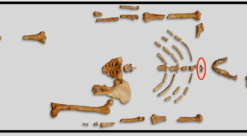
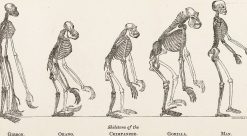
During the time of Darwin, anthropogeny was the study of human origins. Its sub-discipline paleoanthropology has since taken over, which focuses on fossils found in dry parts of Africa. These fossils don’t tell us much about why or where humans actually evolved.
The concept of sustainability has long been incorporated into our collective vocabulary. The word is used in many contexts, including in the PR industry. If we are going to find a way out of the climate and environmental crisis, maybe it should be replaced?
Even Norway, which already heats with green energy sources, could contribute more to shrinking Europe’s CO2 emissions. Building zero emission neighbourhoods would also help lower rising electrical transmission fees.
Stavanger is Norway’s oil capital. Trondheim could become the country’s capital for seabed mining. It will be an important contribution to the UN’s climate goals.
Humans may have evolved relatively recently from isolated chimpanzees, without formation of any fossils. This would mean that since the time of Darwin, the missing-link fossils that people have been looking for simply do not exist.
While there is considerable opposition to dams and reservoirs in the Western world, reservoirs built to store water during the rainy season so it can be used during the dry season can save lives and secure values when the rains fail.
If the world is going to be able to meet the UN’s sustainability goals by 2030, research must give individuals and businesses alike the tools they need to make the right choices.
Researcher Markus Steen says research alone isn’t enough to make Norway’s economy greener. Industry needs to be more deeply involved with the research community at an early stage.
The Privacy Statement is about how this website collects and uses visitor information. The statement contains information that you are entitled to when collecting information from our website, and general information about how we treat personal data.The legal owner of the website is the processing officer for the processing of personal data. It is voluntary for those who visit the web sites to provide personal information regarding services such as receiving newsletters and using the sharing and tip services. The treatment basis is the consent of the individual, unless otherwise specified.
1. Web analytics and cookies (cookies)
As an important part of the effort to create a user-friendly website, we look at the user pattern of those who visit the site. To analyze the information, we use the Google Analytics analysis tool.Google Analytics uses cookies (small text files that the site stores on the user's computer), which registers the users' IP address and provides information about the individual user's online movements. Examples of what the statistics give us answers to are; how many people visit different pages, how long the visit lasts, what websites users come from and what browsers are used. None of the cookies allow us to link information about your use of the site to you as an individual.The information collected by Google Analytics is stored on Google servers in the U.S.. The information received is subject to the Google Privacy Policy.An IP address is defined as a personal information because it can be traced back to a particular hardware and thus to an individual. We use Google Analytics's tracking code to anonymize the IP address before the information is stored and processed by Google. Thus, the stored IP address can not be used to identify the individual user.
2. Search
If the webpage has search function, it stores information about what keywords users use in Google Analytics. The purpose of the storage is to improve our information service. The search usage pattern is stored in aggregate form. Only the keyword is saved and they can not be linked to other information about the users, such as the IP addresses.
3. Share / Tips service
The "Share with others" feature can be used to forward links to the site by email, or to share the content of social networking. Tips for tips are not logged with us, but only used to add the tips to the community. However, we can not guarantee that the online community does not log this information. All such services should therefore be used wisely. If you use the email feature, we only use the provided email addresses to resend the message without any form of storage.
4. Newsletter
The website can send out newsletters by email if you have registered to receive this. In order for us to be able to send e-mail, you must register an e-mail address. Mailchimp is the data processor for the newsletter. The e-mail address is stored in a separate database, not shared with others and deleted when you unsubscribe. The e-mail address will also be deleted if we receive feedback that it is not active.
5. Registration, form
The website may have a form for registration, contact form or other form. These forms are available to the public to perform the tasks they are supposed to do.Registration form is for visitors to sign up or register.Contact form is for visitors to easily send a message to the website's contact person.We ask for the name of the sender and contact information for this. Personal information we receive is not used for purposes other than responding to the inquiry.The form is sent as email via Mailgun as a third party solution. The entire submission will be stored at Mailgun for 24 hours. Between 24 hours and 30 days, only mailheader is stored before the submission is deleted after 30 days. The reason for this storage is to confirm whether emails are sent from the website and forwarded to the correct recipient.Once the email is received by the recipient, it is up to the recipient to determine the data processing needs of the email.
6. Page and service functionality
Cookies are used in the operation and presentation of data from websites. Such cookies may contain language code information for languages selected by the user. There may be cookies with information supporting the load balancing of the system, ensuring all users the best possible experience. For services that require login or search, cookies can be used to ensure that the service presents data to the right recipient.