A new approach to cutting marine plastic pollution
Many measures have been initiated to reduce plastic pollution in Norway. Only a few of them have the potential for transformative change, according to a new study.
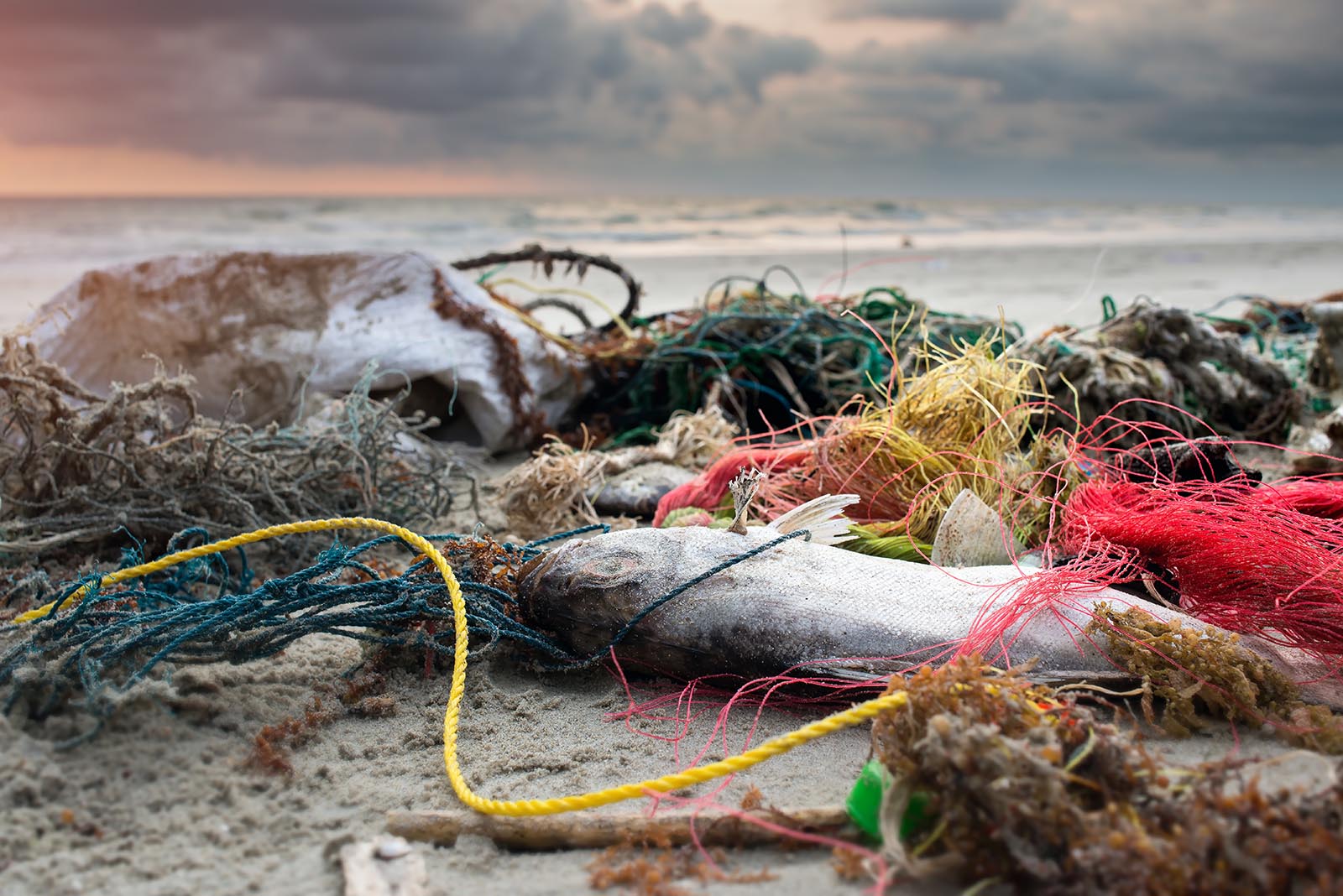
Every year, many millions of tons of plastic end up in the ocean. It’s a serious and rapidly increasing environmental problem.
NTNU researchers are now looking for a solutions that can address the root of the problem.
“The solutions we have today are mostly aimed at cleaning up after the plastic products have been used. We sort, recycle, and pick up plastic along the shoreline. But can we imagine approaches that completely change the way we produce and consume plastic?” says Natalya Amirova, a PhD research fellow at NTNU’s Department of Psychology.
Amirova is part of an interdisciplinary research project at NTNU that aims to identify key sources and solutions for plastic pollution in Norwegian marine and coastal environment.
“Marine plastic litter is a huge problem for the marine ecosystem. So far, we lack good solutions to stop this flow of plastic going astray,” says project coordinator Siv Marina Flø Grimstad, associate professor at the NTNU School of International Business in Ålesund.
Facts about plastic pollution
Marine litter and plastic pollution are accumulating in the world’s oceans at an unprecedented rate. The amount of plastic currently in the oceans is estimated to be between 75 and 199 million tonnes.
Plastic waste is found in sediments on the seabed, on beaches and in many other places around the world. As a result, plastic pollution is becoming part of the Earth’s fossil record and a hallmark of the current geological epoch, the Anthropocene. A new marine microbiological habitat has been dubbed the “plastisphere”.
Marine litter enters the ocean both directly and indirectly through input pathways such as land, rivers and the atmosphere. The main sources of plastic in the ocean include uncontrolled land-based waste streams, discharges of treated and untreated wastewater, wear and tear of plastic products such as textiles and car tyres, run-off from land, leaks from plastics used in agriculture and direct emissions from maritime industries.
Marine life and ecosystems are negatively affected by litter, including plastics and microplastics. In addition, microplastics in these ecosystems pose a potential risk to human health, for example through the consumption of seafood. Depending on the type, size and location, marine litter and plastics can cause both fatal and non-fatal effects on marine life through entanglement, suffocation, ingestion and exposure to chemicals associated with plastics.
There is evidence that floating plastics can transport chemicals and pathogenic bacteria into coastal areas, where they pose a risk to both ecosystems and human health.
SOURCE: United Nations Environment Programme (2021). From Pollution to Solution:
A global assessment of marine litter and plastic pollution.
Examined more than 50 measures
With the goal of helping society move towards plastic-free oceans, the project is exploring approaches related to economics, technology and psychology. Amirova has taken systems and psychological approaches when studying the long list of solutions implemented in Norway over recent decades.

PhD candidate Natalya Amirova at the Department of Psychology, NTNU
“Plastic pollution is a complex social problem. So we’re looking for ways to help change the system itself. We’re looking for solutions that can completely change the way we think, whether we are producers, policymakers or consumers,” says Amirova.
In the study, Amirova et al reviewed 52 solutions introduced in Norway, some dating back to the 1980s.
They include practical measures such as annual beach clean-ups, collecting old fishing equipment from the seabed, removing microplastics from wastewater and using degradable plastic in fishing gear.
There are also overarching approaches such as information campaigns, waste sorting systems, national strategies and web-based map services that show lost fishing gear in the sea.
- You might also like: Scientists call for cap on production to end plastic pollution
A lot of cleanup, not much reduction
The review showed that most of the solutions rely on recycling, cleaning beaches, removing microplastics and using alternative materials, without addressing the actual cause of the pollution.
Other studies also show that measures to control plastic pollution in Norway primarily rely on clean-up and recycling.
Only three of the more than 50 measures assessed, where considered as having the potential for transformative change:
- The municipal network KIMO (the International Organization of Local Authorities)
- The Government’s strategy for a circular economy
-
High-Level Panel for a Sustainable Ocean Economy
- The KIMO network highlights political equality and environmental protection
- The circular economy strategy is motivated by ecological sustainability
-
High-Level Panel for a Sustainable Ocean Economy promotes responsible ocean management
Opting out of behaviour that benefits society
At the same time, Amirova and her colleagues have identified some limitations in these interventions.
All three lack defined goals and deadlines, making it difficult to evaluate whether they have any impact on the plastic problem.
“The root causes of the plastic pollution problem are capitalism and consumerism. Societal materialistic values include financial success, status, and economic growth, among others. At the other end of the value spectrum, we have intrinsic values such as social equality, environmental and human health and well-being, art, and creativity” says Amirova.
A news story that describes the ocean as the world’s seventh largest economy gives us a materialistic view of the ocean.
Research shows that if we are more exposed to materialistic values, we tend to choose behaviours and decisions that are associated with those values, while at the same time opting out of behaviours that benefit society and the environment. Amirova refers to American psychologist Tim Kasser and his work on social change.
“According to Kasser, such societal change can occur when decision-makers at various levels are exposed to and act in line with pro-social and pro-ecological values, rather than materialistic values and goals.” she says.
- You might also like: More than 16,000 chemicals in plastic; many are harmful
A question of influence
All these different values are communicated to us in different ways.
If you are in the middle of Times Square in New York, you will be surrounded by advertising posters to buy things. If, on the other hand, you stand in the centre of Trondheim, you will be surrounded by different messages, including pro-social and pro-ecological ones. You might find notices urging the people not to throw trash in the toilet, or posters for festivals and museums.
“Today, social media—through news and advertising—plays a major role in shaping our daily behaviour too. This also applies to how we might perceive the ocean,” says Amirova.
“Perceiving ocean as the world’s seventh-largest economy gives us a materialistic view of it.”
“But the ocean is not only about money; it also contributes to our physical and mental health. There are more pro-social and pro-ecological values linked to the ocean. When making decisions, we should keep that in mind and not perceive ocean solely as an economic commodity,” says the researcher.
Amirova talks about marine plastic litter in this video. The story continues below the video.
The study, published in PLOS Sustainability and Transformation in June this year, includes suggestions for how to strengthen the potential for change, where more emphasis is placed on the intrinsic values of the ocean.
The authors emphasized three concepts:
- relational environmental thinking (where the relationship between humans and nature is mutual and intertwined)
- Circular economy
- Ocean stewardship.
More “zero waste” in the cityscape
The researchers suggest replacing economics as an indicator of progress, and instead using measures of the state of ocean health as an indicator.
“This would allow authorities to evaluate measures based on water quality, biodiversity, and other indicators, instead of prioritising economic indicators,” says Amirova.
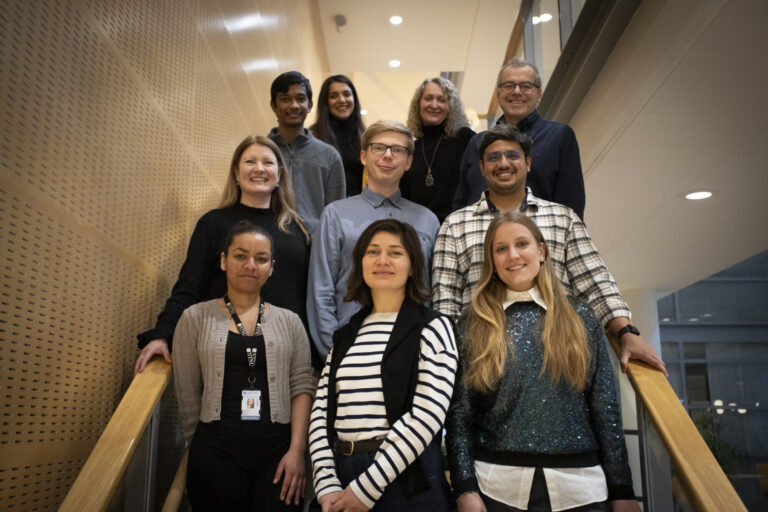
All the participants in the Sweet Spot project. Photo: Siv Marina Flø Grimstad
They also suggest that clear goals and timelines be established for the reduction of plastic waste early in the plastics value chain, as well as increased support for grassroots initiatives and small-scale businesses that work to avoid or reduce plastic production and use.
“For example, by supporting local initiatives and small businesses that have a “zero waste” profile, you can increase their presence in relation to the large companies. This can not only reduce plastic consumption, but also support local communities,” Amirova said.
The researchers also propose reducing the proportion of “profit-based advertising” in favour of “non-profit” messages. They also suggest promoting less materialistic societies with more circular lifestyles.
Project coordinator Grimstad believes Amirova’s work is important, because the problem of marine plastic litter is greater than ever, despite increased focus.
“If we are to have any hope of improving the situation and avoiding having more plastic than fish in the world’s oceans in 2050, as many predict, we must have a change of attitude all the way down to the individual level. This in turn has to lead to behavioural changes, which is what Natalya is focused on,” says Grimstad.
The Sweet Spot project
The Sweet Spot project is an interdisciplinary collaboration to identify the most important sources and hot spots of plastic pollution in Norwegian waters.
The project uses an interdisciplinary approach to investigate solutions that can make a lasting difference to the problem of plastic pollution.
The interdisciplinary aspect includes machine learning, artificial intelligence, laboratory analyses, behavioural changes, supply chain management and business models.
Six doctoral positions are associated with the project. New methods will be developed to detect and manage marine litter through the development and use of an unmanned autonomous vehicles (UAV) for automatic data collection, laboratory experiments will be used to calculate the degradation rate of macroplastic objects in the aquatic environment, and beach sand will be selected and sampled for the characterization and quantification of microplastic pollution.
An organizational network analysis (ONA) will also be conducted in the value chains for plastic-based fishing gear, new business models will be developed for manufacturers of plastic-based fishing gear, and finally key parameters needed to develop an effective measure to change behaviour – both at the individual and group level – will be identified.
Reference:
Natalya Amirova, Maraja Riechers, Isabel Richter: Assessment of the transformative potential of interventions in addressing coastal and marine plastic pollution in Norway: A literature review PLOS Sustainability and Transformation, Published: July 23, 2025 https://doi.org/10.1371/journal.pstr.0000186