Can desert sand be used to build houses and roads?
The globe may be running out of sand suitable for concrete. Researchers are therefore testing a possible solution for using desert sand as a material.
Concrete is the world’s most widely used building material – second only to water. Globally, more than four billion tonnes of cement are produced every year. Concrete consumption is so enormous that it accounts for around eight per cent of the world’s CO₂ emissions.
Sand is an essential component of concrete, and not just any sand: it must be of the right size and shape. Therefore, rock is crushed into gravel and sand, and river sand is excavated on a large scale. This results in major environmental impacts and an increasing scarcity of suitable sand.
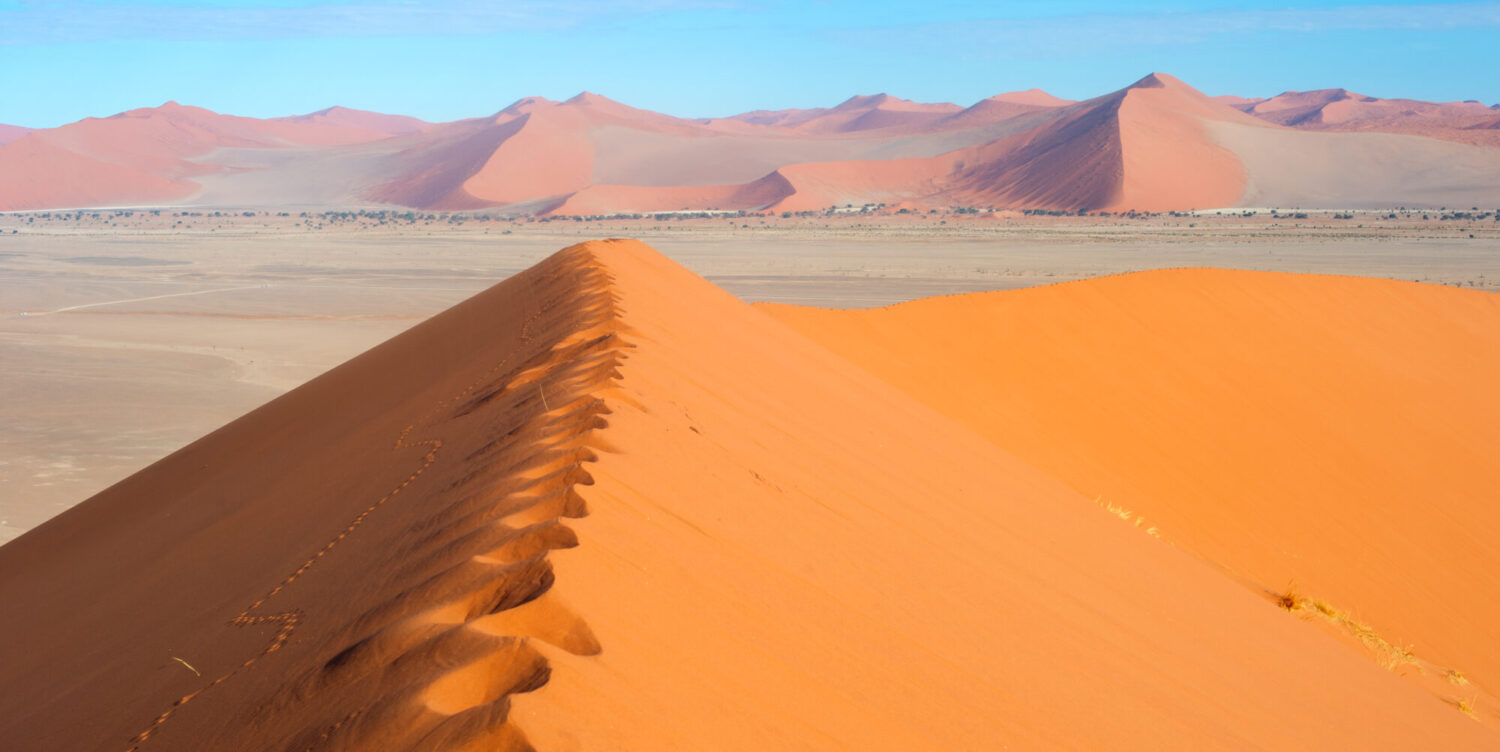
Herein lies the paradox: While we empty rivers and crush mountains to obtain sand, there are enormous amounts of sand in the world’s deserts. However, it is too fine-grained to be used in traditional concrete. Can this “useless” sand become a resource?
New solution: Botanical sand concrete

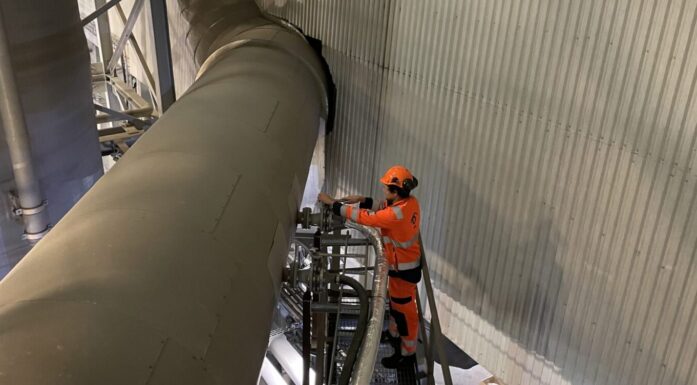
Ren Wei, postdoctoral fellow at NTNU’s Department of Manufacturing and Civil Engineering. Photo: NTNU
“Researchers have discussed for many years whether desert sand can be used in concrete. The challenge is that desert sand is so fine-grained that it is not suitable as a fastener in concrete. In other words, the concrete will not be hard enough to be used in construction projects,” says Ren Wei, postdoctoral fellow at the Department of Manufacturing and Civil Engineering at NTNU.
Ren Wei and several researchers at NTNU and the University of Tokyo have made a prototype of a new material: botanical sand concrete. It combines desert sand with plant-based additives and is made by pressing desert sand and tiny pieces of wood together, along with heat.
- You might also like: New method detects major methane emissions – the good news is that many can be sealed immediately
Works on pavements and walkways
The researchers tried many different ways to create this material. They tested different temperatures, how hard they pressed, and different types of sand. They found that desert sand actually works well when used in this way. The new material became so strong that it can be used to make paving stones for pavements and walkways.
In the study “Botanical sandcrete: An environment-friendly alternative way to the mass utilization of fine (desert) sand”, the researchers conducted a comparative analysis with botanical sand concrete made with desert sand and other types of sand.
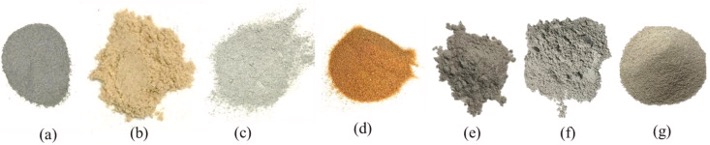
(a) ground fine-aggregate sand powder, (b) wood powder, (c) concrete powder, (d) untreated sand from the Namib Desert, (e) slag aggregate powder, (f) granite (Mikageishi) powder, and (g) silica sand No. 8
“All the experiments so far have been carried out in the laboratory at the University of Tokyo. We tested how various factors affect the strength and density of the materials, including temperature, mixing ratio, pressure, pressing time and different types of sand,” Ren Wei said.
Can reduce environmental impacts
If it turns out that botanical sand concrete can be used for different construction projects, it can reduce the need to crush mountains and collect river sand – and thus reduce the impact on the environment. It can also help to exploit sand resources that currently create challenges in desert areas.
“The production process is relatively simple, so in principle the material can be made in many places. But we need to test more, including how it can withstand cold, before it can be used in Norway,” says Ren Wei.
- You might also like: Green and everlasting concrete is no longer a distant dream
Possible solution to global paradox
Ren Wei emphasizes that in order to get the greatest possible environmental benefit, desert sand must be used in the areas where it is found, so that shipping desert sand around the world does not become the new environmental culprit.
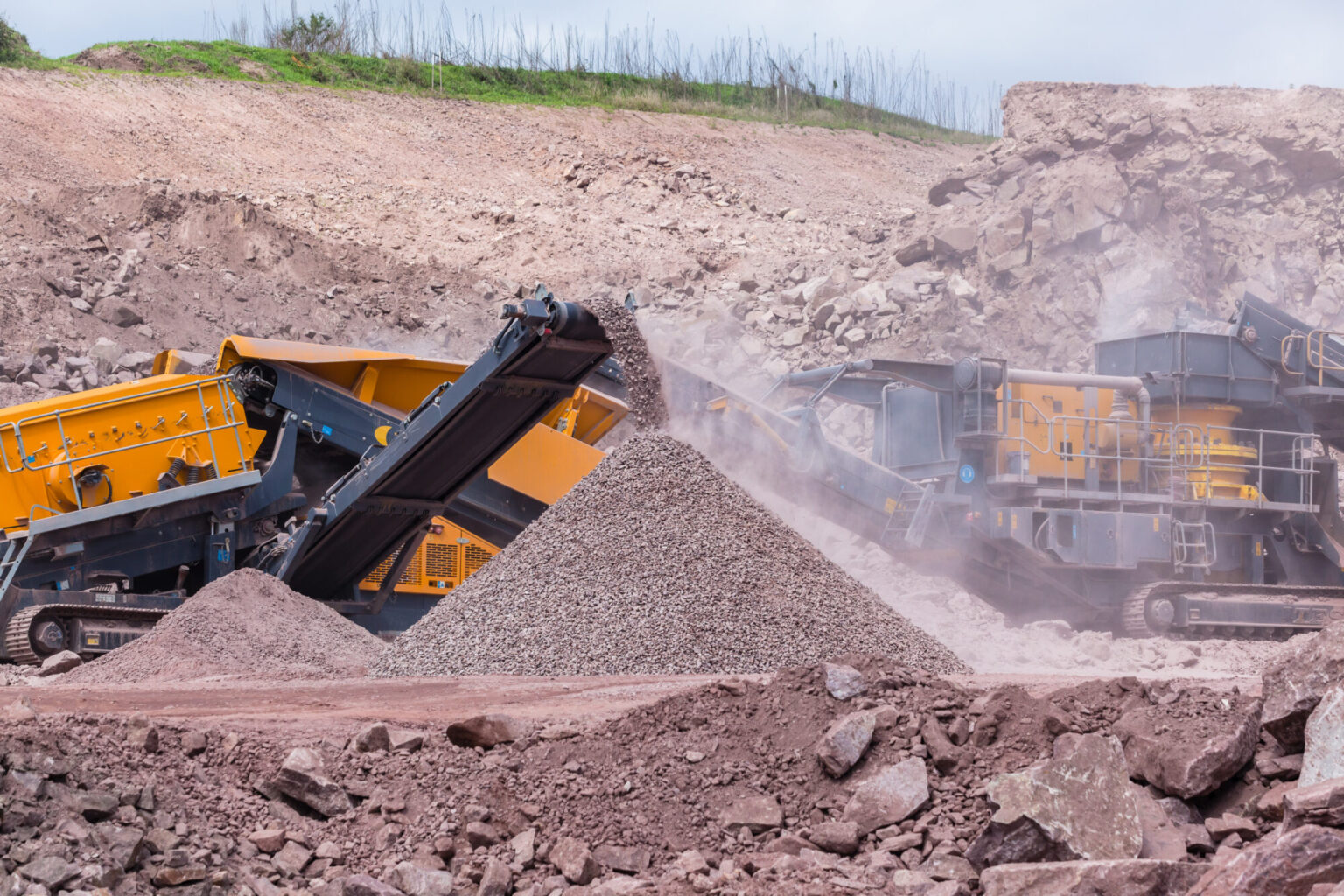
Today, we crush rock to obtain sand for concrete. Illustration photo: Colourbox
Currently, the researchers envisage using this concrete indoors, but with further development, botanical sand concrete can become part of the sustainable building materials of the future – and perhaps solve a global paradox: that we crush mountains while drowning in sand.
Reference:
Ren Wei, Tsukamoto Atsuki, Guomin Ji, Yuya Sakai :
Botanical sandcrete: An environment-friendly alternative way to the mass utilization of fine (desert) sand. https://doi.org/10.1016/j.jobe.2025.114078