Central Norway’s first high seat since the Viking Age
The foundations for the Viking expeditions were laid on farms. Society became more stratified during this period, and carved chairs, owned by wealthy farmers and known as ‘high seats’, were a clear status symbol.
The chaotic exhibition space smells of fresh paint and sawdust, and there is a very special kind of tension in the air. The specially ordered high seat is on its way from Verdal, where it was made by traditional craftsman Kai Johansen, who works at the Stiklestad National Cultural Centre.
The Viking Age was a 300-year period that is considered to have begun with the raid on the monastery at Lindisfarne in 793. During this period, the Vikings travelled extensively, engaging not only in raiding, but also in trade and exploration.
The ‘Viking’ exhibition opened in June 2024 at NTNU University Museum in Trondheim, and the theme for its first year focused specifically on the Vikings’ journeys across the world, both as raiders and as traders. The exhibition showcased boat technology and weapons, as well as objects used as trade goods and artefacts from far-flung places.
- You might also like: Viking raiders stole this box – but the real surprise is what they did with it.
Farm life made the Viking journeys possible
For many people, the magnificent ships, swords and treasures are closely associated with the sea-faring Vikings and the Viking Age. However, the vast majority of people in this period lived at home on the farm, and this is the main focus of part two of the Viking exhibition in Trondheim.
“The farm is the cornerstone of Viking society as a whole,” explained Ellen Grav, who coordinates the museum’s public outreach work on archaeology.
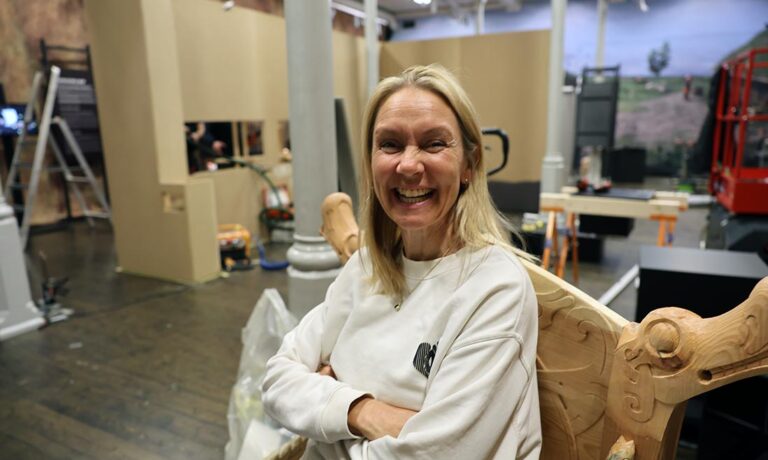
Ellen Grav is not convinced that the seat is all that comfortable, but she gets a very special feeling sitting in this chair. Photo: Ragnhild Sirum Skavhaug
In Central Norway, there were several large farming estates that held considerable power and resources. These farms produced a surplus that could be traded for goods, resulting in objects from distant lands making their way to this part of Norway.
The large estates could collaborate on ships and equipment for Viking expeditions, thereby gaining even greater wealth and status.
No preserved houses from this period have been found, but archaeologists can infer a great deal based on excavations and written sources. During the excavation of Viking Age farms, archaeologists have found things such as layers of cooking stones from brewing activities, cultivation layers and postholes.
In addition, there are often burial mounds in the surrounding area that were associated with the farms.
- You might also like: Who was the man in the well?
New knowledge about farms and farming communities
Several archaeological surveys have been carried out in Central Norway in recent years, and it is knowledge gained from these investigations that form the backbone of the exhibition.
“We now know more about farms and farming communities in the Viking Age than we did just 5–10 years ago,” said Grav.
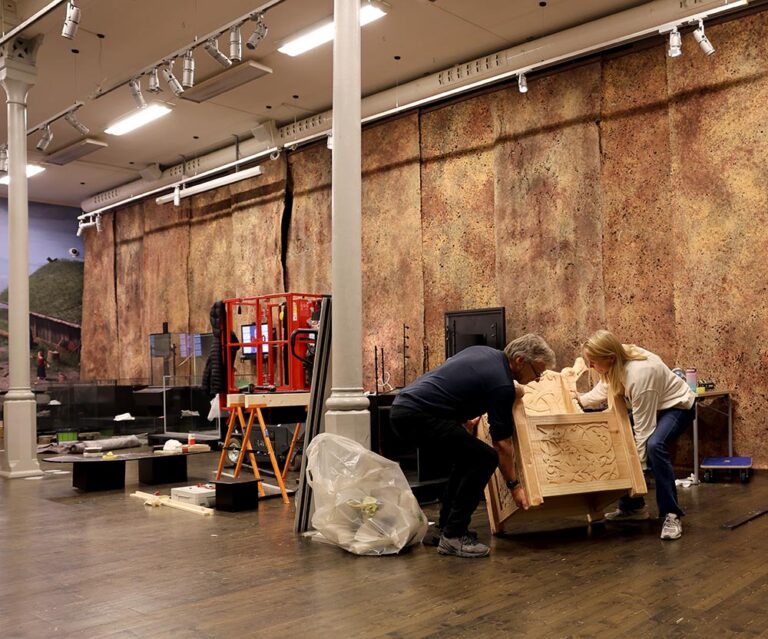
A somewhat special day for researcher Geir Grønnesby and Ellen Grav, who are seen here carrying the high seat into the exhibition halls at the NTNU University Museum. Photo: Ragnhild Sirum Skavhaug
The double rows of postholes often found at farms from this period tell us that the Vikings lived in what we call longhouses.
In the hall of the longhouse, the head of the farm sat on a high seat.
“It was the most prestigious seat in the hall, and not just anyone could sit there,” explained Grav.
“The idea of creating a high seat for the exhibition was inspired by the design of the exhibition space. The double row of posts inside the venue resemble the rows of posts inside a longhouse,” explained researcher Geir Grønnesby from NTNU University Museum.
- You might also like: Unlocking the secrets of Viking and medieval walrus tusk trade
Craftsmanship with historical heft
The honourable task of creating Central Norway’s first high seat since the Viking Age was given to traditional craftsman Kai Johansen.
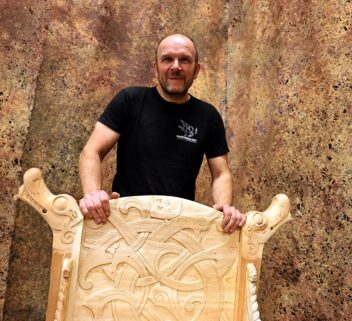
This very special chair was made by traditional craftsman Kai Johansen. He works at the Stiklestad National Cultural Center in Verdal and runs Auskin Creative Center together with Mona Sand. She designed the decoration on the high seat. Photo: Ragnhild Sirum Skavhaug
“The chair itself was fairly quick to make. It was the preparations that took the longest time,” said Johansen.
No preserved Viking Age high seats from Central Norway exist, so Johansen went through all the available archaeological and written material on chairs and high seats from this period.
Among the sources of inspiration were the Oseberg Chair from 834 CE, a gift chair from 875 CE located in St. Peter’s Basilica in the Vatican, the myth of ‘Thor’s fishing trip’, and a decorated bone tube from a cave in Nordmøre.
There is little about this chair that has been left to chance or the imagination, and it is perfect for sparking the public’s curiosity.
Imagine stepping into the dark hall, running your fingers over the smooth, hand-turned animal heads, and sitting down in the majestic high seat. In an instant, you are transformed from a visitor into the master of the space.
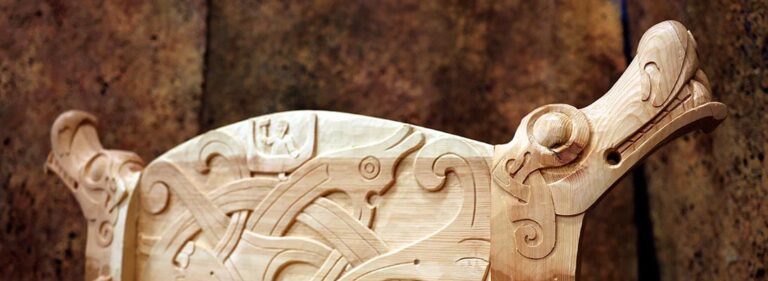
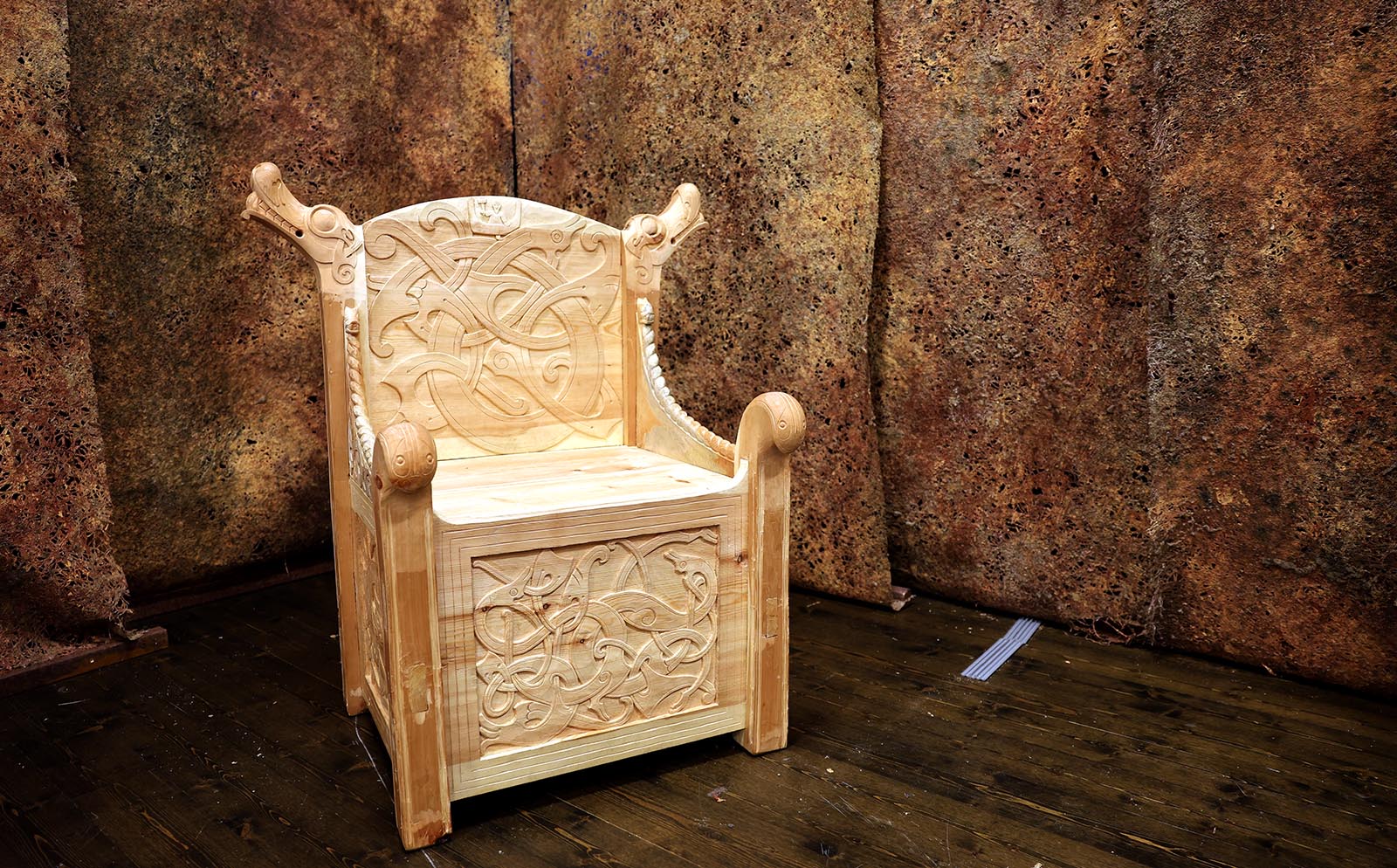
Decoration on the high seat. Photo: Ragnhild Sirum Skavhaug
The carvings
The decoration on this seat is based on a range of archaeological finds and other source material. At the top of the back panel, “Thor’s fishing trip” from Norse mythology is depicted.
The ornamentation on the other surfaces is based on a decorated bone sleeve found in a cave in Nordmøre. The shape of the seat and the decorative animal heads are also designed based on a number of finds, figures, and other sources from this period.
Also exhibited is the bone tube that inspired the seat’s decoration. From among the objects in the first part of the exhibition, Ellen Grav wants to highlight two rare house-shaped reliquary caskets from Ireland and a unique gold knob from a crozier. Both were probably plundered from the British Isles and brought here by the Vikings.
Next year, the museum plans to expand the exhibition with the theme of religion and religious practice. It will most likely focus more on the practice of religion than on the gods and religious images.