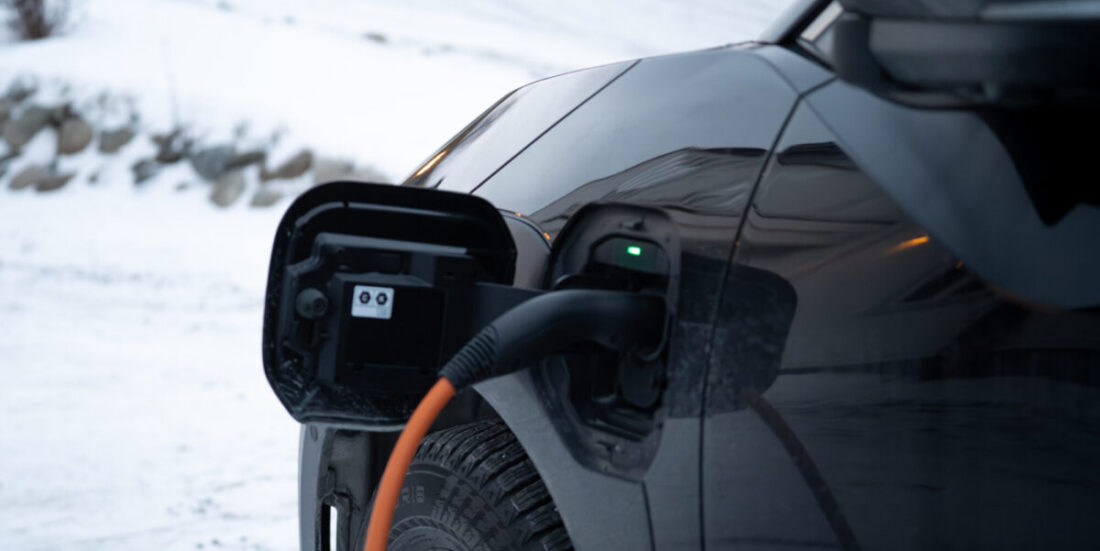
Here’s why you need to charge your EV more often in the cold
When the temperature drops to -20°C, we electric car owners quickly notice it on our wallets. But is it just a matter of driving with the heat on full blast? And what can we do to save the battery as much as possible?
You charged your car to 80 percent last night, and this morning it’s at 78 percent. The fast charger, which usually takes half an hour, now takes almost two hours. And on the way to work, you notice that the battery percentage is dropping faster than normal.
We spoke to senior researcher and battery expert, Fride Vullum-Bruer, to gain a little more insight into why batteries behave the way they do, and what we as users can do to protect the battery as much as possible in the cold.
What happens to the battery in cold weather?
When the temperature drops, the chemical processes in the battery slow down, and the internal resistance increases. This means that the battery becomes less efficient at delivering energy. But what actually happens inside the battery and why are lithium-ion batteries particularly vulnerable to cold?
 Senior researcher at SINTEF Energi, Fride Vullum-Bruer. Photo: SINTEF
“A battery can be seen as a system where lithium ions must move freely back and forth between two sides – the anode and the cathode – to produce electricity. The ions float in a solution in which electrolytes dissolve and enable the ions to conduct electricity. When it gets cold outside, this substance becomes viscous and sluggish, almost like honey. In the worst case, it can solidify completely. The lithium ions then have trouble moving and cannot generate electricity as easily,” Vullum-Bruer says.
She also adds that the battery can “give up” earlier when it is very cold:
“The battery voltage drops faster in the cold, and when it reaches a certain level, called “cut-off”, the battery will stop altogether, even though there is still energy left. This is a protective mechanism to prevent damage to the battery.
Here are the researcher's six tips for winter battery care:
- Preheat the car while it is charging, not afterwards.
- Do not charge the battery while the car is cold; instead, charge it immediately after you have been out and about so that the battery is warm.
- Avoid charging to 100 percent on a daily/weekly basis; stop at 80-90 percent.
- Use the steering wheel and seat heating instead of the passenger compartment heating, as these draw less electricity.
- Avoid making a lot of short trips when it is very cold outside.
- Feel free to add an additional quick charging stop if you have doubts about whether the battery will last for the entire journey.
It’s not just about the heater
Many people may think that the range loss in winter is mainly due to driving with the heater on. This is not entirely true. Although heating the passenger compartment uses energy, the most important reason for reduced range is that the battery gets cold and processes run slower.
But how much energy is actually used for preheating and keeping the car warm while driving?
Vullum-Bruer explains, “The amount of energy used to heat the car, and the amount that is lost while driving, depends on several factors, including the size of the car, battery chemistry and not least how cold it is outside. The colder it is, the greater the energy loss. For a newer electric car the size of a Tesla Model 3 or Y, it typically takes about 0.5 to 1.5 kWh for preheating. In addition, 1-2 kWh per hour is often used to maintain the heat while driving.”
The figures show that heating the car accounts for a relatively small part of the total energy consumption, especially compared to the effect that the cold has on the battery itself.
“For a battery of around 75 kWh, this corresponds to an energy loss of approximately 2-5 percent. The energy consumption of steering wheel heating and seat heating is another order of magnitude smaller than this. By comparison, the battery itself can lose 20-50 percent of its normal range when the outside temperature hovers around -20°C,” she adds.
Avoid charging an ice-cold battery
When is the best time to charge? Should you charge the car overnight or is it okay to fast charge on your way to work the next day?
In general, charging is faster when the battery has reached its operating temperature. Therefore, charging when you get home from a trip instead of waiting until the next morning can be a good idea. Fast charging an ice-cold battery can take a long time, because the battery has to first warm itself up.
Vullum-Bruer explains that low temperatures affect all the processes in the battery, including the charging process itself.
“As already mentioned, all the processes in the battery are slower when it is cold. This also applies to charging. The Li-ions are transported much more slowly at low temperatures, which is why it is a good idea to charge when the battery is already warm.”
She also emphasizes that charging in the cold, and especially fast charging, can in some cases be harmful to the battery.
“Preheating the car and battery will reduce energy loss when it is cold outside. Research also shows that the battery will have a much longer lifespan if you do not constantly charge to 100 percent.”
“What can happen is that the Li-ions settle on the surface of the anode as metallic lithium, instead of going into the material and being stored between the graphite layers. This is called plating and leads to a loss of active lithium.
Over time, this can have more serious consequences.
“Needle-like lithium filaments called dendrites may also form, which can lead to a short circuit in the battery. In the worst case, this can start a fire in the battery.”
Preventing energy loss is key
At the same time, Vullum-Bruer points to several measures that can help reduce the load on the battery, especially now in the winter months.
“Preheating the car and battery will reduce energy loss when it is cold outside. Research also shows that the battery will have a much longer lifespan if you do not constantly charge to 100 percent.”
She explains that the longest lifespan is achieved when the battery is operated within a relatively narrow range, which can be challenging to maintain in practice.
“The longest lifespan is achieved if the battery is operated between 40 and 60 percent. This is generally not very practical in everyday life. However, if you manage to keep the battery between 20 and 80 percent, the lifespan of the battery will increase considerably compared to constantly charging to 100 percent.
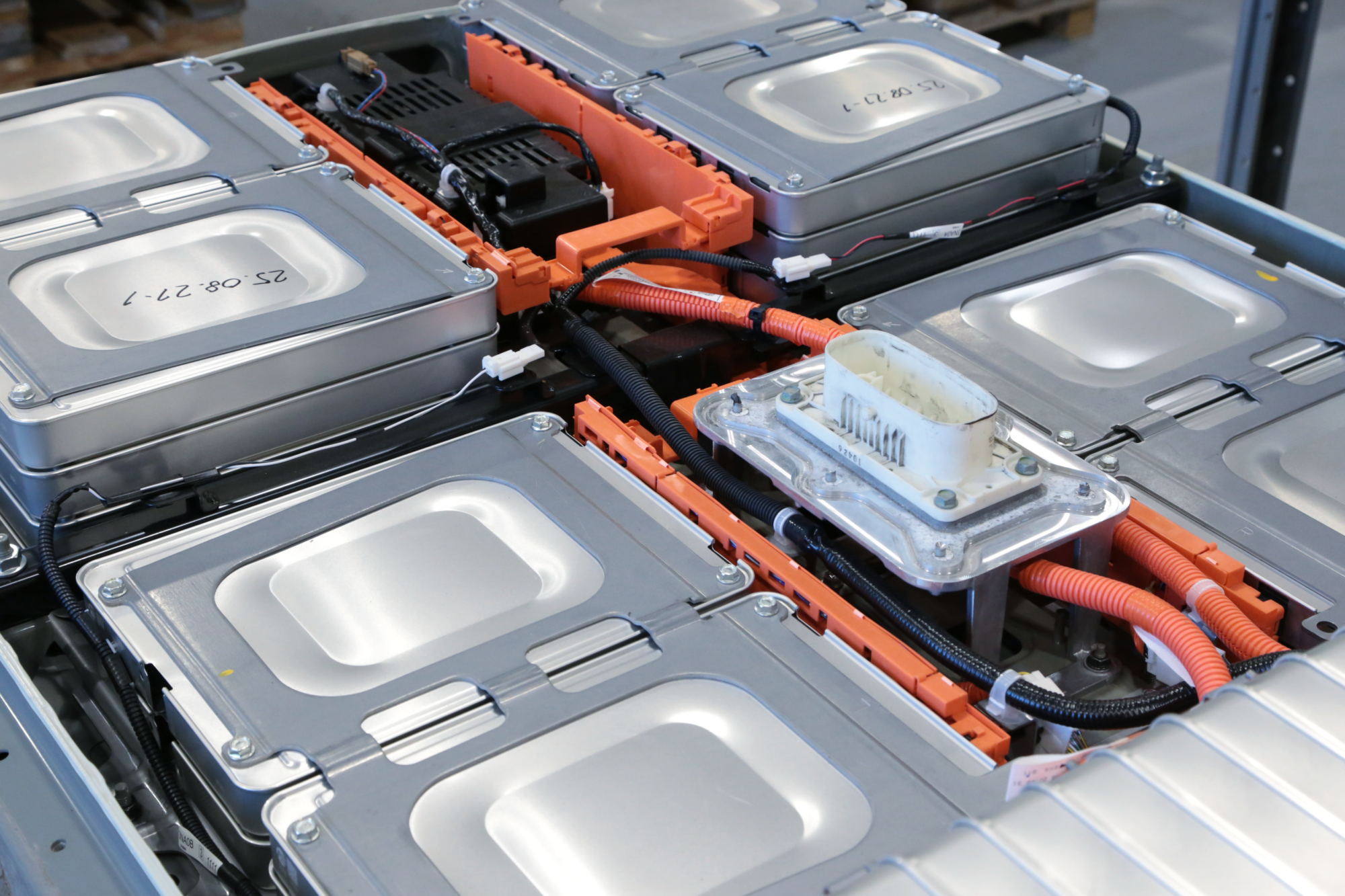
Batterys in a Nissan Leaf. Photo: Daniel Albert, SINTEF
This recommendation applies regardless of the temperature outside, but becomes extra important in the cold.
“In that case, you should be particularly careful that the battery does not remain fully charged for a long time. If the car is not used for an extended period, the battery should only be charged to between 40 and 60 percent.
This contrasts with gasoline and diesel cars, where a full tank is often recommended to reduce condensation.
Better batteries in sight?
What is the status of research when it comes to electric car batteries? Will there be batteries that can withstand cold better, and when can we expect this to happen?
Vullum-Bruer points out that a lot of research into new solutions is happening, but the path from lab to road can be a long one.
“A lot of research into different battery technologies is underway, and not all of them are equally mature or relevant for electric cars. The most promising technology for better EV batteries now appears to be solid-state batteries (or semi-solid) where the liquid electrolyte is replaced with a solid (or semi-solid) electrolyte.
“This technology has been talked about for a long time without it having made it to the market. However, several Chinese players have now announced that they expect scaled-up production within the next one to three years.”
The Chinese car manufacturer FAW has recently unveiled its first prototype car with a solid-state battery. Developments indicate progress, but it will still take time before such batteries become part of everyday life for ordinary electric drivers.
Whether and when new battery technology will have an impact on the electric vehicle models currently on the market will depend on further testing, production and commercial maturation. For now, current battery technology sets the framework for how EVs should be used, especially in the winter months, according to the researcher.