Europe’s power grid has a big drought problem
Europe’s droughts are challenging its clean energy ambitions — with considerable social and environmental costs. There’s a solution – but it’s not quite what you might expect.
In brief
- European droughts are forcing countries to burn more fossil fuels when renewables underperform, creating a damaging feedback loop with climate change.
- A study of 25 European countries (2017–2023) found drought-related fossil fuel use emitted an extra 141 million tonnes of CO₂ and cost an estimated $26 billion in social and environmental damage.
- Air pollutants released in the process caused significant health harms, with Bulgaria, Spain, and Italy most affected.
- Experts say the fix lies in faster renewable energy expansion, better cross-border grid connections, and new storage technologies like batteries and clean hydrogen.
This summary was generated using AI and was fact-checked by the human author of this article.
A new study tracking 25 European countries from 2017 to 2023 documents a problematic reality: when droughts strike, hydropower and other renewables don’t work as well as they might.

Professor Francesco Cherubini. Photo: Lars Bang, NTNU
As a result, countries have to fire up more fossil fuel power plants and import energy to keep the lights on.
Europe risks a vicious cycle where conditions made worse by carbon emissions force countries to emit even more carbon.
In this case, researchers found power production in the EU from fossil fuels increased over the seven-year-period by 180 TWh, which is the equivalent of 7 per cent of the EU’s total generation in 2022, according to a 2023 European Electricity Review.
So as climate change makes dry spells more frequent and severe, Europe risks a vicious cycle where conditions made worse by carbon emissions force countries to emit even more carbon.
Huge emissions over a short period
Here’s the size of the problem: Fossil fuel plants used to fill the energy gap during the seven drier-than-average years the researchers studied emitted an extra 141 million tonnes of CO2 equivalents. That’s more than the total annual emissions from fossil fuel combustion in the Netherlands
There’s the goal of reducing imports of fossil fuels from these geopolitical areas for energy security. So there are a lot of positive advantages to the growth in renewables in Europe.
“It’s true that today we are still dependent on fossil fuels to compensate for shortages in renewable energy, but there are solutions that can help us get rid of this dependency,” said Francesco Cherubini, the senior author of the paper and head of NTNU’s Industrial Ecology Programme.
“We are on track to move away from this problem, but we still need changes in our electricity systems and networks,” he said.
You can read more about some of the solutions later in the article.
- You might also like: Is it possible to cut CO2 emissions from European agriculture by 40 per cent?
Harmful air pollution
Drought doesn’t just cause Europe’s CO2 emissions to skyrocket. Burning fossil fuels also releases air pollutants that have a direct effect on people’s health.
This is an effect of climate change that people experience directly.This is something that impacts your pocket, because of electricity bills and electricity supplies.
Here, the researchers looked at three common pollutants released by burning fossil fuels: sulphur dioxide, nitrogen oxides and very fine inhalable particles, called PM2.5.
None of these are good for us or the environment. Sulphur dioxide causes acid rain. Oxides of nitrogen irritate your lungs and cause smog.
PM2.5 particles are so small that when you inhale them, they actually enter your bloodstream. That can affect your heart and lungs, according to the US Environmental Protection Agency.
In this case, PM2.5 emissions represented roughly 4 per cent of the total amount of air pollutants. But the researchers found that the particles were responsible for 20 per cent of the harms the pollutants caused for human health.
- You might also like: Nuclear energy will play a vital role in Europe’s clean energy mix
Pollution hotspots
By mapping each country’s energy mix, the researchers could pinpoint which countries suffered most from excess pollution when fossil fuels were used to fill the electricity gap.
Natural gas was the most commonly used fossil fuels in this situation. Power production from coal and its dirtier cousin, lignite was just one-fifth of that from natural gas.
But pollution from coal and lignite plants was 10 times higher for PM2.5 and 130 times higher for sulphur dioxide compared to pollutants from burning natural gas.
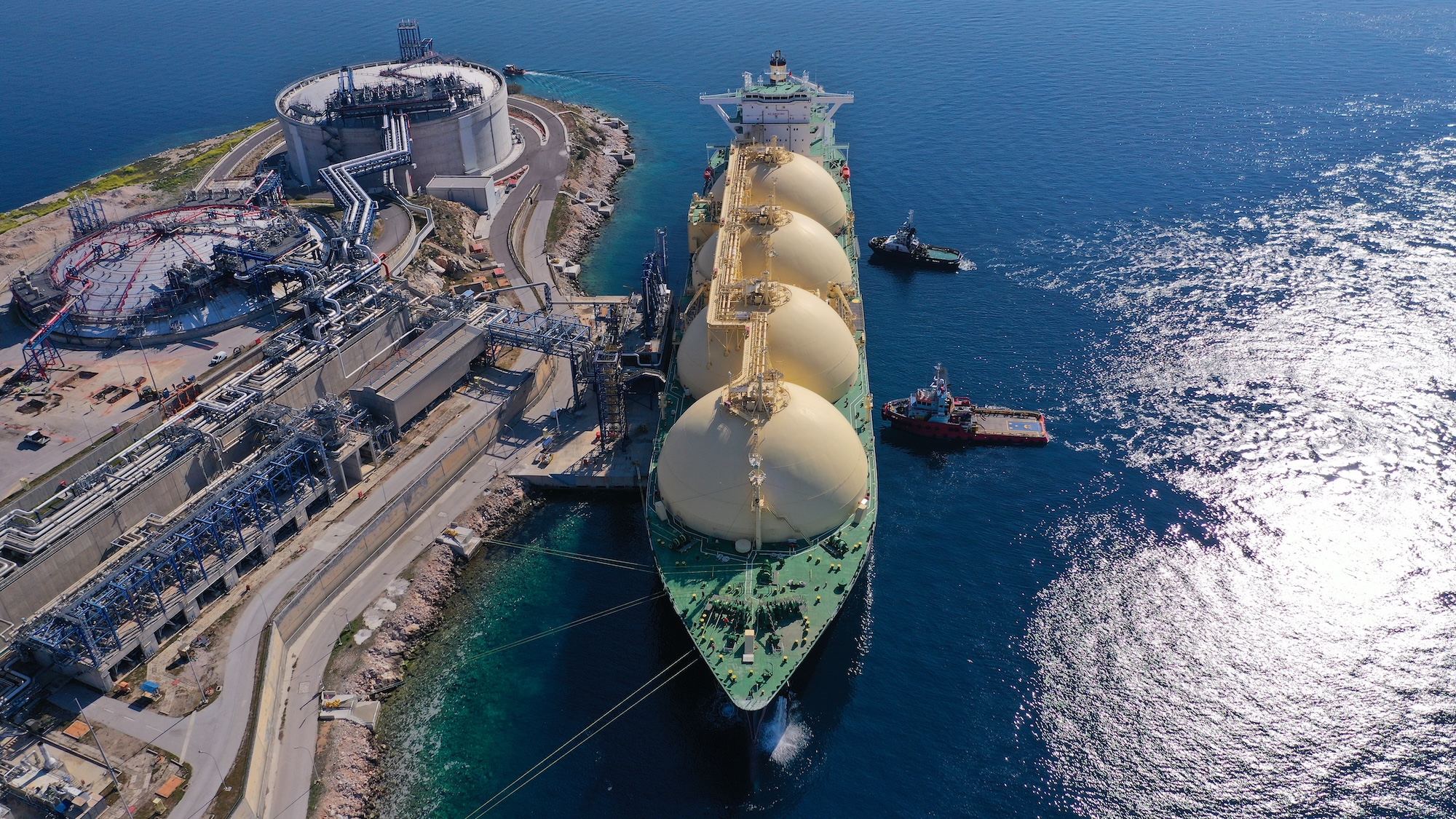
Aerial drone photo of LNG (Liquified Natural Gas) tanker anchored in Salamina, Greece. Natural gas is better than coal or lignite when it comes to air pollution such as sulphur dioxide, oxides of nitrogen and very fine particles called PM2.5. Photo: Aerial-motion / Shutterstock / NTB
When it came to PM2.5 emissions, Bulgaria, Spain, and Italy topped the charts. That’s because they’re in a sweet spot where emissions from lignite plants in eastern Europe and from coal plants in western Europe converge.
France was the opposite: droughts actually cut the country’s use of coal, for a variety of reasons. That meant negative PM2.5 emissions during dry spells.
The social and environmental cost of this drought-related use of fossil fuel plants was an estimated $26 billion.
- You might also like: Sustainable salmon? The feed industry will need more electricity
Reduce air pollution, improve energy security
It may seem counterintuitive, but Cherubini says one of the best solutions now is for countries to continue to invest in renewable energy and expand cross-border power interconnections.
Societies need to stop adding more CO2 to the atmosphere, he says, because that will absolutely make the problem worse over time.
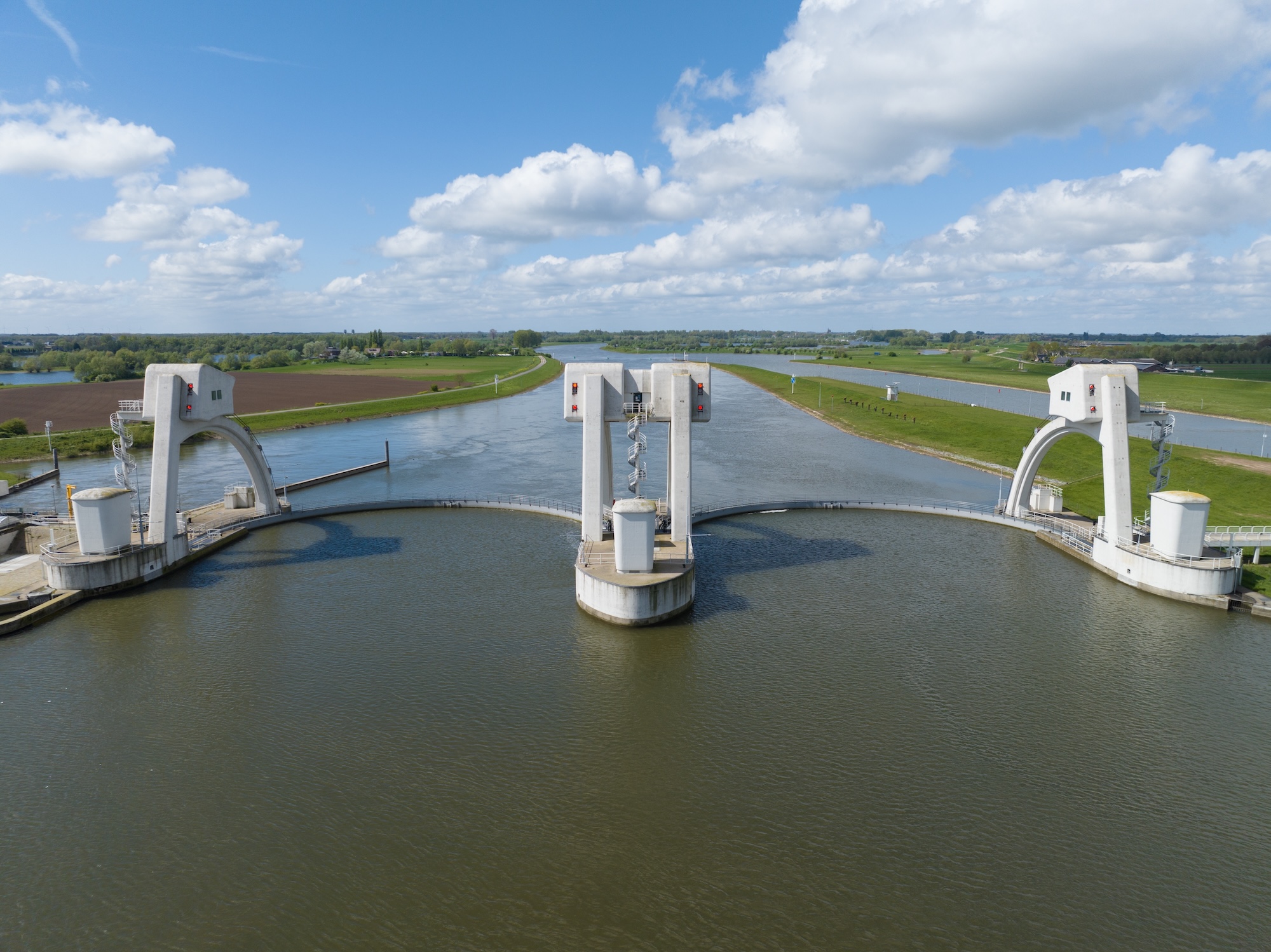
The Maurik hydroelectric power station in the Netherlands.It was built in 1988 at the weir of Amerongen on the Lower Rhine, in the southeastern part of the country. The hydro power plant is largely underground. Photo: Make more Aerials / Shutterstock / NTB
There are other benefits.
“This will also reduce air pollution,” he said. “Renewables are also getting cheaper, and are cheaper than investing in fossil fuel fired plants.”
Another incentive is being made evident by the war in the Middle East is energy security.
“There’s the goal of reducing imports of fossil fuels from these geopolitical areas for energy security,” he said. “So there are a lot of positive advantages to the growth in renewables in Europe.”
Many approaches to solve the problem
European countries are already beginning to adopt some of the approaches that can help cut demand when supply is short.

Xiangping Hu is a researcher at NTNU’s Industrial Ecology Programme. Photo: NTNU
One is voluntary power cuts when demand is high. This is when factories, commercial buildings or even smart home devices are set up to throttle back their energy use for short periods when peak demand is high.
For example, Norwegian electric car owners can get small discounts if they allow their charging schedule to be synched with times of lower power demand.
Another concerns better connections between countries. There are now links between Norway, Germany and the UK via the NordLink and North Sea Link cables. Those allow surplus power to move from regions that have it to those that don’t.
Some solutions aren’t quite ready for full rollout yet.
Boosting battery storage and developing clean hydrogen are two examples that could to soak up surplus renewable electricity when it’s abundant and releasing it when hydropower falls short, Cherubini said.
The reality of a warmer world
A warmer planet will mean more, and more severe, droughts. Xianping Hu, a researcher in NTNU’s Industrial Ecology Programme and the lead author of the article, says their findings should be a wakeup call for Europe.
“We need to be prepared when something extreme happens,” he said. “We have to build our systems to be more resilient.”
Global warming can seem abstract, Cherubini added, but when severe droughts affect power prices, it makes this problem concrete.
“This is an effect of climate change that people experience directly,” he said. “We’re not talking about melting glaciers in the north, or flooding in the tropics. This is something that impacts your pocket, because of electricity bills and electricity supplies.”
Reference:
Hu, Xiangping; Ballal, Vedant Pushpahas; Martinelli, Gabriele; Fuglstad, Geir-Arne; Nocente, Alessandro; Iacono, Roberto. (2026) Impacts of drought on electricity production, fossil carbon emissions, and air pollution in Europe. Energy Nexus