The Kavli Prize: Major discoveries about the universe, materials and the brain
The Kavli Prize 2026 has been awarded to researchers who have provided us with groundbreaking knowledge in their fields.
Every two years, the Kavli Prize is awarded to researchers who have made discoveries that change how we understand the world.
The awards are made in three fields: astrophysics, nanoscience, and neuroscience. The research is advanced, but the ideas can be explained quite easily.
What is the Kavli Prize?
- The Kavli Prize was established in 2005 as a collaboration between the Norwegian Academy of Sciences and Letters, The Kavli Foundation and the Ministry of Education and Research in Norway.
- The prize is designed to honour research that has changed our understanding of nature. It aims to make science more widely known to the general public and encourage international collaboration between researchers.
- It is awarded for groundbreaking work in three fields: astrophysics, nanoscience and neuroscience.
- Each prize consists of three things: $1 million US dollars per field, which is shared between the winners. A gold medal. A diploma.
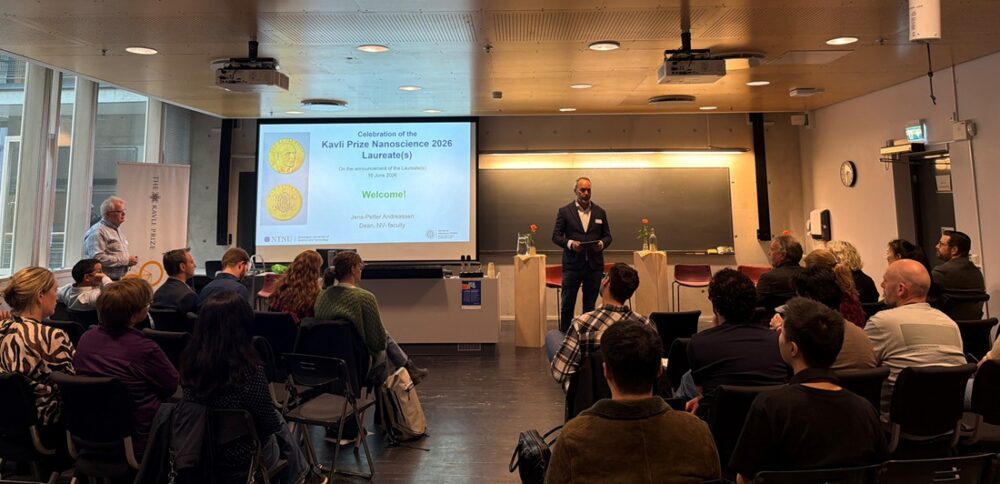
- The prizes are awarded at a ceremony in Oslo. The winners are then invited to events at NTNU.
Astrophysics: The Milky Way has had a violent past
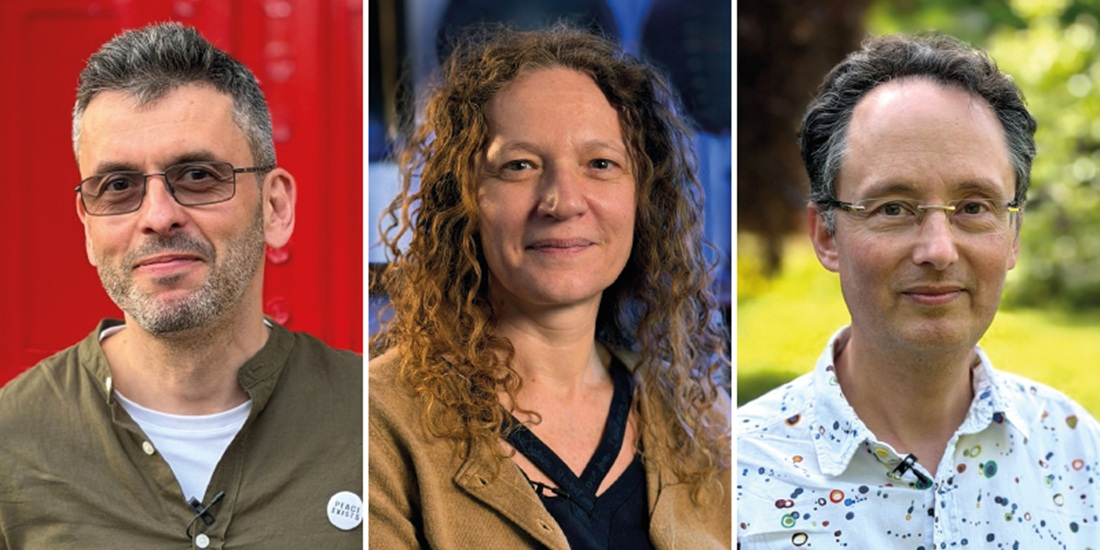
Vasily Belokurov, Amina Helmi and Rodrigo Ibata have been recognized for changing our understanding of the Milky Way.
In the past, it was thought that our galaxy formed gradually. Their research shows something completely different.
The Milky Way is made up of smaller galaxies that have been pulled in and torn apart over billions of years. When this happens, stars are left behind in long streams in space.
This can be compared to cosmic archaeology: scientists read the history of the galaxy by examining these stellar streams, almost like investigating an ancient crime scene.
An important finding is that these structures also help map dark matter, an invisible substance that holds galaxies together.
In short: The Milky Way is anything but quiet and stable – instead, it has grown as the result of old, violent collisions.
- Read more on the Kavli Prize website: 2026 Kavli Prize in Astrophysics
Nanoscience: When twisting changes materials
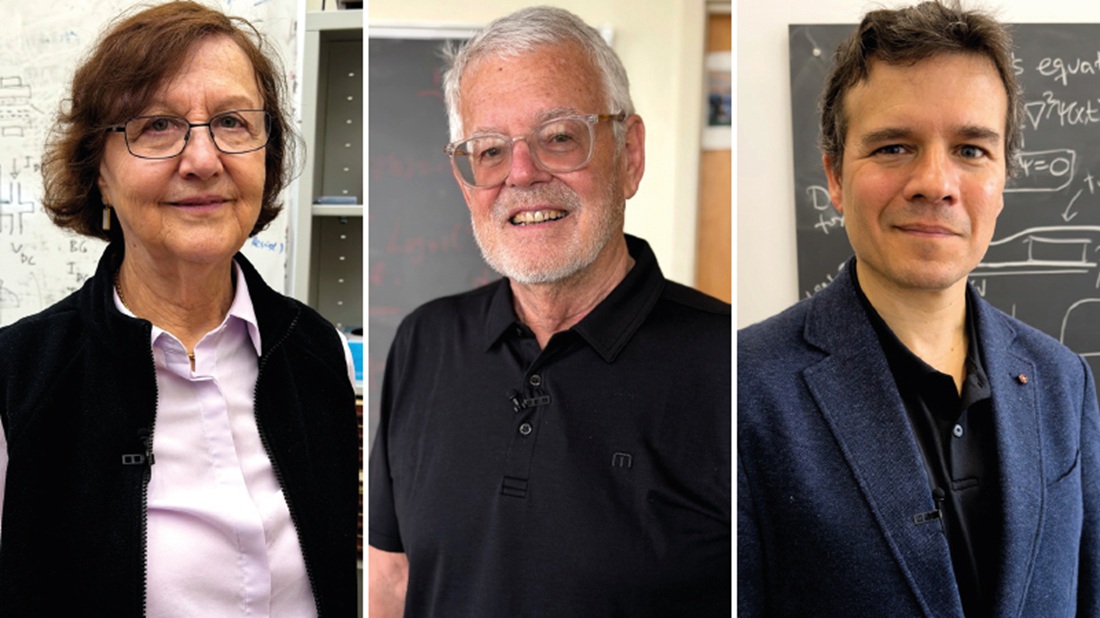
The 2026 Kavli Prize in Nanoscience goes to Eva Y. Andrei, Allan H. MacDonald and Pablo Jarillo-Herrero for laying the foundation for the research field of twistronics. Photo: Liwlig
Eva Y. Andrei, Pablo Jarillo-Herrero and Allan H. MacDonald have been given the award for founding the field of twistronics.
The idea is surprisingly simple: If we take extremely thin layers of material, only one atom thick, and twist them slightly relative to each other, their properties can change dramatically.
At a particular angle – around 1.1 degrees – graphene can behave in completely unexpected ways, including as a near-perfect conductor of electricity. This means that electricity can flow almost without resistance.
The main point is that small changes in geometry can lead to major changes in how materials behave. This may contribute to new types of electronics and quantum technology in the future.
- Read more on the Kavli Prize website: the 2026 Kavli Prize in Nanoscience
Neuroscience: The brain makes proteins where they are needed
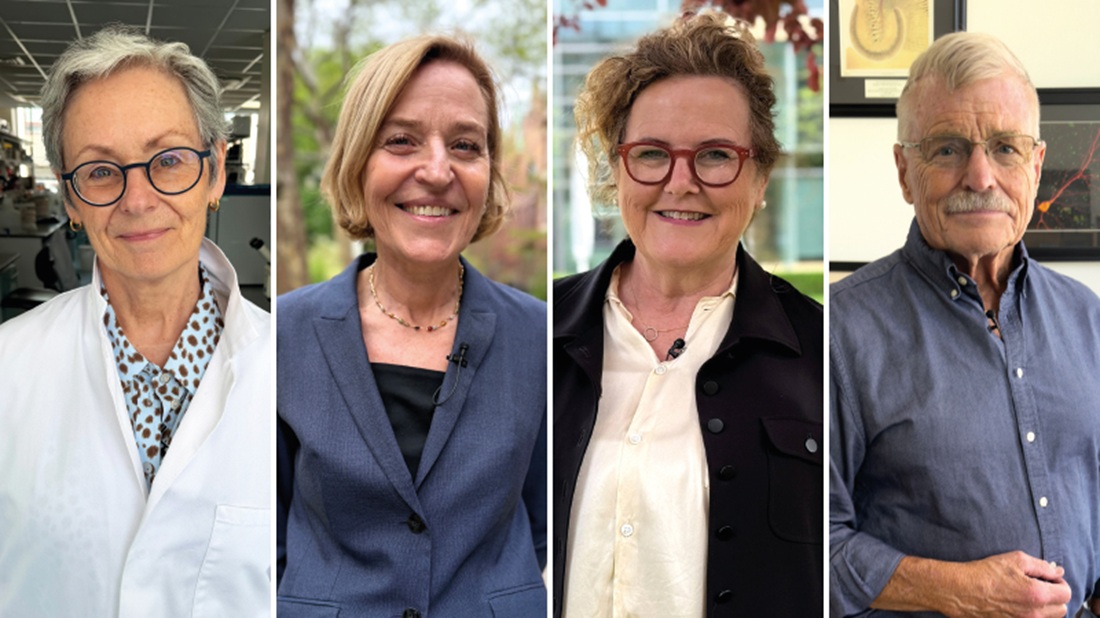
The 2026 Kavli Prize in Neuroscience has been awarded to Christine Holt, Kelsey Martin, Erin Schuman og Oswald Steward. Foto: Liwlig
Christine Holt, Kelsey Martin, Erin Schuman and Oswald Steward have been awarded the prize for the discovery of local protein synthesis in nerve cells.
Previously, scientists believed that all proteins in nerve cells were made in the cell body and then transported to where they are needed. This year’s winners have shown that something else is happening: nerve cells can make proteins directly where they are needed, at the contact points between cells, called synapses.
This is precisely where learning happens. This local production makes the brain fast, flexible and highly efficient.
The discovery also provides new opportunities for understanding and perhaps treating brain diseases.
- Read more on the Kavli Prize website: the 2026 Kavli Prize in Neuroscience
Nature is more surprising than we think
Common to all three awards are surprising findings:
- The Milky Way has been shaped by violent collisions, not calm development.
- Small twists in materials can provide completely new properties.
- The brain works more locally and efficiently than we thought.
Together, this shows that nature is often more surprising than we think – and that small changes can have big consequences.
The winners
- Astrophysics: Vasili Belakurov, University of Cambridge. Amina Helmi, University of Groningen, Rodrigo Ibata, University of Strasbourg.
- Nanoscience: Eva Y. Andrei, Rutgers University. Pablo Jarillo-Herrero, Massachusetts Institute of Technology. Allan H. MacDonald, The University of Texas at Austin.
- Neuroscience: Christine Holt, University of Cambridge. Kelsey Martin, Simons Foundation. Erin Schuman, Max Planck Institute for Brain Research. Oswald Steward, University of California Irvine.