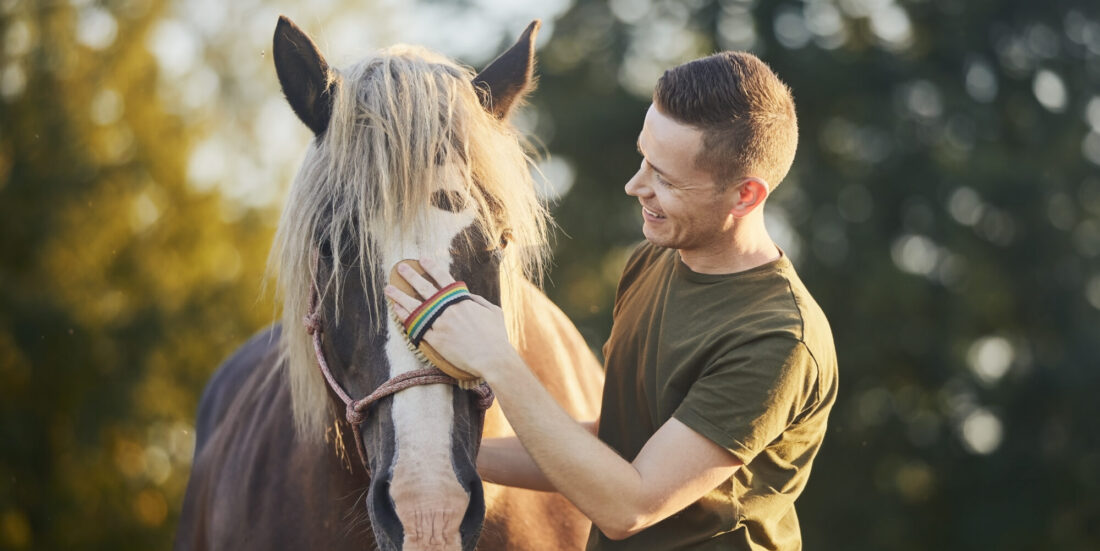
Equine colleagues can help protect therapists from burnout
Spending less time in an office and more time in the great outdoors with animals can benefit patients and therapists alike.
“Including a big, warm creature in the therapy space creates a completely different dynamic than what can be achieved in an office,” said Charlotte Fiskum, associate professor of psychology at NTNU.
She has led a study at NTNU demonstrating that equine-assisted therapy helps therapists and protects them from burnout.
“For many patients, a one-to-one conversation in an office can feel intimidating, and talking as a tool for change does not suit everyone. Horses help both the therapist and the patient by providing a physical starting point for building a good relationship and addressing difficult issues. Horses can help build a safe bridge between the therapist and the patient,” explained Fiskum, speaking on behalf of the research group.

“The horse doesn’t care what you look like, what education you have or don’t have, and it doesn’t judge you for anything you’ve done.”
Using horses to help regulate emotions
The study was conducted through ten in-depth interviews with experienced psychiatrists and psychologists who, in addition to extensive experience as psychotherapists, have also worked for at least ten years with equine-assisted therapy. The interviews were conducted by the lead author Norunn Kogstad, a PhD research fellow and psychiatrist.
“All the therapists reported that their job was made easier because horses made it possible to express difficult emotions in a completely different way than in an office. The therapists could also use the horses to regain composure and get support managing emotions and thoughts – both their own and their patients’ – during therapy sessions,” said Fiskum.
She believes that psychologists should work more in teams, but that financial constraints often mean they have to work alone.
“Burnout is a major challenge. The vast majority of therapists describe their workdays as both mentally taxing and hectic. There is a lot that we may not be able to provide enough of within the current framework of mental healthcare,” added Fiskum, emphasizing that every case is different.
- You might also like: Yes, it’s true – a walk in the woods actually helps with anxiety and depression
Animals as therapy facilitators
“Therapists also need to make sure they focus on their own well-being. The most important thing is managers with system-level responsibility who facilitate reflection and peer support, as well as good working conditions. In addition, having a horse as a colleague can be a great help,” said Fiskum.
Numerous studies show that simply spending time with animals such as horses and dogs can be beneficial for people’s mental health. Using horses as a therapeutic tool has shown positive results for patients struggling with confidence, relationships, self-regulation and substance abuse.
“A horse can provide the patient with both comfort and physical contact, and the therapist can use these situations to help the patient cope with issues such as loss and grief,” explained the associate professor.
She highlights that many animals can serve as facilitators in a therapeutic setting, but claims that horses are better suited than dogs, because horses are both prey and herd animals, meaning they have a high degree of social awareness and sensitivity.
“Horses are very sensitive to their surroundings and body language. A horse often picks up on a person’s inner emotions. Unlike dogs, horses are less concerned with pleasing people. When a horse reacts to an emotion, it does not hesitate in expressing it. It may back away, neigh, or clearly signal that it does not want contact,” explained Fiskum.
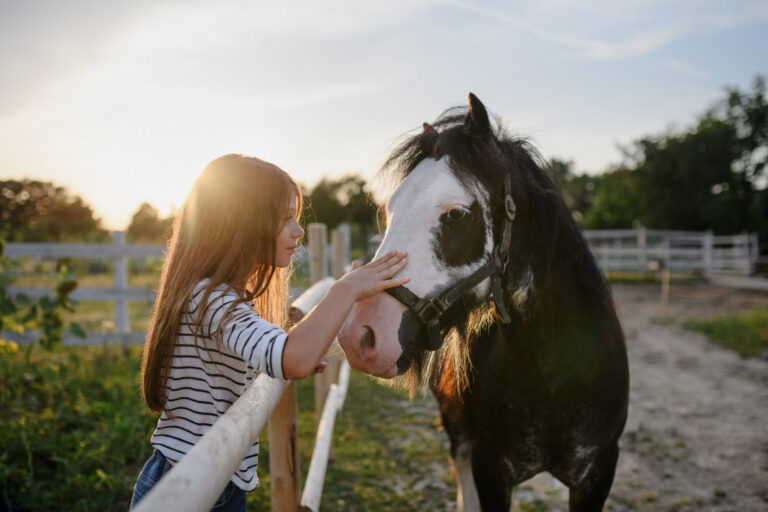
By understanding a horse and building a relationship with it, you can also learn how to build relationships with other people. That’s according to a research group at NTNU. The horse acts as a bridge between the patient and the therapist, becoming an aid for the therapist. Stock photo: Colourbox.
A miniature laboratory for bonding
A horse that is relaxed and trusts the people present may try to rest its head on a person’s shoulder. It might also try to get attention by rubbing its muzzle against a person. Horses that like each other sometimes breathe into each other’s faces.
“The therapist can use the patient’s reactions to the horse’s behaviour in order to understand how they interact with other people, providing useful insight,” said Fiskum.
For example, a therapist who uses cognitive therapy can use the patient’s interpretation of the horse’s behaviour and reactions to identify and change their negative thought patterns.
“A horse does not care about your appearance, what education you have (or don’t have), and it does not judge you for something you have done. There are many people who struggle to trust others, but who might dare to form a bond with a horse, because there is no risk of being criticized or rejected. Working with horses is a bit like a miniature laboratory for bonding and social interaction,” added Fiskum.
- You might also like: A toolbox for good mental health
Less office, more nature
Equine-assisted therapy may simply involve spending time together in the stable. Sometimes, it is also possible for patients to sit on a horse led by the therapist, or even to go for a ride, but most of the work with horses takes place on the ground.
In another study, Fiskum has researched the use of horses in substance abuse treatment and interviewed an adult patient.
“He had been bottling up his feelings for years, but when he saw the horse, he simply walked into the stall, sat down next to it and started to cry. The patient finally found a space that felt safe enough to let out his difficult emotions. Situations like that are not so easy to create in an office,” emphasized Fiskum.
She also believes that there should be greater flexibility in how therapy is conducted, because tailoring treatment to each patient’s needs and wishes is part of effective, knowledge-based care.
“Equine-assisted therapy is resource-intensive, and it isn’t available everywhere. Dogs can be wonderful therapy animals for patients who are anxious. In some cases, patients also bring their own dog along as a source of comfort during their session with the therapist. It is important that the therapy is associated with something that the patient experiences as safe,” explained Fiskum.
Equine-assisted therapy is offered at Oslo University Hospital, among other places, and there are also a number of private providers. This study was conducted in collaboration with the Lundehagen Center for Psychotherapy and Research, which is led by psychiatrist and PhD research fellow Norunn Kogstad.

“Nature can be a source of restoration for therapists, but moving therapy and treatment more into nature can also make therapy a more positive experience for many patients. In that way, it can also become easier for the therapists,” says Charlotte Fiskum, associate professor of psychology at NTNU. Photo: Nina Tveter
Source:
Kogstad, N., Christiansen, S.E., Ulberg, R. et al. Therapists’ reasons for including horses into psychotherapy, a qualitative study. BMC Complement Med Ther 26, 20 (2026). https://doi.org/10.1186/s12906-025-05185-2