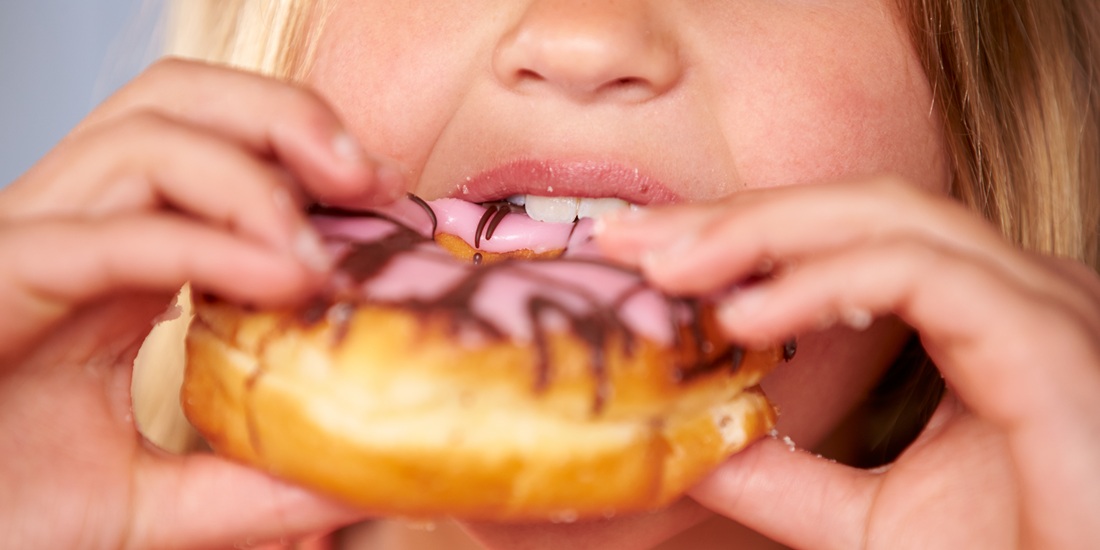
Certain children are more prone to serious eating problems in later life
Children with large mood swings are at greater risk for comfort eating in their teens.
“Children who often experience strong and variable emotions may be at greater risk of developing emotional overeating later in life,” says first author Francesca Parisi, a PhD research fellow at NTNU’s Department of Psychology.
Emotional overeating, sometimes called ‘comfort eating,’ is not just an innocent habit.
“Emotional overeating may initially start as a completely normal part of children’s eating patterns, but high levels are linked to an increased risk of obesity and more serious eating problems later in life,” says Parisi.
Finding out what drives this type of eating is therefore important, so that preventive measures can be introduced early on.
- You might also like: Increase in BMI precedes unhealthy eating behaviours
878 children in the survey
A research group at NTNU initially wanted to see whether emotional instability and ability to regulate emotions could affect the development of emotional overeating over time, as existing theory claims. Parisi worked together with NTNU professors Silje Steinsbekk and Lars Wichstrøm, along with associate professor and supervisor Oda Bjørklund.
The researchers obtained data from the long-term Trondheim Early Secure Study (TESS), which followed 878 children and adolescents from age 6 to 18.
The results suggest that children with greater emotional instability and more negative emotions had an increased risk of emotional overeating.
- You might also like: Conflict with fathers can influence whether teens receive mental health support
Similar incidence level between gender and age
The study found no significant gender or age differences between boys and girls within childhood and adolescence.
The findings only partially support emotional overeating theories which state that the degree of mood swings and poor emotion regulation are central causes.
“The results suggest that paying extra attention to children who express strong and unpredictable emotions could be a wise tactic to prevent the development of emotional overeating,” says Bjørklund.
Steinsbekk adds: “We’ve previously shown that the risk of overeating increases if parents use food to comfort their child. This habit may be particularly important to avoid for parents who have a highly emotional child.”
Reference:
Parisi F, Steinsbekk S, Wichstrøm L, Bjørklund O. Eating your emotions: Within-person relationships of emotional overeating with lability/negativity and emotion regulation from childhood to young adulthood. Child Dev. 2026 May 26:aacag104. doi: 10.1093/chidev/aacag104. Epub ahead of print. PMID: 42188999. https://pubmed.ncbi.nlm.nih.gov/42188999/
Contact Francesca Parisi
Contact Oda Katrine Bjørklund
Contact Silje Steinsbekk