No, we don’t need more and more data about nature. We need more people to use the data.
Norwegian municipalities are collecting more and more data on how what they do affects the natural world, but do not always know what to do with it. They wade in green facts, but continue to sacrifice the environment, colouring the landscapes grey.
Europe is gobbling up almost 50 square metres of land and topsoil per second. And Norway tops the list of European countries with the most land lost to construction per person, according to a study initiated by the Arena for Journalism in Europe and the Norwegian Broadcasting Corporation, NRK. At the same time, we have never had access to more data and knowledge about nature and the ecosystems we are building in and on.
“We are acquiring more and more ecological data as a basis for land-use planning. Then you would think that the decisions we make just get better and better for nature. That’s not the case. So what’s really going on?” says Arron Wilde Tippett.
Don’t know how the data will be used
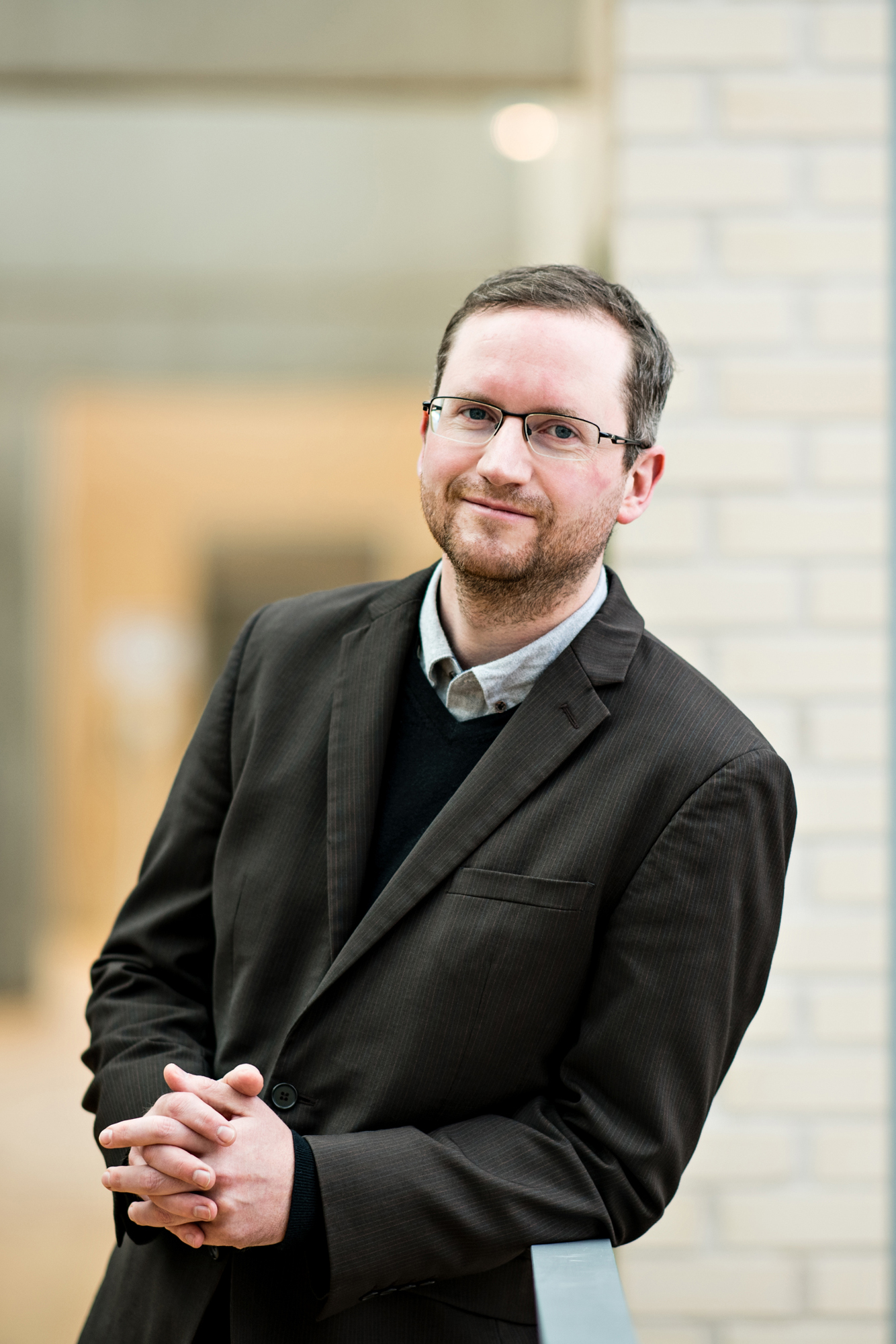
As researchers and ecologists, we need to start seeing ourselves more as stewards of the data we collect. We need to think more strategically about how it is used, and ask: Where will it be used? By whom? In what political context? says researcher Arron Wilde Tippett. Photo: NTNU
In his PhD at the NTNU School of International Business, Tippett has studied how data on nature and the environment can be used in land-use plans and building projects that require the use of nature. Ecological data can be maps of habitat types, records of various plant and animal species, or measurements of water quality and biological conditions in lakes and rivers. As an ecologist, Tippett says he is trained to produce and analyse extensive datasets about species and ecosystems, and what natural benefits they provide us.
“We hand over the data in reports, but then: It stops there. Out in the municipalities, they don’t always know what to do with the information. We must stop producing data for the sake of data, and instead become better at ensuring that the knowledge is actually used,” he says.
Short circuit in the planning process
What Tippett is describing looks like a short circuit in the municipal planning processes. In technical language, it is called the “Knowledge Deficit Model”. This idea is based on the assumption that the more knowledge we have, the better decisions we make.
“That’s not always the case,” Tippett said, referring to recent media reports (in Norwegian) about how Norway is sacrificing thousands of vulnerable natural areas the country has agreed to preserve.
“Everyone understands that we have an ongoing biodiversity and land use crisis,” said Tippett, who has interviewed 16 municipal planning professionals from across Norway.
Working in silos, collaborating little
According to the Planning and Building Act (in Norwegian), the municipalities have a great deal of autonomy. Planning takes place through municipal plans, area plans and detailed regulation plans. It is the latter that are most common, and private interests are behind 7 out of 10 of these detailed regulation plans, according to previous research cited in the new study from NTNU and the Norwegian Institute of Bioeconomy Research (NIBIO).
The study also shows that:
- Relatively few stakeholders are involved in planning and zoning matters
- The planning systems do not particularly facilitate people’s participation
- The implications of private plans often only become clear to affected stakeholders in the later stages of planning processes
- Different agencies can work on the same issue, but based on different legislation
- There can be limited cooperation across agencies
- Relevant information is not shared
All this means that input and knowledge during the planning phase may not be used. Participation is most impactful in the earliest phases of planning decisions. Often, residents only come on board after decisions have been made.
Ensuring more participation
The researchers emphasize that the more stakeholders who can engage with insight and knowledge, the better the decisions that are made. In the article “A new conceptual model for ecological data communication in the context of spatial planning and policy”, they propose new ways of using ecological data.
The group has launched what they call the PRISM model. Simply explained, the model calls for a shift from the idea that more data equals better decisions to strategic framing of ecological data (through PRISM) to engage multiple stakeholders and improve planning decisions.
The name comes from the comparison to an actual prism, because a big chunk of information can be split into different components, “in the same way that white light is refracted into a rainbow when it passes through a prism,” Tippett said.
“The idea is to engage as many people as possible. By showing how they are affected and what is actually at stake, we can ensure more and earlier participation,” he said.
Nature Accounts are next
Part of the backdrop for the research is that Norway has committed to delivering a national nature account based on a standard from the United Nations. Reporting is likely to start as early as next year. The goal is to increase awareness of nature’s intrinsic value, and for more decision-makers to understand that we as a society depend on it functioning well.
The nature accounts must report on the state of ecosystems, areas and habitat types. It will give us a kind of Gross National Natural Product, on a par with the more well-known gross national product (GNP )GDP is equal to the sum of all goods and services produced in a country during a year, minus the goods and services used during this production. Source: Statistics Norway.
“The PRISM model will incorporate the nature accounts into regulation and planning work. It will help to balance what local nature can actually tolerate against planned use,” Tippett said.
Delivering vital services
Nature is a round-the-clock service centre for vital services. It delivers clean air for us to breathe and water to drink. It provides us with food, offers places for recreation and to improve our mental and physical health. It provides insects that pollinate plants, it stores carbon and curbs floods. Nevertheless, we cut down forests and dig up marshes at a high pace and on a large scale.
“As researchers and ecologists, we need to start seeing ourselves more as stewards of the data we collect. We need to think more strategically about how it is used, and ask: Where will it be used? By whom? In what political context?” says researcher Arron Wilde Tippett. Photo: NTNU
Hard-pressed municipalities
“There is a lot of work ahead. Small municipalities in rural areas in particular may face demanding challenges in mapping habitat types and their condition. Many are already hard pressed. Some may only have one land use planner who gets all the building cases on their desk,” Tippett said.
At the same time, the municipalities must create a desirable place to live. They need to keep the population stable and preferably increase it. They have to attract private developers to ensure economic development, jobs and tax revenues.
Untouched nature vs. survival
Roads, infrastructure, commercial areas, cabin fields, data centers. Weighing untouched nature against a municipality’s survival is demanding. Tippett says that several of the informants in the study were frustrated with politicians who had a completely different agenda than considering how vulnerable the natural environment is.
“It happens that elected representatives choose to approve developments, contrary to professional advice. My respect for the planners has grown through this work. They are often in a difficult situation,” Tippett said.
No miracle cure
Another paradox is that it is often the smallest municipalities that have the most valuable natural areas. They also often have few land-use planners and professional resources.
“There is no one miracle cure that can reverse the loss of natural areas and biodiversity. But I think a lot can be improved if we start to coordinate the knowledge we have better,” he said.
Reference:
Arron Wilde Tippett, Christina Carozzo Hellevik, Liv Guri Velle, Dina Margrethe Aspen: «A new conceptual model for ecological data communication in the context of spatial planning and policy» https://doi.org/10.1016/j.envsci.2025.104240