Feeling lonely? Try a walk in the great outdoors
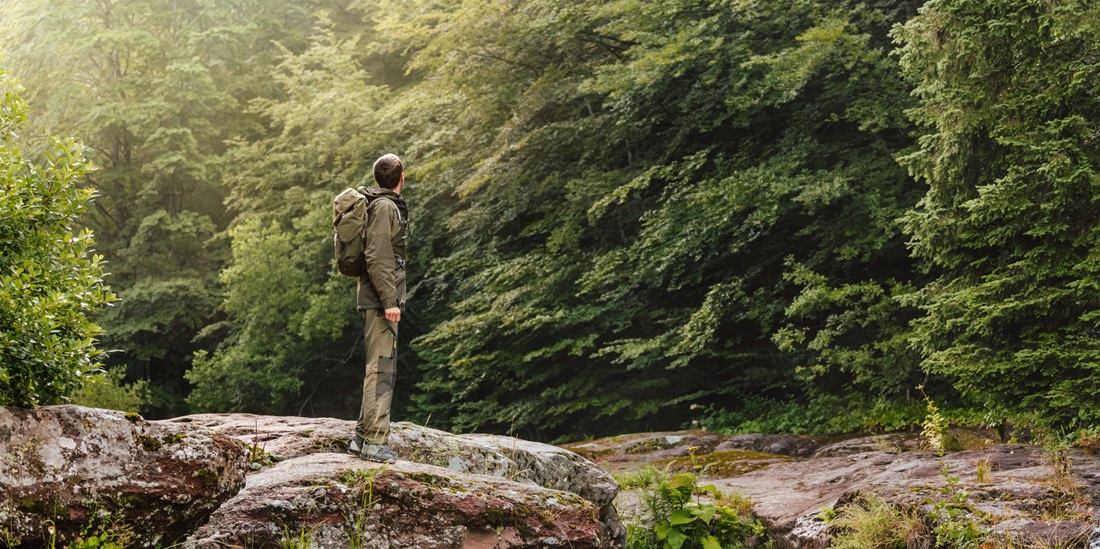
Even a solitary walk in the woods or by water provides a sense of connectedness. Simply spending time in natural environments can help prevent loneliness.
Taking part in activities can make you less lonely, because you meet people, and because social gatherings are a positive thing.
But can the mere fact of being active, especially in natural surroundings, help prevent loneliness?
“The conclusion is that outdoor activities in natural environments largely have a protective effect against loneliness,” said Sindre Johan Cottis Hoff, a PhD research fellow in sociology at NTNU. He believes this constitutes a useful addition to the toolbox for combating loneliness.
Hoff decided to test the theory that being active in natural surroundings could make people feel more connected to nature and attached to a place.
“Strengthening the sense of belonging, not just to other people, but to natural environments and the surroundings, appears to have a protective effect against loneliness,” he said.
- You might also like: A toolbox for good mental health
Jogging is not enough
Simply spending time in the great outdoors doesn’t actually have an immediate effect, Hoff found. The study emphasizes that the effect depends on whether people are attentive to the many different details found surrounding them. For example, the sounds, the light, the view of the horizon, or patterns in the leaves on the trees. Noticing these details can be easier when you are alone.
In comparison, the study shows that exercising in natural environments, such as jogging, does not necessarily have the same effect. This can be explained by the fact that the focus is often on personal performance rather than the surroundings.
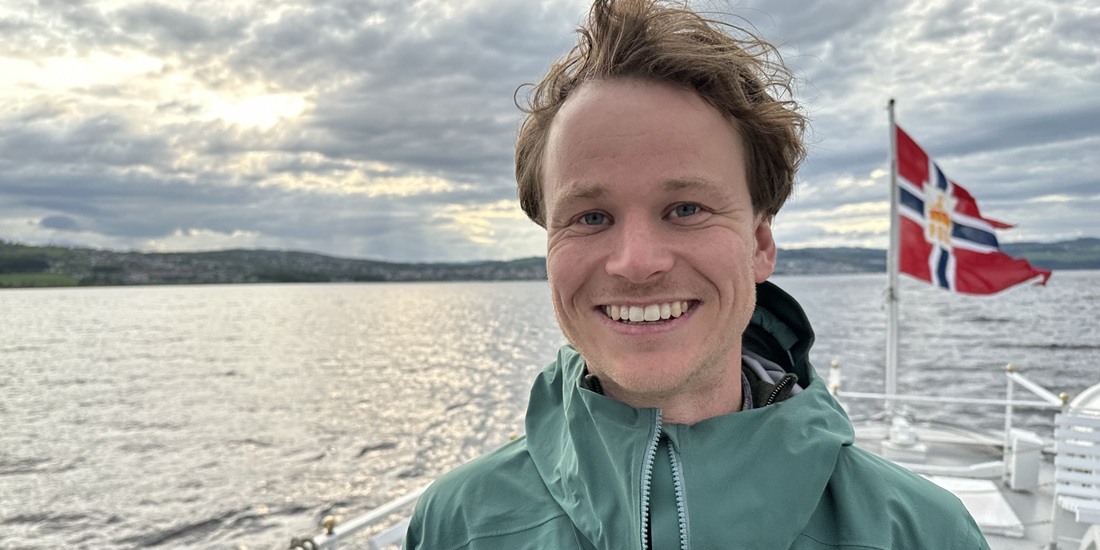
“Trips in nature can help prevent loneliness, because the experiences foster a sense of belonging,” says researcher Sindre Johan Cottis Hoff at NTNU. Here on DS Skibladner on Lake Mjøsa. Photo: Bjørn Kvaal, NTNU
Important for public health
The findings are based on interviews with 2500 people in the Mjøsa Study, which is part of the Mission Mjøsa project at NTNU in Gjøvik. One of the goals of the project is to pave the way for value creation, including intangible assets. An example of this could be Lake Mjøsa and the importance of the local landscape and nature for health and a sense of belonging. It is also a matter of identifying assets that might be lost through overdevelopment and that are absolutely worth preserving.
“Loneliness and a sense of not belonging are major public health challenges. If natural environments are destroyed or become less accessible, it may be costly for society,” said Hoff.
Fulfilling a need
Loneliness is a sign of a lack of belonging. The researchers wanted to investigate whether being in the great outdoors can help fulfil this need.
“When you see yourself as part of nature, you create a sense of belonging to a community. Many people have previously argued that loneliness only relates to human contact and human communities, but in recent years, several studies have shown that attachment to places and natural environments also have a pronounced effect,” said Hoff.
Hoff believes that there are both direct and indirect explanations for why having a sense of connectedness to nature can help alleviate loneliness:
- The direct explanation is that it fulfils the deeply human need to belong to a community. Many people also experience nature as non-judgemental; you can simply be yourself, without having to conform to any social norms.
- The indirect explanation is that it makes thoughts in relation to loneliness more constructive. Destructive thoughts are a major reason why people struggle with loneliness, for example assuming that other people dislike them or do not understand them. Several studies have found that feeling connected to nature counteracts precisely these types of destructive thought patterns and even improves relationships with other people.
Enjoying the lake
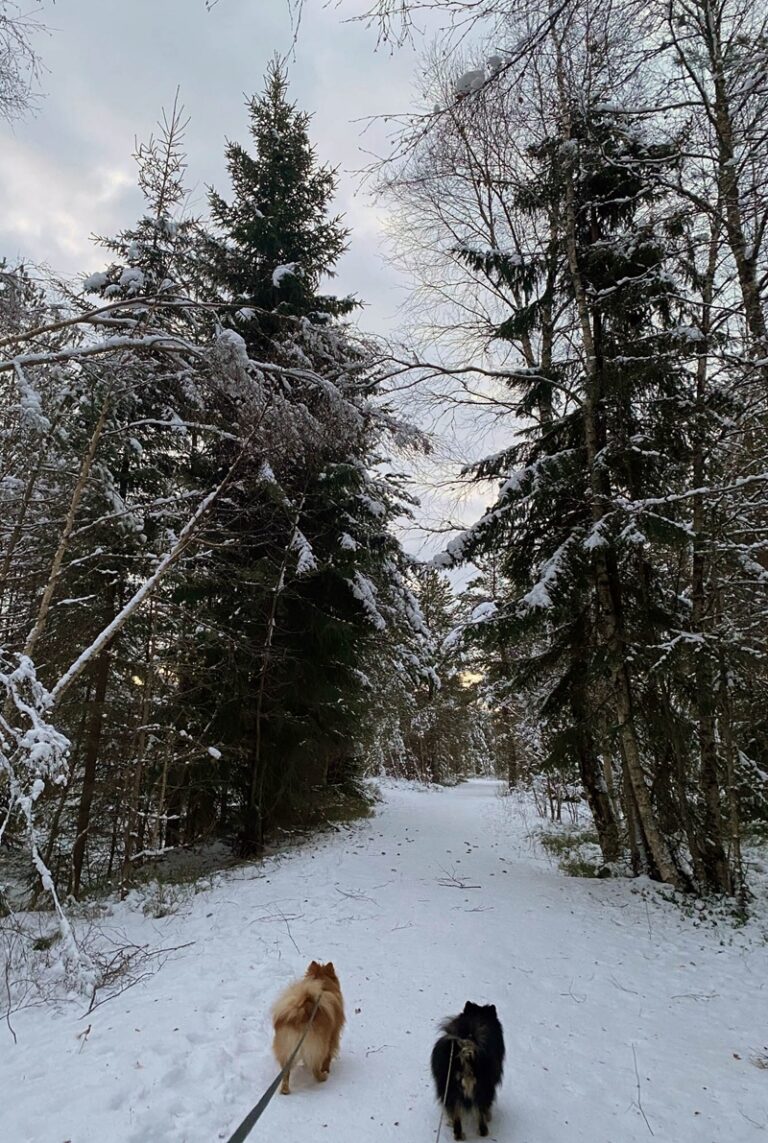
A walk in the forest is good for many things, in addition to giving our furry friends a little fresh air. Photo: Steinar Brandslet, NTNU
The study investigated activities on or near Lake Mjøsa. Walks along the lake and enjoying life by the water’s edge were the most common activities among the respondents. Over 75 per cent visit the lake several times a year, and almost 25 per cent go there several times a month.
Hoff highlights two things the findings can be used for:
- Making the great outdoors accessible. Being able to walk outside and enjoy a break looking out over a landscape offers something you do not get in a city centre.
- Encouraging people to go outside alone and pay attention to details in the natural environment. The symbolic significance of seeing spring arrive, hearing the ground under our shoes, and breathing in the fresh air has an impact on us.
“Most people can take responsibility for their own well-being, as in ‘this is probably good for me’. But some people may need a little help to help themselves. In addition, municipal authorities should take ensuring that residents have access to natural areas into account in their planning,” said Hoff.
Is access to the natural environment more limited today?
“Nature is never far away in Norway, even when you are in the middle of a city, although there is often some sort of urban noise that can be heard when visiting these kinds of natural areas. In many other countries, access to the great outdoors is much more limited,” explained Hoff.
- You might also like: Yes, it’s true – a walk in the woods actually helps with anxiety and depression
Loneliness affects one in seven people
Previous research shows that connectedness to nature can be strengthened by writing down three good things you have noticed in the outdoors each day over a given period. This is an exercise in noticing nature in everyday life, and the effects have been shown to be stable. The Norwegian philosopher Arne Næss was a great advocate for identifying with nature. He urged people to distinguish between activity and activeness. In natural environments, ‘activeness’ is about taking in the surroundings, as opposed to just moving from point A to point B.
According to Statistics Norway, 15 per cent of the Norwegian population experiences significant or severe loneliness. The recently published study, which is taken from the Mjøsa Survey, classifies the respondents as follows:
- 6 per cent of the sample were very lonely.
- 53 per cent said they experience some loneliness.
- 41 per cent said they did not feel lonely at all.
Reference: Sindre Cottis Hoff, Helga Synnevåg Løvoll, Activities in natural environments as a remedy to loneliness: The role of connectedness to nature and place attachment, Health & Place, Volume 98, 2026, 103617, ISSN 1353-8292. https://doi.org/10.1016/j.healthplace.2026.103617