Why aren’t house sparrows as big as geese?
A group of researchers spent twelve seasons making some house sparrows bigger and others smaller. Their experiment yielded some important answers.


A group of researchers spent twelve seasons making some house sparrows bigger and others smaller. Their experiment yielded some important answers.

Carl Folke, a groundbreaking researcher in his field, has been awarded the Gunnerus Sustainability Science Award for 2017.

The relationship children have with their parents can sometimes influence the relationship they have with their teachers. Now we know more about why.
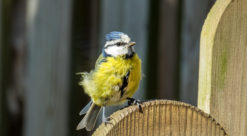
Why do some sparrows hatch six chicks while others don’t hatch any? How does upbringing affect the remainder of their lives? Physiological stress in the nest can actually affect birds’ DNA and possibly their lifespan.
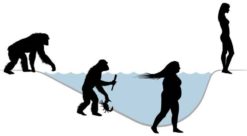
Did some of our human features evolve while our ancestors were living in water? The aquatic ape theory has been disregarded by paleoanthropologists, but it deserves another chance.

Bird songs have many functions, but their main purpose is to attract a mate. Some of the best avian singers are described below.

Norway has direct contact with the ISS space station. Now CIRiS – the Centre for Interdisciplinary Research in Space – is opening a new control room.
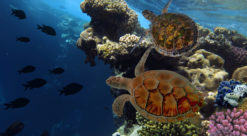
Science has made great strides since Svante Arrhenius, the Swedish Nobel Laureate who in 1896 first determined that carbon dioxide from human activity could warm the planet. The same progress hasn’t been made in increasing the number of women in the sciences.

Whether you are religious or not does not matter so much. You regret one-night stands about as much as other people do.

When you notice your partner is less interested than you are, your brain may send out a hormone that can help you fix the relationship.
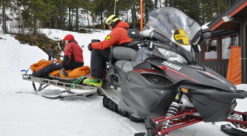
What is the best form of first aid for a cold, injured body? Mountain medicine researchers are now co-operating to find the answer. At present there is actually no “best practice” for treating this type of patients.

Adolescents who are open to casual sex are more often involved in sexual harassment – both as victims and as perpetrators.
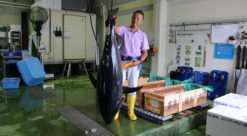
The Japanese eat one in ten of the world’s fish, and 80 per cent of the planet’s prized —and critically threatened — Bluefin tuna. Tuna aquaculture pioneered at Kindai University in Japan offers hope for both fish lovers and the fish.

Women regret saying yes to casual sex much more often than men do. Men – almost exclusively – regret saying no. Why?
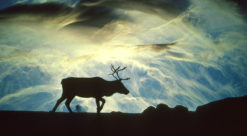
Every schoolchild knows about Rudolph the Reindeer and his magic red nose. But Rudolph’s real-life counterparts really do have a magic nose. The colder it is, the better it is in keeping the animals warm and hydrated.
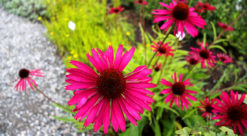
Advances in our understanding of the developmental history of plants is turning botanical gardens worldwide on end.

Why has ragweed – a highly allergenic plant – been spreading so quickly?
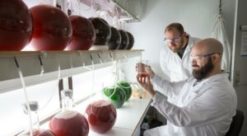
Minute particles of plastic, called microplastics, are everywhere. An international research team is now about to investigate how toxic microplastics are to marine animals such as plankton, crabs and fish, and to find out if such plastics accumulate in the food chain.

Ocean dumping of munitions from WWII was common in Norway and along the European coast. Some of these bomb dumps offer a natural living laboratory where biologists can study cold-water coral reefs.

The Kon-Tiki2 expedition aims to both reinforce and challenge Heyerdahl’s theories – and NTNU will gather unique research material from the major oceans that the expedition crosses

Beginning on 30 November, the nations of the world will gather in Paris to discuss a new global agreement on climate change. But what will it take to transform international political will into real action to curb global warming?
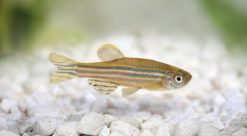
Transparent fish and an ability to work in the dark are key to the research of the newest group at the Kavli Institute for Systems Neuroscience.
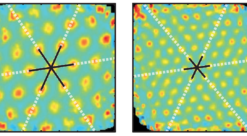
The brain’s GPS would be worthless if it simply contained maps of our surroundings that were not aligned to the real world. But we now know how this is done.
2014 NOBEL PRIZE: The brain has an enormous capacity to store memories and to keep memories from getting mixed up in part because of how these memories are stored in the hippocampus, researchers from NTNU’s Kavli Institute for Systems Neuroscience have shown.