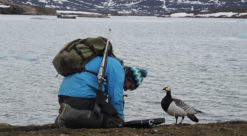
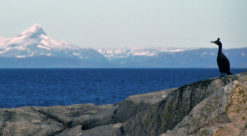
Climate change is the big wild card when it comes to the survival of many Arctic species. A new study shows that climate change will be both good and bad for Svalbard barnacle geese populations — although the balance may tip depending upon the severity of future temperature increases and how other species react.
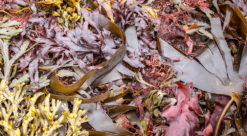
Algae cultivation is popular, but good uses for the raw material are still lacking. Researchers in Norway are set to do something about this, with the goal of fully using this resource.
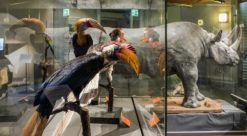
We can’t take care of the Earth’s species unless we know what species exist. A collaborative project that will help us know more is being launched in Trondheim during The Big Challenge science festival.
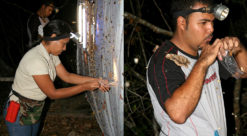
Ecologist Daniel H. Janzen has spent virtually all of his half-century career trying to catalogue and understand the creatures in a patch of dry tropical forest in northwestern Costa Rica. Little did he realize his efforts would evolve into building a sea-to-summit conservation area — and a drive to inventory all million species in the country in partnership with the Costa Rican government.
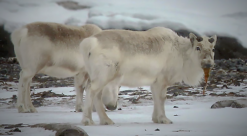
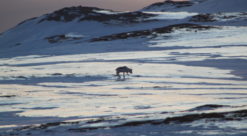
The arctic archipelago of Svalbard is already experiencing dramatic effects from climate change. A new study shows how these changes can force wild reindeer to graze on seaweed, a strategy that increases their likelihood of survival— and is recorded in their poop.
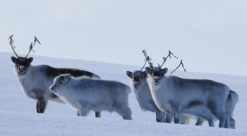
Climate change is increasing the likelihood of extreme winter rain events in the Arctic. These kinds of winter storms on Norway’s Svalbard archipelago can cause a thick cap of ice to cover the forage that reindeer eat. You’d think that more frequent rain-on-snow events would spell the end for these arctic animals — but you’d be wrong.
Several fish species can change sex as needed. Other species adapt to their surroundings by living long lives — or by living shorter lives and having lots of offspring. The ability of animals and plants to change can sometimes manifest in apparently extreme ways.
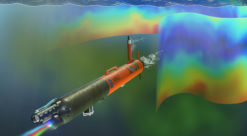
Phytoplankton form the base of the marine food chain but are notoriously difficult for scientists to account for — a little like trying to identify and count motes of dust in the air. A truly independent underwater vehicle shows it can do the job.
Do we have a dominant brain hemisphere? Do we use our whole brain? Can we train our brains to be smarter? Does our ability to learn depend only on our genetic inheritance?
Twenty-five years ago, African wild dogs (Lycaon pictus) disappeared from Serengeti National Park. A firestorm of debate followed when one researcher claimed that handling by scientists was the cause. New research refutes that claim and offers another explanation.
Travelling to Mars will require astronauts to grow their own food. NTNU is creating the planters for cultivating veggies in space. Now that researchers have finished lettuce-growing experiments, they’ll be embarking on bean trials.
Climate change in the Arctic means more winter rain, and consequently more rain falling on snow. The result can be a buildup of ice under the snow, which can wreak havoc with arctic ecosystems.
Can offshore wind power be combined with good seabird management? Using GPS to track seabirds, a research project has come up with a surprising answer.
Plants have to defend themselves against drought, enemies and disease. But different threats demand different responses. So how do plants know what’s attacking them?
The moss world will never be the same. The moss Norwegian researchers thought they knew has played a trick on them. In return, researchers are calling on the Norwegian public to name a new species.
Tinder users don’t have more sexual partners than other similarly minded people. Women tend to use the app to feel better about themselves, whereas men are more focused on sex.
The Privacy Statement is about how this website collects and uses visitor information. The statement contains information that you are entitled to when collecting information from our website, and general information about how we treat personal data.The legal owner of the website is the processing officer for the processing of personal data. It is voluntary for those who visit the web sites to provide personal information regarding services such as receiving newsletters and using the sharing and tip services. The treatment basis is the consent of the individual, unless otherwise specified.
1. Web analytics and cookies (cookies)
As an important part of the effort to create a user-friendly website, we look at the user pattern of those who visit the site. To analyze the information, we use the Google Analytics analysis tool.Google Analytics uses cookies (small text files that the site stores on the user's computer), which registers the users' IP address and provides information about the individual user's online movements. Examples of what the statistics give us answers to are; how many people visit different pages, how long the visit lasts, what websites users come from and what browsers are used. None of the cookies allow us to link information about your use of the site to you as an individual.The information collected by Google Analytics is stored on Google servers in the U.S.. The information received is subject to the Google Privacy Policy.An IP address is defined as a personal information because it can be traced back to a particular hardware and thus to an individual. We use Google Analytics's tracking code to anonymize the IP address before the information is stored and processed by Google. Thus, the stored IP address can not be used to identify the individual user.
2. Search
If the webpage has search function, it stores information about what keywords users use in Google Analytics. The purpose of the storage is to improve our information service. The search usage pattern is stored in aggregate form. Only the keyword is saved and they can not be linked to other information about the users, such as the IP addresses.
3. Share / Tips service
The "Share with others" feature can be used to forward links to the site by email, or to share the content of social networking. Tips for tips are not logged with us, but only used to add the tips to the community. However, we can not guarantee that the online community does not log this information. All such services should therefore be used wisely. If you use the email feature, we only use the provided email addresses to resend the message without any form of storage.
4. Newsletter
The website can send out newsletters by email if you have registered to receive this. In order for us to be able to send e-mail, you must register an e-mail address. Mailchimp is the data processor for the newsletter. The e-mail address is stored in a separate database, not shared with others and deleted when you unsubscribe. The e-mail address will also be deleted if we receive feedback that it is not active.
5. Registration, form
The website may have a form for registration, contact form or other form. These forms are available to the public to perform the tasks they are supposed to do.Registration form is for visitors to sign up or register.Contact form is for visitors to easily send a message to the website's contact person.We ask for the name of the sender and contact information for this. Personal information we receive is not used for purposes other than responding to the inquiry.The form is sent as email via Mailgun as a third party solution. The entire submission will be stored at Mailgun for 24 hours. Between 24 hours and 30 days, only mailheader is stored before the submission is deleted after 30 days. The reason for this storage is to confirm whether emails are sent from the website and forwarded to the correct recipient.Once the email is received by the recipient, it is up to the recipient to determine the data processing needs of the email.
6. Page and service functionality
Cookies are used in the operation and presentation of data from websites. Such cookies may contain language code information for languages selected by the user. There may be cookies with information supporting the load balancing of the system, ensuring all users the best possible experience. For services that require login or search, cookies can be used to ensure that the service presents data to the right recipient.