How storm surges could impact your workplace
Businesses along the Norwegian coastline are becoming increasingly vulnerable to storm surges and flooding. Researchers have now created digital maps that show who is most at risk.


Businesses along the Norwegian coastline are becoming increasingly vulnerable to storm surges and flooding. Researchers have now created digital maps that show who is most at risk.

It had been dormant for 800 years, but in March 2021, the Fagradalsfjall volcano in Iceland came to life. While the eruption was ongoing, large-scale field experiments were conducted to build defensive earthen barriers aimed at slowing down the molten lava flow.

What should power the future’s shipping fleets? How can we change the way we build buildings so that they’re truly climate neutral? If we’re going to actively alter the planet’s climate, how should we study this?
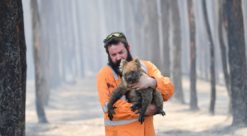
Bushfires are a normal part of the cycle of nature in Australia. But not like this. And it is going to get worse.
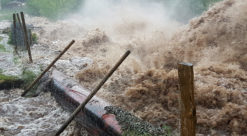
Floods are expensive and at times dangerous. But what if a computer disaster simulation game could show politicians and local people what potential floods in their town would look like?
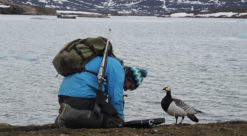
Climate change is the big wild card when it comes to the survival of many Arctic species. A new study shows that climate change will be both good and bad for Svalbard barnacle geese populations — although the balance may tip depending upon the severity of future temperature increases and how other species react.
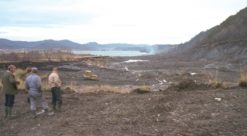
In theory, PoreLab studies porous media. But the research team dreams of being able to predict quick clay landslides as part of their results.
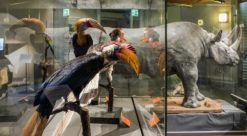
We can’t take care of the Earth’s species unless we know what species exist. A collaborative project that will help us know more is being launched in Trondheim during The Big Challenge science festival.
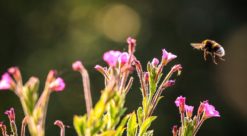
Many insect species are struggling. But all of us can help them, whether we live in an apartment or in a house with a garden.
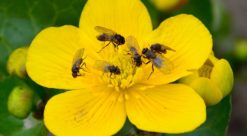
Several countries are warning of massive insect deaths. Right now we don’t know how matters stand in Norway. But that’s about to change.
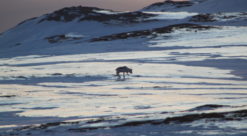
Climate change in the Arctic means more winter rain, and consequently more rain falling on snow. The result can be a buildup of ice under the snow, which can wreak havoc with arctic ecosystems.
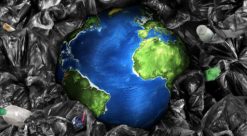
Our carbon emissions are much higher than are needed for us to have happy, healthy lives. But cutting these emissions requires us to think differently about how we measure growth and progress.
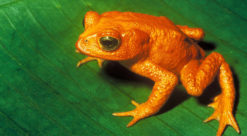
The fungus kills frogs, toads and salamanders, and now we know where it emerged. The pet trade may be to blame.
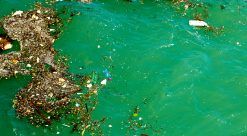
Picking up a plastic bag from the beach makes a bigger difference than you might imagine.
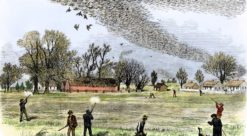
The passenger pigeon was once among the most numerous species on earth. The last passenger pigeon died in the Cinncinati Zoo just over 100 years ago. How did it all go so wrong?
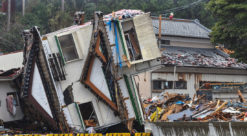
The 11 March 2011 Tohoku-Oki earthquake was the largest and most destructive in the history of Japan. Japanese researchers — and Norwegian partners — are hard at work trying to understand just what made it so devastating.
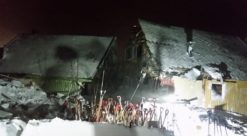
You might think that polar bears— and the potential for attack— are the biggest danger on the Norwegian island archipelago of Svalbard. But avalanches kill far more people on Svalbard than polar bears ever have.
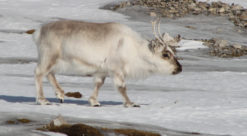
The last week of January 2012 brought wild weather to the Norwegian arctic island archipelago of Svalbard and its largest town, Longyearbyen. A new cross-disciplinary study provides a comprehensive look at the effects of this extreme weather event on everything from town infrastructure to the natural environment.
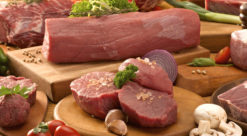
Growing and producing food make agriculture and food consumption among the most important drivers of environmental pressures, including climate change and habitat loss.