
Two prestigious awards for research on interfaces
Two international professional organizations recognize PhD research that could improve everything from weather forecasts to the prediction of volcanic eruptions.

Two international professional organizations recognize PhD research that could improve everything from weather forecasts to the prediction of volcanic eruptions.
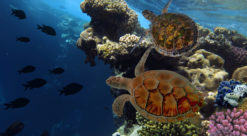
Science has made great strides since Svante Arrhenius, the Swedish Nobel Laureate who in 1896 first determined that carbon dioxide from human activity could warm the planet. The same progress hasn’t been made in increasing the number of women in the sciences.
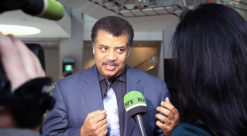
This year’s winners of the Stephen Hawking Medal for Science Communication 2017 were announced yesterday at a press conference in New York. The winner of the science communicator award is astrophysicist Neil deGrasse Tyson. The medal itself will be awarded on 20 June during the Starmus Science Festival in Trondheim.
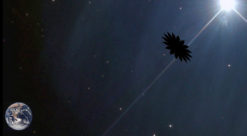
Imagine a firefly fluttering near a floodlight. Can you see it? Not unless you shade the light coming from the glare of the lamp. This is where the sunflower screen enters the picture.

Whether you are religious or not does not matter so much. You regret one-night stands about as much as other people do.
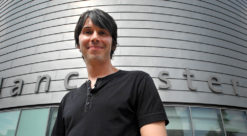
Many of the speakers at the Starmus Festival are superstars in their fields of expertise. But few have as many fans as Brian Cox, the researcher who also feels at home in popular culture.

Imagine a dog owner with a reflective vest and a black dog without one. In the dark we can see how the dog owner moves, but not the dog. That’s how black holes work, too.

When you notice your partner is less interested than you are, your brain may send out a hormone that can help you fix the relationship.
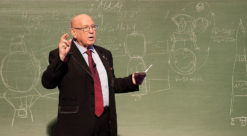
He was the very first person to walk in space. A rescue team on skis brought him to safety after an emergency landing in the Siberian forest. Now, Alexei Leonov is coming to Trondheim.
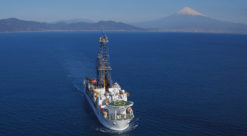
Japanese researchers have access to the largest scientific vessel ever constructed, one that has a 120 metre tall derrick capable of drilling to 7500 metres below the seafloor. They’re using it to hunt for life deep under the seafloor and explore for mineral deposits at the bottom of the ocean — topics that are of great interest to Norwegian researchers.
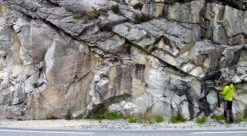
How and why do movements of the Earth’s crust still cause death and destruction millions of years after they first happened? A new technique sheds light on this question.
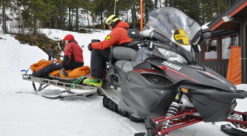
What is the best form of first aid for a cold, injured body? Mountain medicine researchers are now co-operating to find the answer. At present there is actually no “best practice” for treating this type of patients.
Forty-six science superstars will gather in Trondheim this 18-23 June for the Starmus Science Festival, a one-of-a-kind event that mixes cool science seminars with red-hot concerts.

Adolescents who are open to casual sex are more often involved in sexual harassment – both as victims and as perpetrators.
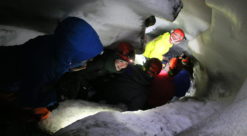
Svalbard’s cold climate means that its glaciers are solid and frozen to the ground. This allows for winter travel into unique ice caves that contain plants and material that froze into the glacial ice as it formed.
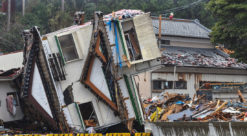
The 11 March 2011 Tohoku-Oki earthquake was the largest and most destructive in the history of Japan. Japanese researchers — and Norwegian partners — are hard at work trying to understand just what made it so devastating.
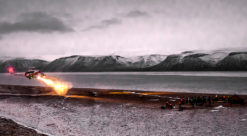
Help is not just a phone call away if you have an accident in the Arctic. That’s why the far northern Norwegian archipelago of Svalbard is establishing an educational and research centre for Arctic safety.
Stephen Hawking will come to Norway this summer as the star speaker at the Starmus Festival, scheduled for 18-23 June in Trondheim.

You might think that polar bears— and the potential for attack— are the biggest danger on the Norwegian island archipelago of Svalbard. But avalanches kill far more people on Svalbard than polar bears ever have.
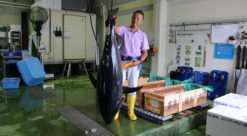
The Japanese eat one in ten of the world’s fish, and 80 per cent of the planet’s prized —and critically threatened — Bluefin tuna. Tuna aquaculture pioneered at Kindai University in Japan offers hope for both fish lovers and the fish.

Women regret saying yes to casual sex much more often than men do. Men – almost exclusively – regret saying no. Why?
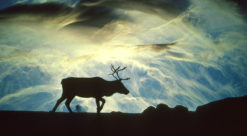
Every schoolchild knows about Rudolph the Reindeer and his magic red nose. But Rudolph’s real-life counterparts really do have a magic nose. The colder it is, the better it is in keeping the animals warm and hydrated.

Advances in our understanding of the developmental history of plants is turning botanical gardens worldwide on end.
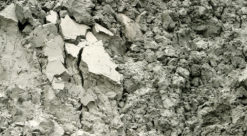
By controlling a mix of clay, water and salt, Norwegian and Brazilian researchers have created nanostructures that might help boost oil production, expand the lifespan of certain foods or that could be used in cosmetics or drugs.