Just one degree can change a species
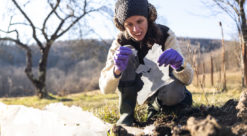
Even seemingly small changes in the climate can change the number of animals and plants in an area and how species behave, new research shows. Natural history collections provide valuable insights.

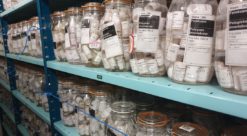
Even seemingly small changes in the climate can change the number of animals and plants in an area and how species behave, new research shows. Natural history collections provide valuable insights.
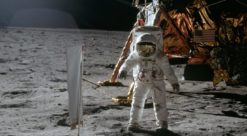
The Moon’s atmosphere is entirely devoid of oxygen. If humans want to stay there for extended periods, it will be of great benefit to make breathable oxygen there instead of having to transport it from Earth. But is this at all possible?
The total contribution to wealth creation from the Norwegian marine fishing fleet in 2021 was NOK 32.8 billion, including ripple effects.
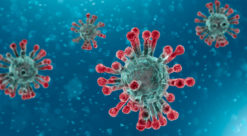
The ability of gold particles to reflect light in different colours is used in applications from stained glass to pregnancy tests. Now researchers are set to exploit the same properties in an ultra-fast sensor for the coronavirus.
The view that natural gas can act as an eco-friendly bridge in the transition from our use of coal to renewable energy has experienced a renaissance in the wake of the European war. Thus, the time is right to review the data behind the politics.
The fisheries and aquaculture sectors are major users of plastics. A research project has recently been launched to investigate how these plastics can be recycled and made into new products.
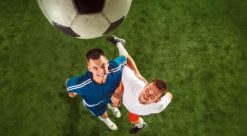
Big football clubs in the UK often have their own sports psychologists for the players. But can the players trust that their confidential conversations won’t be shared with management?
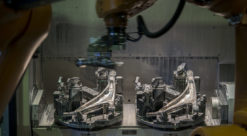
A new Norwegian technology is enabling the removal of an entire process stage from car component production lines. It makes the cars less expensive, more eco-friendly and faster to manufacture.
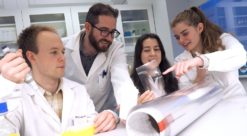
Plastic is useful but also poses an environmental problem. Scientists are now using enzymes from bacteria and fungi to break down plastic.
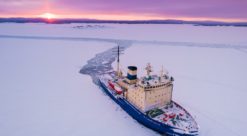
This summer, a coalition of researchers led by the Norwegian University of Science and Technology reported the first-ever use of a fibre-optic cable network to eavesdrop on whales in the Arctic. Now they suggest these networks be used to establish a low-cost global ocean-earth observatory.
The Norwegian government is committed to reducing greenhouse gas emissions by 55 per cent by 2030. This will involve dramatic changes to the electricity grid system.

There’s been no lack of scandals in the IT industry. When NAV, the Norwegian Labour and Welfare Administration, experienced difficulties in the middle of a major project, they changed their methods – and came up with a successful solution.
What should leaders in academia do to improve their gender balance? A new toolbox will help answer that.
A stroke of serendipity, courtesy of the weather gods, will save the Norwegian offshore wind sector from the intermittent moods of windpower. But only if wind farms are distributed across large geographical areas.
Paradoxical maybe, but it’s what often happens in the health services: When you ask for an MRI to be on the safe side, your uncertainty increases.
Linguistic logic rooted in classical philosophy can help us in our search for future eco-friendly materials.
Researchers are currently working to improve the recycling system for agricultural plastics. Their aim is that more plastic shall be recovered and recycling made simpler and more effective.
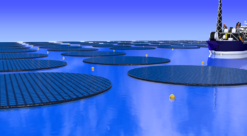
Covering less than ten per cent of the world’s hydropower reservoirs with floating solar panels would yield as much energy as all hydropower does today, one researcher says.

Are you getting fat from playing way too many computer games? If so, we have good news for you. The game of BitPet requires you to move around in order to do well.
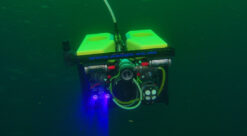
Artificial intelligence can be of great benefit underwater and SINTEF, in collaboration with the research centre SFI Exposed, is developing systems that will help to boost fish farm safety and security under harsh sea conditions.
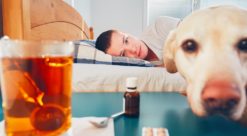
Smart gadgets in the home might soon be able to tell you what’s wrong with you. But the technology is good news for a lot of other things too.

The transition from junior to senior football is a big one. Researchers have identified some of the biggest stressors for athletes who want to continue playing football at the elite level.
Working from home is here to stay. And this makes team building more important than ever. Recent research demonstrates that making employees’ working lives more flexible may also erode their loyalty.

Now it’s well documented: forest therapy is an effective and simple method for dealing with something many people struggle with.
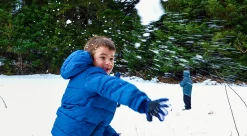
Children engage in rough play today, just like they did in the past. What’s the same and what has changed? Researchers have taken a closer look and have a clear recommendation for today’s parents and kindergarten and school staff.
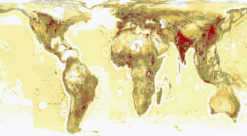
Cattle farming has often been portrayed as having the most detrimental environmental impact because it takes the most grazing land, uses a lot of water and has large methane emissions. But it’s not the worst. And is locally produced food always best for the environment?

Autonomous aerial and ground-based robots have been designed to do the work needed to protect critical infrastructure – quicker and more cheaply than traditional methods.

People have always been fascinated by real-life crime mysteries. True crime has become a popular genre in films, TV series, podcasts and books. The 19th century also had its own way of cultivating the genre.
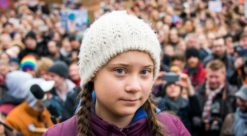
Norwegian youth from all over the country and across social affiliation point to teen activist Greta Thunberg as a role model and source of inspiration for climate engagement.
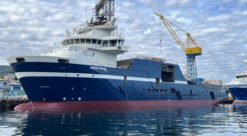
The Arctic Pearl is setting course for the Barents Sea in search of the shellfish delicacy Iceland scallop. It is the first and only vessel of its kind, crammed with new technology that may herald the start of a new era in bottom fishing.

The youngest children in a school grade are diagnosed with ADHD almost twice as often as the oldest in the class. The most widespread use of ADHD medication is among children who were born prematurely.
If only the Norwegian building and construction industry would embrace a little more digitalisation, this alone would enable Norway to achieve its 2023 emissions target agreed with the EU.