Now we know which airline routes pollute the most
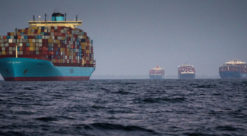
Norwegian greenhouse gas emissions from air traffic are more than twice as high as the worldwide average.


Norwegian greenhouse gas emissions from air traffic are more than twice as high as the worldwide average.
How does the chain of suppliers impact on a company’s climate footprint? This is a key question and, according to a recently established entrepreneur in the field, Norwegian know-how stands ready to offer the world the answer.
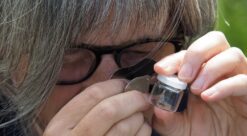
DNA from European species is being collected in an open reference work. Norway’s contributions are well underway.
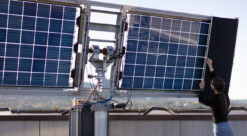
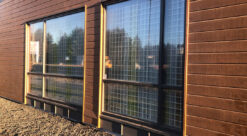
Solar energy is good news for planet Earth – but solar panels are not as climate-friendly as they should be. Researcher Martin Bellmann is using what he calls the ‘black gold’ waste materials from solar panel manufacture to make new panels.
Waste slags from the metallurgy industries often contain valuable materials, but in very small concentrations. This means that large areas of valuable land are used to accommodate reservoirs filled with what is sometimes toxic waste. We now want to use hydrogen to convert this waste into a resource.
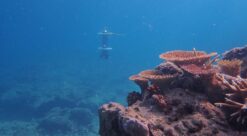
Australia has a seafloor monitoring program where they can precisely surveil the changes in the environment. NTNU has attracted one of the key researchers from this project. Oscar Pizarro’s research goal is to find tools to facilitate continuous observation with less resources.
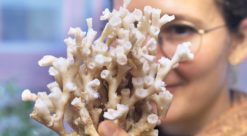
Lena van Giesen, an associate professor at NTNU’s Department of Biology, was awarded EUR 1.7 million by the European Research Council (ERC) to study larval development of the coral Lophelia pertusa as well as its environment.
Research scientist Trine Moholdt at the Norwegian University of Science and Technology (NTNU) has been awarded an ERC Starting Grant from the European Research Council (ERC). She will study how exercise impacts breast milk composition.

What are people’s attitudes towards food, sustainability, new foods and food additives? Researchers have found some answers.

Scientists have now found out how to optimise the functional and aesthetic character of the world’s first fully electric high-speed ferry. The aim is to persuade passengers to opt for fossil-free transport.
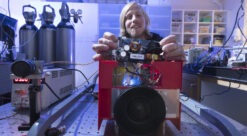
There is a lot of space junk orbiting the Earth. Norwegian researchers believe that in the future, there will be a market for its removal and have developed an entirely new type of robot vision that will make this possible. This has stimulated the interest of the ESA.
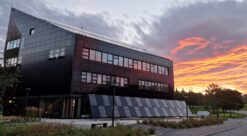
How scientists and engineers across the globe — and at NTNU — are harnessing unlikely materials to cut greenhouse gas emissions.
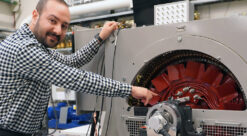
By listening to electric machines’ magnetic fields, faults can be detected that could prevent potential disasters with electric vehicles. The new method could also save power producers large sums of money.
During the next three years, a team of researchers will be developing a system designed to protect floating solar farms in the harshest ocean environments.
Blind faith in data as a perfect reflection of reality is causing many businesses to make decisions on false premises.

People in good physical shape are less likely to need a sleeping pill prescription from their doctor. This suggests that being fit can help you sleep better.
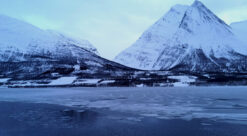
Norwegian fjord and coastal ice represent a potential security threat, as it may cut off entire communities from the outside world.
Not only are they high above us – they also offer us great benefits. From SINTEF’s new solar panel laboratory, you can see all across the city of Trondheim. Here, conditions are optimal for research into solar panel performance at Nordic latitudes.

Over three hundred Norwegians experience temporary memory loss each year, but the cause has until now been difficult to discern with brain scans. A super magnet costing EUR 9.4 million gives hope that more people might be able to find out why they suddenly forgot everything.
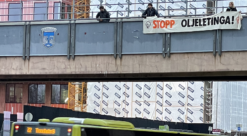
Tremendous floods in Pakistan earlier this year forced 600,000 pregnant women to leave their homes for safer ground. It was just one in a series of nearly unthinkable happenings caused by climate change — and a clear message that humankind has to do more to stop it.
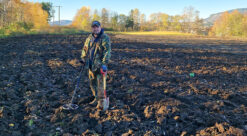
An exceptional find, says archaeologist Birgit Maixner at the NTNU University Museum.
The Norwegian school year start up again after another pandemic crisis year and with the ongoing war in Ukraine. Pupils’ experiences may be different, but all children are affected by these crises, some many years later.
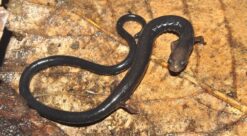
We know very little about very many species. Unfortunately, that’s often not a good sign.
Stroke patients who experience delirium during a stroke could be more prone to developing cognitive and psychiatric difficulties.
How can we ensure that everyone feels that they can cope and develop? This is just one of many challenges that employers have to address now that working from home is here to stay.

Is it safe to use treated wastewater to irrigate lawns and vegetable crops? This is the question now being addressed by researchers and the water industry.
How to know whether building materials are fit for reuse? A new guide can tell.

Individuals with severe obesity often reward themselves with food. Recent research shows that dieting is good for changing eating habits and weight. However, bariatric surgery has several advantages.
A game-based test that detects hearing loss in children has recently been awarded a European innovation medal. Both the test and the technology behind it have been developed by Norwegian researchers.
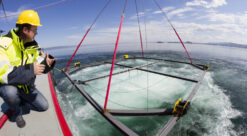
Norway has developed subsea technologies that you may never have heard of to ensure the safe operation of Norwegian oil and gas installations. Our experts are ready and waiting to assist in the Baltic Sea.
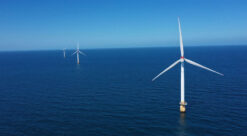
Norway needs to take proactive steps to retain its lead in developing floating offshore wind, says NTNU professor.
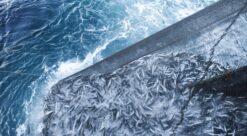
Researchers have succeeded in showing that mackerel turn blue when under stress. This new knowledge will better enable our fisheries to safeguard fish welfare and will optimise catch quality into the bargain.