A new invention may be on the verge of replacing a costly cranial surgical procedure currently being performed on some traffic accident victims and other patient groups. The ultrasound-based technology has now been granted CE approval for the European market.
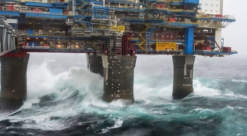
Strong storms can trigger steep, breaking waves that slam into platforms and wind turbines with tremendous force. Scientists at NTNU and SINTEF are studying the behaviour of offshore structures subjected to these kinds of waves. Their goal is to increase safety at sea.
Large cost cuts are achievable for both floating and bottom-fixed wind farms in the future. If we do this correctly, floating wind turbines will be able to compete with bottom-fixed wind turbines by 2030.
Relatively simple adaptation could make the cargo ships of the future completely green. The technology is based on the chemical compound ammonia, some extensive number crunching and one or two engine modifications.
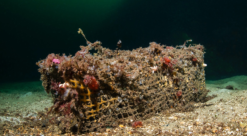
Ghost fishing and plastic waste from the fisheries industry is becoming a major environmental problem. Can we address the issue by using degradable plastics? Scientists at a new research centre are aiming to find the answers and develop the systems we need.
Intelligent food handling by robots can boost productivity and reduce waste in the production chain. Meet the robot with visual and tactile sensing, capable of handling compliant food objects.
The sun shines just as much out at sea as it does on land. There are also no restrictions on area use and seawater even helps to cool the solar panel technology. It’s only a matter of time before the first floating solar energy farms are installed at sea.
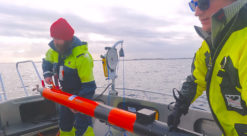
The microscopic, free-floating algae called phytoplankton — and the tiny zooplankton that eat them — are notoriously difficult to count. Researchers need to know how a warming climate will affect them both. A new kind of smart, lightweight autonomous underwater vehicle (LAUV) can help.
Researchers have studied the energy consumption of 140 hotels in Norway and Sweden. The use of CO2 heat pumps could cut energy consumption in these hotels by about 60 per cent.
The Covid-19 pandemic has forced companies to change the way they organise their day-to-day activities. Many people find working from home no problem at all. According to researchers, there is little to suggest that these changes will be reversed once the pandemic is over.
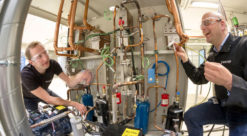
Researchers working with industrial partners have developed the world’s first heat pump producing temperatures of up to 180 degrees celcius. Such record high temperatures will enable one fifth of European industry to reduce its energy consumption by up to 70 percent, and become entirely climate neutral.
Research scientists in Norway recently set out on a scientific cruise in the Trondheim fjord to collect water samples and specimens of marine species. What they stumbled over was quite different from what they were looking for.
What’s needed to be able to safely send a vessel to sea with no crew? How will these vessels detect a kayaker or a recreational boat that drifts into the course of the unmanned vessel? A new Centre for Research-Based Innovation, SFI AutoShip, will look for answers to these questions – and more.
For more than 100 years, we’ve known that some metal alloys become stronger by being kept at room temperature. But we haven’t understood all the details – until now.
Land-based fish farming offers many benefits to both the fish and the environment. In traditional offshore farms, the fish are vulnerable to sea lice infestation and infectious diseases. Modern land-based aquaculture systems are able to offer local fish products in landlocked countries.
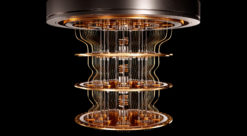
The race is on to get Norway ready for the next big technology revolution – quantum computers, and the first Norwegian centre for quantum technology is being rolled out.
Ten cubic kilometres of concrete, equivalent to the volume of Mount Everest, are used in construction projects every year, resulting in huge volumes of emissions. But a new eco-friendly cement may help to reduce our global climate footprint.
The circular economy can boost profits in the water management sector, and at the same time provide farmers both in Norway and around the world with cheaper fertiliser.
A team of researchers studying our footprint in the Arctic has taken samples of marine animals and wastewater linked to tourism. Their findings have revealed surprising levels of pharmaceutical drugs.
The Privacy Statement is about how this website collects and uses visitor information. The statement contains information that you are entitled to when collecting information from our website, and general information about how we treat personal data.The legal owner of the website is the processing officer for the processing of personal data. It is voluntary for those who visit the web sites to provide personal information regarding services such as receiving newsletters and using the sharing and tip services. The treatment basis is the consent of the individual, unless otherwise specified.
1. Web analytics and cookies (cookies)
As an important part of the effort to create a user-friendly website, we look at the user pattern of those who visit the site. To analyze the information, we use the Google Analytics analysis tool.Google Analytics uses cookies (small text files that the site stores on the user's computer), which registers the users' IP address and provides information about the individual user's online movements. Examples of what the statistics give us answers to are; how many people visit different pages, how long the visit lasts, what websites users come from and what browsers are used. None of the cookies allow us to link information about your use of the site to you as an individual.The information collected by Google Analytics is stored on Google servers in the U.S.. The information received is subject to the Google Privacy Policy.An IP address is defined as a personal information because it can be traced back to a particular hardware and thus to an individual. We use Google Analytics's tracking code to anonymize the IP address before the information is stored and processed by Google. Thus, the stored IP address can not be used to identify the individual user.
2. Search
If the webpage has search function, it stores information about what keywords users use in Google Analytics. The purpose of the storage is to improve our information service. The search usage pattern is stored in aggregate form. Only the keyword is saved and they can not be linked to other information about the users, such as the IP addresses.
3. Share / Tips service
The "Share with others" feature can be used to forward links to the site by email, or to share the content of social networking. Tips for tips are not logged with us, but only used to add the tips to the community. However, we can not guarantee that the online community does not log this information. All such services should therefore be used wisely. If you use the email feature, we only use the provided email addresses to resend the message without any form of storage.
4. Newsletter
The website can send out newsletters by email if you have registered to receive this. In order for us to be able to send e-mail, you must register an e-mail address. Mailchimp is the data processor for the newsletter. The e-mail address is stored in a separate database, not shared with others and deleted when you unsubscribe. The e-mail address will also be deleted if we receive feedback that it is not active.
5. Registration, form
The website may have a form for registration, contact form or other form. These forms are available to the public to perform the tasks they are supposed to do.Registration form is for visitors to sign up or register.Contact form is for visitors to easily send a message to the website's contact person.We ask for the name of the sender and contact information for this. Personal information we receive is not used for purposes other than responding to the inquiry.The form is sent as email via Mailgun as a third party solution. The entire submission will be stored at Mailgun for 24 hours. Between 24 hours and 30 days, only mailheader is stored before the submission is deleted after 30 days. The reason for this storage is to confirm whether emails are sent from the website and forwarded to the correct recipient.Once the email is received by the recipient, it is up to the recipient to determine the data processing needs of the email.
6. Page and service functionality
Cookies are used in the operation and presentation of data from websites. Such cookies may contain language code information for languages selected by the user. There may be cookies with information supporting the load balancing of the system, ensuring all users the best possible experience. For services that require login or search, cookies can be used to ensure that the service presents data to the right recipient.