How do you create buildings that can withstand the most extreme stress loads?
An explosion can hurtle fragments and debris at enormous velocities so they strike the surroundings. Then comes the shock wave. It’s a scary combination.

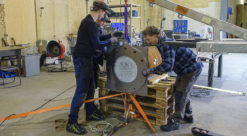
An explosion can hurtle fragments and debris at enormous velocities so they strike the surroundings. Then comes the shock wave. It’s a scary combination.
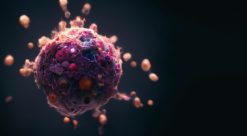
Peritoneal cancer is difficult to treat and has a poor survival prognosis. But a new and effective nanomedicine delivery system is offering some hope.

Energy consumption in buildings can be reduced by predicting their actual heating needs.
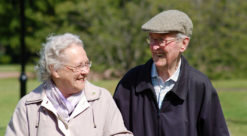
A recent large study suggests that being divorced or single increases the risk of dementia. But the researchers also discovered some surprising results.
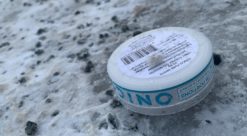
Don’t tell me that you haven’t noticed them. Empty snuff boxes littered all over our streets and parks. But instead of being just rubbish, they can now be recycled to make new products.

Women often participate in non-violent demonstrations, and they can be of crucial importance. But what is now happening in Iran stands out from other popular uprisings.
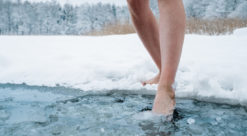
Is it healthy to take a cold dip in winter? Is it true that most heat loss occurs through the head, and can we get ill if our legs get cold? Here is a summary of our researcher’s answers.

Many children struggle with reading. A new method offers hope. The focus is on giving children the right challenges.
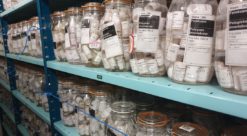
Even seemingly small changes in the climate can change the number of animals and plants in an area and how species behave, new research shows. Natural history collections provide valuable insights.
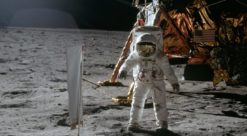
The Moon’s atmosphere is entirely devoid of oxygen. If humans want to stay there for extended periods, it will be of great benefit to make breathable oxygen there instead of having to transport it from Earth. But is this at all possible?
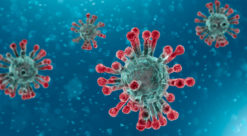
The ability of gold particles to reflect light in different colours is used in applications from stained glass to pregnancy tests. Now researchers are set to exploit the same properties in an ultra-fast sensor for the coronavirus.

Big football clubs in the UK often have their own sports psychologists for the players. But can the players trust that their confidential conversations won’t be shared with management?
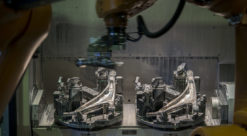
A new Norwegian technology is enabling the removal of an entire process stage from car component production lines. It makes the cars less expensive, more eco-friendly and faster to manufacture.
Plastic is useful but also poses an environmental problem. Scientists are now using enzymes from bacteria and fungi to break down plastic.

This summer, a coalition of researchers led by the Norwegian University of Science and Technology reported the first-ever use of a fibre-optic cable network to eavesdrop on whales in the Arctic. Now they suggest these networks be used to establish a low-cost global ocean-earth observatory.

There’s been no lack of scandals in the IT industry. When NAV, the Norwegian Labour and Welfare Administration, experienced difficulties in the middle of a major project, they changed their methods – and came up with a successful solution.

What should leaders in academia do to improve their gender balance? A new toolbox will help answer that.
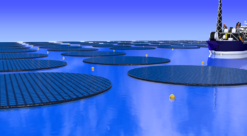
Covering less than ten per cent of the world’s hydropower reservoirs with floating solar panels would yield as much energy as all hydropower does today, one researcher says.

Are you getting fat from playing way too many computer games? If so, we have good news for you. The game of BitPet requires you to move around in order to do well.

Smart gadgets in the home might soon be able to tell you what’s wrong with you. But the technology is good news for a lot of other things too.

The transition from junior to senior football is a big one. Researchers have identified some of the biggest stressors for athletes who want to continue playing football at the elite level.

Now it’s well documented: forest therapy is an effective and simple method for dealing with something many people struggle with.

Children engage in rough play today, just like they did in the past. What’s the same and what has changed? Researchers have taken a closer look and have a clear recommendation for today’s parents and kindergarten and school staff.
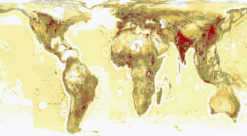
Cattle farming has often been portrayed as having the most detrimental environmental impact because it takes the most grazing land, uses a lot of water and has large methane emissions. But it’s not the worst. And is locally produced food always best for the environment?