All you need to know about saving a life out in the cold
Why are cold temperatures so dangerous if you have an accident? And why is it that cold temperatures enable some patients to survive without permanent harm?

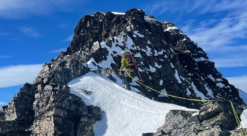
Why are cold temperatures so dangerous if you have an accident? And why is it that cold temperatures enable some patients to survive without permanent harm?
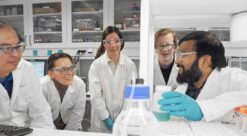
Electric cars are a growing market, and so are the large batteries they use. Often these batteries are difficult to recycle. But help is on its way.
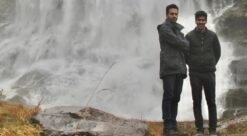
Managing hydropower production is complicated. Artificial intelligence can help ensure that we don’t run out of power.

Security holes in our smart devices are difficult to detect. Is it possible to automate the search for vulnerabilities? Researchers at NTNU in Gjøvik are on the case.
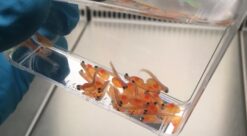
Bacteria-free fish fry put researchers on the track of how they could make fish more disease resistant.

Researchers are planning a solar energy plant that will capture ‘concentrated sunlight’ using mirrors. The plant will also be distinctive because it will generate both electricity and heat, which can be used to capture carbon dioxide.
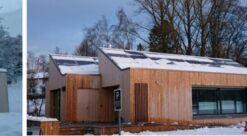
Norway has seen an increase in solar power capacity in recent years, but in winter solar panels face a big problem: snow. Researchers modelled how much extra electricity could be generated if solar panel surfaces were designed to repel snow and ice.
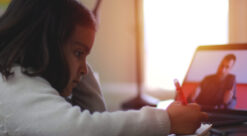
Are remote video consultations appropriate for treating children and young people under the care of the child welfare services? Therapists recognise a number of benefits, but most young people are critical of webcam-based therapy.

The magnets in wind turbines come from China, and the materials in our electric car batteries are for the most part sourced from Congo. Today, key minerals and metals are being transported to Europe from politically unstable countries far away. Is it possible to safeguard access to these raw materials here in Norway? In this article, we present three research-based strategies for addressing the problem.
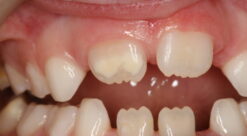
Many children have teeth that are practically falling apart due to weak enamel. Now researchers have studied whether a lack of vitamin D during pregnancy could be the culprit.
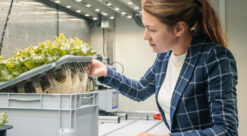
NASA has finished its planning and is ready to go. Humans will soon be returning to the Moon – this time in a manned base. But, if this project is to succeed, astronauts must be able to grow their own food. Norwegian researchers are in the process of making this possible.
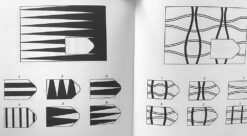
Seeing the similarity between graphic patterns or concepts can indicate whether a child has language difficulties.
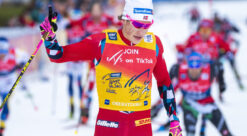
What we are seeing on our TV screens has now been confirmed by science. Johannes Høsflot Klæbo ticks all the boxes defined by researchers looking for the most important factors needed for success in mass start cross-country ski racing.
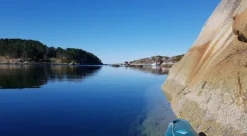
Hydrogen is found in large quantities on Earth, can be used in many contexts and is being promoted as an important solution in the transition to climate-friendly energy. But hydrogen investment also generates heated debate. So what’s the deal with hydrogen?
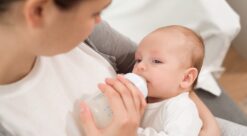
Many infant formulas purport to be healthy in several ways. But the evidence is often razor thin. The companies usually manage the research themselves.

Perhaps you’ve heard about it and are wondering exactly what the EU taxonomy is – and what it really means. SINTEF researcher Mathias Irgens is ready with an explanation.

For some children with obsessive-compulsive disorder, therapy via the internet and apps can be more effective than physically attending treatment sessions.

Never before have more people been displaced. How should schools receive youth with a refugee background whose experience is that their opinion has no value?
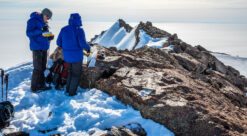
The ice sheet in Queen Maud Land in East Antarctica is not stable. Large amounts of ice have melted in the past, most recently as 5,000 years ago.

Sometimes you become so absorbed in a task that you forget everything else. We call it finding the flow. A new test can measure it.
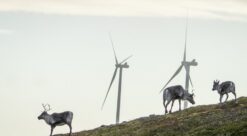
Wind turbines are contributing to the Southern Sámi losing grazing land for their reindeer husbandry. This livelihood is central to the identity of the Southern Sámi culture and thus to their language, researchers say.
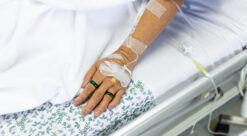
It has taken 18 years, but Professor Marit Otterlei has now created a completely new type of cancer medicine. No similar medication has progressed this far in development worldwide.
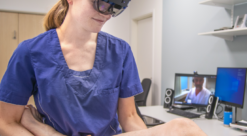
Imagine being treated ‘in hospital’ via an advanced VR headset! Researchers are now making this possible with the help of local ‘health rooms’ and so-called ‘augmented reality’. Results from their experiments have so far proved to be quite promising.
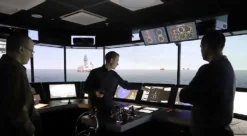
The risk of cyber attacks against a ship is real. The working crew on board must be allowed to practice handling these risks in a realistic way. Now they can.