Active control of wind turbine speed can lead to fewer bird strikes
Norwegian researchers are currently developing wind turbines that can adapt their blade rotation speeds to prevent bird strikes.

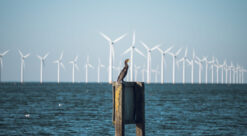
Norwegian researchers are currently developing wind turbines that can adapt their blade rotation speeds to prevent bird strikes.
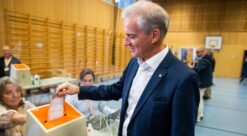
More people are taking advantage of early voting than before. But the impact on the elections is not exactly what politicians had hoped for.
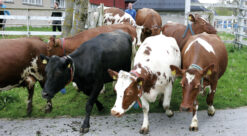
Researchers have developed a new method of detecting a metabolic disease that affects dairy cows after calving. The aim is to determine whether cows are at risk of contracting the disease before they actually become sick.

Teachers should encourage more debate in the classroom. Practicing discussions can help pupils to master situations where they disagree.
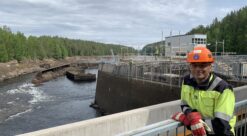
SINTEF researcher Marcell Szabo-Meszaros is the man behind the international study ‘Hydropower and Fish – a Roadmap for Best Practice Management’, which offers guidelines on fish population protection in rivers to companies carrying out hydropower developments.

Exercising can be absolutely awful. However, none of our excuses matter when it comes to the health benefits. The benefits go beyond physical health —exercise also has a major impact on mental health.

Arctic researchers have travelled north to study ice and life in the Arctic Ocean. They discovered a creature at a depth of 3500 metres, a “dumbo octopus” dancing in the deep waters in a ballerina’s skirt.

Many children and young adults spend a lot of time on social media, much to the concern of their parents and guardians. Researchers at NTNU have now taken a closer look at the impact of using social media such as Instagram, Snapchat and TikTok on young people’s mental health.
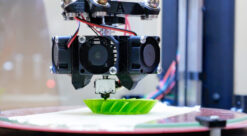
In recent years, 3D printing has exploded in popularity, and may open a new era of faster and more climate-friendly manufacturing. But is it really the manufacturing method of the future?
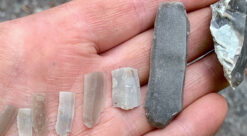
When archaeologists recently carried out an excavation at Vinjeøra in southern Trøndelag County, they made a surprising discovery that they had only dreamed of finding.

Solid-state batteries may be the perfect solution for electric cars of the future. Researchers in Norway are making these batteries better.
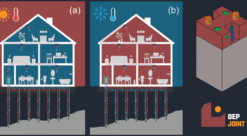
Using a completely new piling joint, geothermal heat can be extracted directly via the piles used to anchor buildings in the ground. The invention makes it easier, quicker, cheaper and safer to use environmentally friendly energy.

“A sense of community between generations will be key to ensuring sustainable coastal communities. The importance of children’s learning through work is underestimated,” says Professor Anne Trine Kjørholt.

The number of lemmings varies greatly from year to year. Other species also have similar fluctuations. Why is it like this, and what happens if lemming years happen less often?
A physical suggestion box doesn’t work in 2023. So why not just create a Facebook group or set up an e-mail address? Because there’s another option, which we’ll tell you more about now.
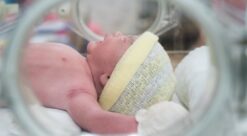
“Doctors should look at the length of pregnancy in patients with respiratory problems,” says researcher Kari Risnes. But if you were born before your due date, you can take some measures yourself to prevent lung infections.
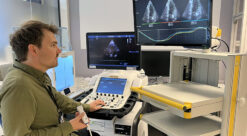
If anything goes wrong with your heart, it is critical to get the right treatment quickly. Artificial intelligence can help with just this – and more lives can be saved.
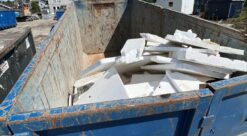
Tonnes of reusable polystyrene ends up as plastic waste when buildings are demolished. Researchers want to see more recycling and reuse.
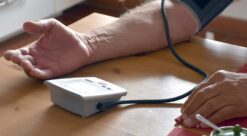
Hypertension affects one billion people and is considered the number one cause of death worldwide. Mass testing of genetic variants can now shed light on the cause of high blood pressure.

In Norway, girls are much better at reading than boys. But girls and boys perform equally well when using a new teaching method.

The Norwegian government has proposed opening an area of the continental shelf to deep sea mining. NTNU researchers have worked for more than a decade on this issue. They say we have much to learn before Norway can decide if this can become a viable industry.
There is enormous potential in the aquaculture sector to generate circular economy initiatives when it comes to its use of plastics. But can these be made commercially viable? Researchers believe that they can.

We were through the roof with excitement when the first ship rivet was found, says archaeologist Geir Grønnesby at the NTNU University Museum

Do we discriminate against people with foreign-sounding names? A clever experiment with fictional girls who wanted to play football yields some answers that might surprise you.