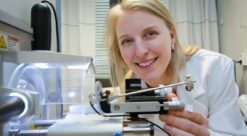
The use of stem cells now makes it possible for us to cultivate so-called organoids, such as tiny versions of a liver, heart or small intestine, in the lab. These micro-organs can then be connected to a microchip that simulates the body’s biological processes. This ‘organ-on-a-chip’ technology opens the door to previously undreamt-of research possibilities.
Hundreds of thousands of pilgrims make use of Europe’s many pilgrimage walks every year. However, travellers tend to visit only a few of the attractions along the routes. The EU project “rurAllure” aims to attract travellers to lesser-known sites of interest.
Online abuse of children has increased considerably in recent years. Technological advances and inadequate legal regulation are driving this development, according to a new Norwegian report.
Municipalities were given more responsibility for specialist health services in 2012. The changes appear to have resulted in better healthcare for the elderly.
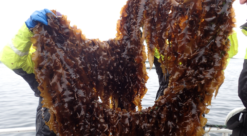
Seaweeds cultivated in the sea off the coast of Trøndelag, Norway will be converted into biocoal and used to improve agricultural land. A new method for carbon capture and storage is now being trialled by Norwegian researchers.
Everlasting concrete is here! It requires no maintenance, and its manufacture emits 80 per cent less CO2 than current products. And just recently, its inventors have been awarded a research prize for their achievement.
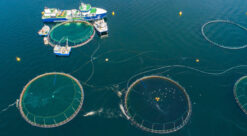
The aim is to extract the most efficient performance from all the various vessels utilised by the aquaculture sector at facilities exposed to rough seas and strong currents. Researchers have been looking into all aspects of this issue.
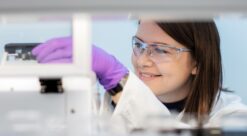
The fact that our immune systems capture and destroy nanoparticles and the drugs they carry has been a problem in the field of nanomedicine for some time. But, in the fight against cancer, researchers are now attempting to exploit this problem to their advantage.
These smart glasses first tell you what to do, then check that you’re doing it right, while constantly making sure that you aren’t getting too tired. Future aircraft are among the products that will be manufactured with the help of this innovative Norwegian technology.
Researchers at NTNU have found a way to make gold nanoparticles with a uniform size and shape, opening up the possibility of finding more effective photocatalysts
Assigning marks in Grade 7 can have negative effects. A new study shows that the practice can affect pupils’ academic performance and how they experience the transition to secondary school.
Recycling is the guiding principle behind the new Voldsløkka school and Culture Centre. Pupils are taking part in an art project as their contribution to the research project called ARV.
Approximately 47 000 different species have been identified in Norway – and there are probably many more. A new tool can help us gain a better overview.
Fossil fuel vehicles gulp down petrol, and electric cars gobble up minerals. The battery industry is so ravenous for lithium as a raw material that researchers believe the demand could threaten climate goals.
It’s not true that women are subjected to sexual double standards, researchers say. Most people tend to be more liberal than they think other people are. But not all behaviour is OK.
After examining 298 patients with cardiac arrest, researchers found that ECG markers can provide a clue as to how the treatment is working — as much as four to five minutes into the future.
The plant is called common ragweed, and if you are allergic to pollen, you should probably pay extra close attention. This is one of the invasive plants that supergenes have brought to Norway.
The Privacy Statement is about how this website collects and uses visitor information. The statement contains information that you are entitled to when collecting information from our website, and general information about how we treat personal data.The legal owner of the website is the processing officer for the processing of personal data. It is voluntary for those who visit the web sites to provide personal information regarding services such as receiving newsletters and using the sharing and tip services. The treatment basis is the consent of the individual, unless otherwise specified.
1. Web analytics and cookies (cookies)
As an important part of the effort to create a user-friendly website, we look at the user pattern of those who visit the site. To analyze the information, we use the Google Analytics analysis tool.Google Analytics uses cookies (small text files that the site stores on the user's computer), which registers the users' IP address and provides information about the individual user's online movements. Examples of what the statistics give us answers to are; how many people visit different pages, how long the visit lasts, what websites users come from and what browsers are used. None of the cookies allow us to link information about your use of the site to you as an individual.The information collected by Google Analytics is stored on Google servers in the U.S.. The information received is subject to the Google Privacy Policy.An IP address is defined as a personal information because it can be traced back to a particular hardware and thus to an individual. We use Google Analytics's tracking code to anonymize the IP address before the information is stored and processed by Google. Thus, the stored IP address can not be used to identify the individual user.
2. Search
If the webpage has search function, it stores information about what keywords users use in Google Analytics. The purpose of the storage is to improve our information service. The search usage pattern is stored in aggregate form. Only the keyword is saved and they can not be linked to other information about the users, such as the IP addresses.
3. Share / Tips service
The "Share with others" feature can be used to forward links to the site by email, or to share the content of social networking. Tips for tips are not logged with us, but only used to add the tips to the community. However, we can not guarantee that the online community does not log this information. All such services should therefore be used wisely. If you use the email feature, we only use the provided email addresses to resend the message without any form of storage.
4. Newsletter
The website can send out newsletters by email if you have registered to receive this. In order for us to be able to send e-mail, you must register an e-mail address. Mailchimp is the data processor for the newsletter. The e-mail address is stored in a separate database, not shared with others and deleted when you unsubscribe. The e-mail address will also be deleted if we receive feedback that it is not active.
5. Registration, form
The website may have a form for registration, contact form or other form. These forms are available to the public to perform the tasks they are supposed to do.Registration form is for visitors to sign up or register.Contact form is for visitors to easily send a message to the website's contact person.We ask for the name of the sender and contact information for this. Personal information we receive is not used for purposes other than responding to the inquiry.The form is sent as email via Mailgun as a third party solution. The entire submission will be stored at Mailgun for 24 hours. Between 24 hours and 30 days, only mailheader is stored before the submission is deleted after 30 days. The reason for this storage is to confirm whether emails are sent from the website and forwarded to the correct recipient.Once the email is received by the recipient, it is up to the recipient to determine the data processing needs of the email.
6. Page and service functionality
Cookies are used in the operation and presentation of data from websites. Such cookies may contain language code information for languages selected by the user. There may be cookies with information supporting the load balancing of the system, ensuring all users the best possible experience. For services that require login or search, cookies can be used to ensure that the service presents data to the right recipient.