Almost all pregnant women in Norway are worried
Pregnant women worry most about their baby’s health, having a miscarriage, and giving birth.
The short version
The studies include more than 1,400 pregnant women in Norway and were conducted using questionnaires distributed exclusively through Facebook and Instagram in early 2022.
Worries are very common among pregnant women, especially among first-time mothers and those facing financial challenges.
Pregnant women prefer to receive quality-assured information from healthcare professionals. Only two percent report using influencers or bloggers as a source of information.
As many as 99 per cent of pregnant women in Norway worry that something might be wrong with their baby.
First-time mothers and pregnant women who report financial insecurity worry the most.
“In principle, it is normal for pregnant women in Norway today to be worried,” said Bente Prytz Mjølstad. She is both an associate professor at NTNU and a general practitioner.
“We live in a country with the world’s best antenatal care, and seen in an international context, we have very healthy women. Very few women smoke or drink alcohol during pregnancy. The consumption of alcohol among pregnant women in Norway is among the lowest in the world. In view of the fact that we have such good healthcare services and such healthy pregnant women, the contrast with the level of worry among pregnant women is rather striking,” Mjølstad said.
Two former medical students at NTNU wrote a thesis on antenatal care. Mjølstad was their main academic supervisor, and an article based on this thesis was recently published.
- You might also like: Pregnant women with obesity talk about difficult childhood experiences
The jungle of information can exacerbate worry

Only two percent of pregnant women report using influencers or bloggers as a source of information.
“In our study, this group ranked very low on the list of information sources that pregnant women rely on. As a doctor, I find that reassuring”, says Bente Prytz Mjølstad, associate professor at NTNU. Photo: Kai T. Dragland, NTNU
The studies involved over 1400 pregnant women in Norway and were conducted using a questionnaire that was only distributed via Facebook and Instagram in early 2022.
It shows that worries are very common, especially among first-time mothers and women who are struggling financially.
“I have been a GP for more than 20 years and have felt for quite a while that pregnant women are more worried than before. Our study confirms what I have observed as a doctor,” Mjølstad said. She observed that much of the research previously conducted on this topic is several decades old.
She believes that the vast digital jungle of information may be a factor that increases worry rather than alleviates it.
“Knowledge about the connections between an expectant mother’s lifestyle and how it affects her baby’s health has increased. In principle, that is a good thing. But there are also a lot more precautionary measures and advice for pregnant women, and there is much greater focus among health professionals on providing lifestyle recommendations at the earliest opportunity. At the same time, all of this may have led to increased worry among pregnant women, who can feel overwhelmed by all the information. Pregnant women also gather a lot of information themselves from social media, apps and websites,” Mjølstad said.
She explains that there is overuse of antenatal check-ups compared to what is recommended in the healthcare system’s basic programme.
“On average, first-time mothers have the most check-ups – and far more than the recommended level,” said Mjølstad.
She believes that the findings from the study should be considered in connection with how health professionals engage with pregnant women.
- You might also like: Newborns’ clumsy arm movements show how smart they are
Overuse of antenatal check-ups
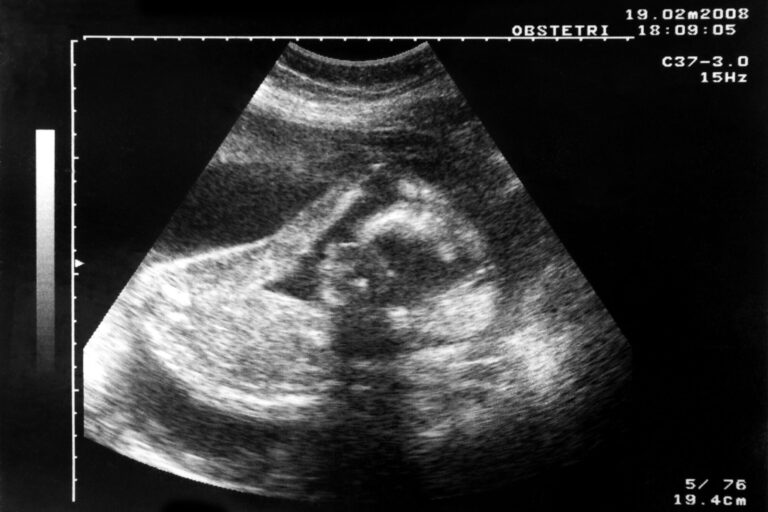
The fetus’s health is what worries pregnant women the most. Associate Professor Bente Prytz Mjølstad explains that especially first-time mothers tend to overuse prenatal checkups compared to what is recommended in the basic healthcare program. Illustrative photo: Colorbox
“I think that health professionals need to be even more aware that it is normal for pregnant women to feel worried. We need to be even more attentive and supportive in our communication with them,” Mjølstad said.
The study also found that pregnant women with limited finances reported more and greater worries.
“We asked the pregnant women if they would be able to pay an unexpected bill of NOK 10,000. Almost 17 per cent answered no. A question like this can reveal something about a person’s experience of financial security in life. We found that those women who were financially insecure were the most worried,” she said.
She believes that this can be interpreted in a number of different ways.
“If you are in a financially insecure situation, you may be especially worried about having a child with a disability, because this type of combination would make life even more challenging. I find it remarkable that this issue stands out so clearly in Norway, with its generous welfare system. The reasons behind it are complex, but financial challenges can certainly feel isolating and burdensome,” Mjølstad said.
The study also investigated the type of information pregnant women rely on.
Seeking quality-assured information
“Pregnant women prefer to receive quality-assured information from health professionals, either via a website or by contacting a doctor or midwife. In third place are apps, and in fourth and fifth place is information from friends and family,” said Mjølstad.
Only 2 per cent report using influencers or bloggers as a source of information.
“In our study, this group was way down at the bottom of the list of information sources that pregnant women rely on. As a doctor, that reassures me,” said Mjølstad.
After giving birth, other worries arise such as physical changes and breastfeeding. Financial insecurity is also a cause of worry for many women after they have given birth.
“It seems that financial insecurity exacerbates other worries both during pregnancy and after childbirth. It is thought-provoking that financial security plays such a crucial role in how this vulnerable phase of life is experienced – especially when we live in one of the world’s wealthiest countries with a well-developed welfare system,” concluded Mjølstad.
Source:
Hansen, M. H., Mørkved, H. S., Austad, B., Vie, G. Å., Getz, L. O., & Mjølstad, B. P. (2025).Worries and information seeking during pregnancy: a cross-sectional study among 1402 expectant Norwegian women active on social media platforms. Scandinavian Journal of Primary Health Care, 43(2), 488–499. https://doi.org/10.1080/02813432.2025.2461036