New findings could help develop computers that resemble your brain
Why on earth should you care that physicists have now filmed skyrmion lattices melting? Well, there are actually some very good reasons why.
In brief
- For the first time, researchers have filmed how a magnetic skyrmion lattice melts in real time, while being able to directly influence each individual skyrmion.
- Skyrmions are small magnetic vortices that can store information in a new and energy-efficient way, and could be central to future computer technology.
- The findings provide new insight into how skyrmions behave and could help develop more energy-efficient computers and storage systems.
- In the long term, the technology could enable computers that resemble biological brains, which use magnetism instead of transistors and require almost no electricity.
- This summary was created using artificial intelligence. It was then reviewed by a member of the editorial team.
Most people can go their entire lives without knowing what skyrmions are, and they generally get along just fine.
However, skyrmions are probably more useful than you think. New research on them has resulted in an article being published in the highly prestigious journal Nature Nanotechnology, making these nanoscopic discoveries a big deal.
The vast majority of the research has been carried out at the Institute of Physics at Johannes Gutenberg University in Mainz, but a professor at NTNU has also been involved.
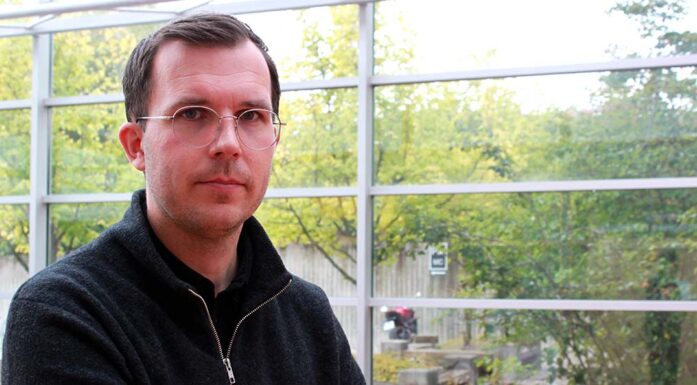
“Skyrmions are small, magnetic vortices that can store information in a completely new way,” explained Asle Sudbø, who is head of NTNU’s Centre for Quantum Spintronics (QuSpin).
These nanoscale vortices could help in the development of computers that resemble biological brains.
This means they could play a key role in developing the technology of the future.
“Instead of the current technology, where we constantly need more space and energy to process data, skyrmions could make it possible to build much smaller and more energy-efficient data storage systems,” explained Sudbø.
- You might also like: One step closer to quantum computers that work properly
Computers like biological brains

Asle Sudbø. Photo: NTNU
But more energy-efficient storage is not the only benefit; skyrmions are key to advanced fields such as spintronics and the study of topological quantum effects. Fortunately, you do not need to know what this is either, but some of it is very exciting – even for non-physicists.
“These nanoscale vortices could help develop computers that resemble biological brains,” said Sudbø.
These computers would then operate using magnetism instead of transistors, and would therefore require hardly any electricity.
But what exactly are the new findings?
- You might also like: The spiders that eat stars, and the scientists who catch them
Filmed skyrmion lattices melting
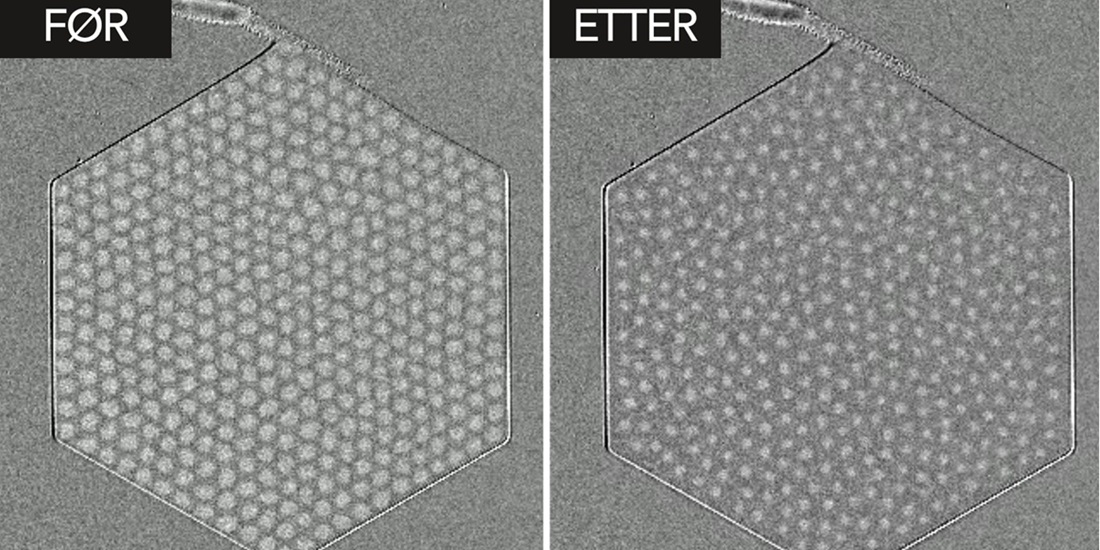
Skyrmions, which are magnetic vortices, often arrange themselves in a kind of lattice, almost like a crystal, but on a much smaller scale. Researchers can manipulate these lattices.
This is crucial if we are ever to be able to use them in new computer technology.
“For the first time, researchers have managed to film how a magnetic skyrmion lattice melts in real time, while simultaneously being able to manipulate each individual skyrmion directly as they film it. For example, both their shape and size can be changed ‘on the fly’,” said Sudbø.
You can download the video here: Skyrmion lattice melting
New tool to understand skyrmions
The fact that researchers can now see how the skyrmions react when the lattices collapse provides a new tool for controlling them more effectively.
This could revolutionize the way we think about computers.
“The findings give us new insight into how these types of particles behave. This could consequently become important in the development of more energy-efficient computer technologies in the future,” said Sudbø.
In the future, this line of research could contribute to everything from improved data storage to new quantum technology.
“This could revolutionize the way we think about computers,” Sudbø said.
Reference: Gruber, R., Rothörl, J., Fröhlich, S.M. et al. Real-time observation of topological defect dynamics mediating two-dimensional skyrmion lattice melting. Nat. Nanotechnol. (2025). Published. 04 August 2025. https://doi.org/10.1038/s41565-025-01977-2