Decommissioning old wind turbines generates thousands of tons of new waste
By 2040, up to 20,000 wind turbine blades could be landfilled or incinerated simply because we lack good ways to process them sustainably.
In brief
- The oldest offshore wind turbines in Europe are reaching the end of their expected useful life and are going to be dismantled in the coming years.
- At present, there are no good solutions for disposing of wind turbine blades in a sustainable manner.
- A recent NTNU study shows that the offshore wind industry is choosing the easiest, cheapest and most environmentally harmful options instead of sustainable recycling and reuse.
- If this continues, 20,000 wind turbine blades could be landfilled or incinerated in Europe by 2040.
- The NTNU study highlights factors that could enable the offshore wind industry to become part of a circular economy.
- It identifies six types of obstacles and presents 13 measures for overcoming them.
This summary was created using AI and was fact-checked by the human author.
Europe’s oldest offshore wind turbines are now being dismantled, after having delivered clean energy since the early 1990s.
Thse turbines have transformed offshore wind into clean power on land, but decommissioning the oldest creates new environmental problems. Over the next few years, Europe will have to dispose of up to 20,000 wind turbine blades, without any requirements for recycling the materials.
“In trying to use wind power to solve a major climate challenge, there is a risk that we have created new and even greater resource challenges,” said Pankaj Ravindra Gode.
Choosing the worst solutions

“Thousands of tons of valuable materials risk ending up in landfills or incineration plants if we do not take action to strengthen the circular economy,” says NTNU researcher Pankaj Ravindra Gode. Photo: NTNU
Gode recently completed a PhD at NTNU’s Department of Industrial Economics and Technology Management. His work is part of FME North Wind, and deals with how a circular economyAn economic system based on principles from natural ecosystems characterized by restorative cycles. The premise is that all resources have a use, and therefore no waste is created. Source: SNL can best be embraced by the offshore wind industry.
In a recent study, he and Associate Professor Øyvind Bjørgum demonstrate how the industry is opting out of sustainable, circular solutions such as recycling and reuse. Instead, they are choosing the easiest, cheapest and most environmentally harmful options – landfills and incineration.
“Landfills are the biggest problem because we end up throwing away enormous amounts of recyclable, reusable and valuable materials. Landfills sites also occupy large areas that become unusable for purposes such as agriculture.
Obstacles and solutions
The study is based on interviews with 21 stakeholders from across the entire value chain. It highlights factors that can drive the industry in a circular direction, what is hindering it, and measures that can help overcome those obstacles.
Five factors that can push the industry in the right direction
Economic: Working within a circular economy is commercially profitable because it requires fewer raw materials and reduces waste. High energy prices in recent years provide an incentive to extend the lifespan of products. Recycling metals and other materials generates economic gains.
Environmental: There is a need to recycle and reuse materials in order to meet future needs. The use of new raw materials has a high carbon footprint. Circularity reduces emissions. Challenges related to landfill are driving circular solutions.
Institutional: A landfill ban will encourage alternative processing methods. It will also encourage more collaboration on waste and solutions along value chains. Stakeholders and business partners demand sustainability.
Regulatory: Landfill bans on composite waste have been introduced in several countries. In some countries, the authorities support the establishment of circular facilities.
Market-related: Circular products create new markets and opportunities for industry.
This fact box was created using AI.
Estimated lifespan: 20–25 years
Wind turbines are usually decommissioned after 20–25 years, which is often the lifespan specified in contracts. Some wind turbines can operate for longer, but this depends on regulations, environmental factors and maintenance. Approximately 85 per cent of the parts in a wind turbine can be recycled or reused.
The exception, however, is the blades. They are made from composite materials, making them both lightweight and extremely strong. The downside is that their complex structure makes them difficult to recycle or reuse, and that is why they usually end up in a landfill.
A graveyard for wind turbine blades
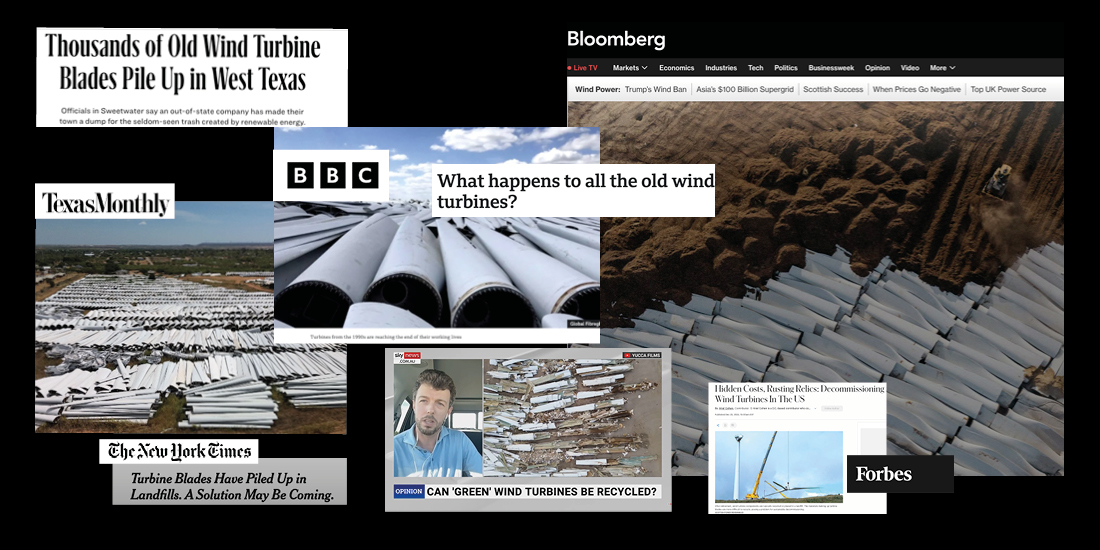
Shocking images from a municipal landfill site in Casper, Wyoming, USA triggered the alarm in 2020. The news and market data agency Bloomberg described the landfill site as a final resting place for wind turbine blades that “resemble bleached whale bones nestled against one another”.
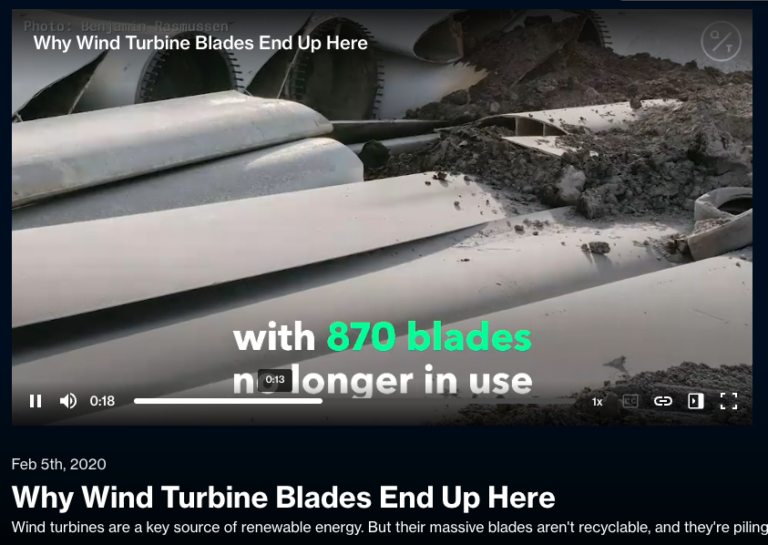
Screenshot, Bloomberg
The problem is that tens of thousands of ageing onshore wind turbines will be decommissioned within a few years. Most would end up in landfill sites because they could not be recycled.
Offshore wind is next
It’s now time for offshore wind turbines to be ready for decommissioning.
The world’s first offshore wind farm, Vindeby in Denmark, opened in 1991. It has previously been estimated that approximately 1800 offshore wind turbines will be decommissioned in Europe over the next four years. By 2040, this figure could rise to almost 20,000.
“The decommissioning and further processing of wind turbine blades is a real challenge,” said Marthe Michelsen Bottéri, communications manager at Havvind Norge.
She says that both the industry and research communities are actively working on this, referring to a company called Gjenkraft. This company has developed a technology to recycle and reuse materials such as glass and carbon fibre. Equinor, the Norwegian state energy company, is also collaborating with companies working on circular solutions and the reuse of composite waste.
“Unfortunately, not all companies are trying to implement circular solutions,” Michelsen Bottéri said.
Demanding better solutions
At present, these challenges primarily relate to foreign and European wind farms.
Norway’s first offshore wind farm, Hywind Tampen, only opened in 2023. The Sørlige Nordsjø II wind farm has been awarded, while Utsira Nord has been announced for tender. In addition, 20 other offshore wind areas are being assessed.
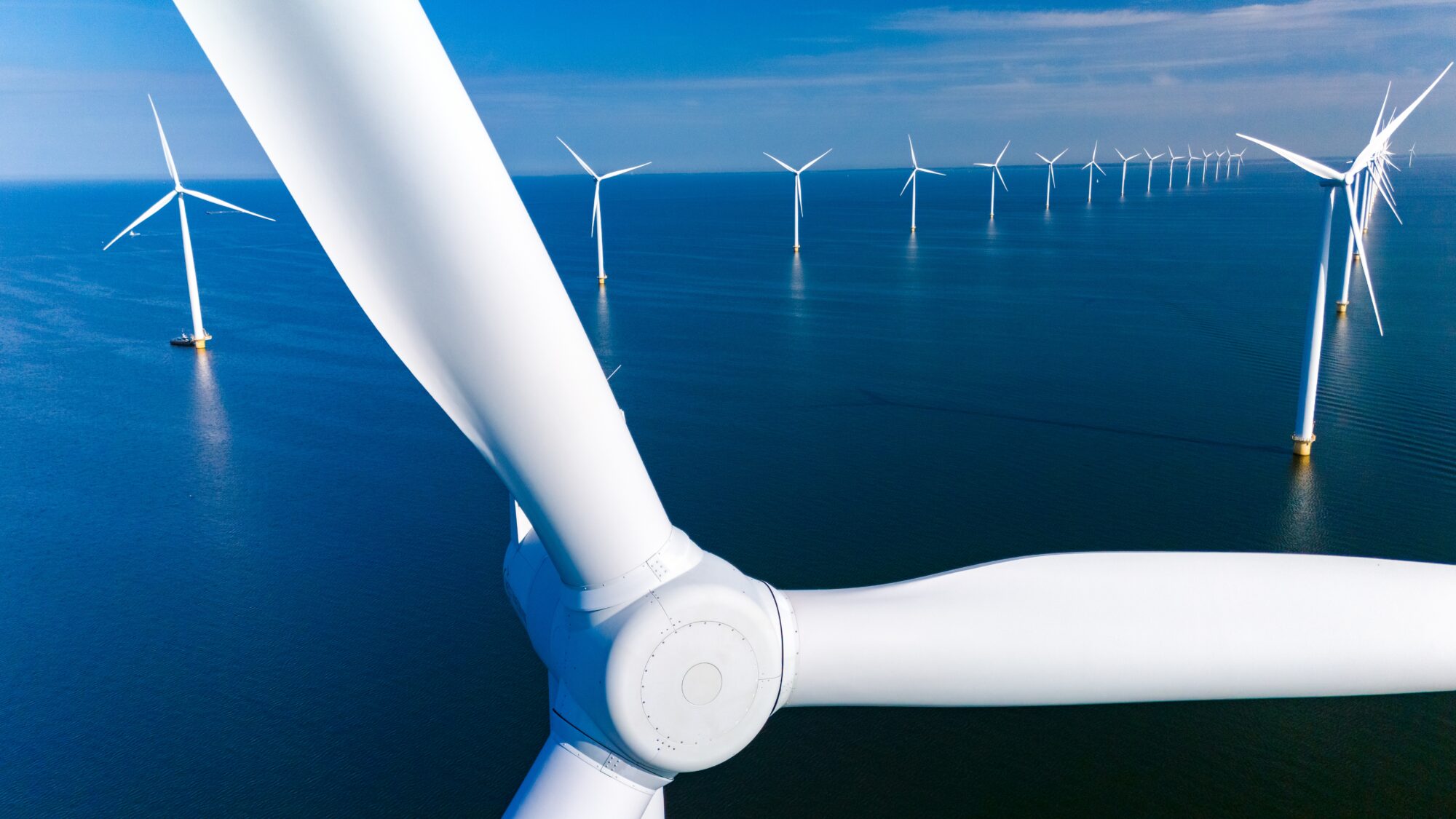
The Ministry of Energy has a clear goal that wind power waste should, as far as possible, be included in circular solutions. There are no specific requirements for material recycling. It is the waste producer’s responsibility to know which regulations to follow for proper handling.
Illustration photo: Colourbox
“We have set requirements in the prequalification criteria for Sørlige Nordsjø II and in the qualitative criteria for Utsira Nord that applicants must submit a project plan,” said Henrik Hoel, senior communications advisor at the Norwegian Ministry of Energy.
“The plan must outline the proposed measures for waste management, as well as the potential for material recycling and reuse. By setting these requirements, we can help promote better solutions,” he said.
More wind farms, larger blades
More and more offshore wind farms are being built around the world, and the turbines are getting larger. The next generation of rotors will have a diameter of 310 metres, which is as long as three football pitches. China is now building and testing offshore wind turbines with towers that are 200 metres high.
Several hundred tonnes of steel, composites, concrete, copper and aluminium are used to build a single turbine. In addition, rare earth metals such as neodymium, praseodymium, dysprosium and terbium are required.
In trying to use wind power to solve major climate challenges, there is a risk that we have created new and even greater resource challenges.
When their service life is over, the wind turbine blades are transported ashore. Thousands of kilometres of cables worth billions of kroner are left abandoned and buried on the seabed. Not only does this put significant strain on the environment, it is also a waste of large amounts of valuable materials.
Metals are a key factor in global power dynamics
Rare earth elements are used in mobile phones, hard drives, flat-screen devices, electric vehicles and wind turbines. Their scarcity has become a matter of global power politics, and a lot of these metals are not found in Europe. China has large reserves and a virtual monopoly on their trade.
One of the informants in the NTNU study asked what would happen if China stopped supplying the world with these rare metals – and goes on to surmise:
“Our technology would stop working. This is a serious geopolitical problem.”
Five factors that can push the industry in the right direction
Economic: Working within a circular economy is commercially profitable because it requires fewer raw materials and reduces waste. High energy prices in recent years provide an incentive to extend the lifespan of products. Recycling metals and other materials generates economic gains.
Environmental: There is a need to recycle and reuse materials in order to meet future needs. The use of new raw materials has a high carbon footprint. Circularity reduces emissions. Challenges related to landfill are driving circular solutions.
Institutional: A landfill ban will encourage alternative processing methods. It will also encourage more collaboration on waste and solutions along value chains. Stakeholders and business partners demand sustainability.
Regulatory: Landfill bans on composite waste have been introduced in several countries. In some countries, the authorities support the establishment of circular facilities.
Market-related: Circular products create new markets and opportunities for industry.
This fact box was created using AI.
Prohibition – in certain countries
“One of the major obstacles to the circular economy is that legislation varies from country to country,” one of the stakeholders in the NTNU study said.
Landfilling of turbine blades is prohibited in Germany, Finland, Austria and the Netherlands. Some companies get around this obstacle by transporting decommissioned wind turbine blades to countries where they can be buried. The United Kingdom and France have some of the highest concentrations of landfills in Europe.
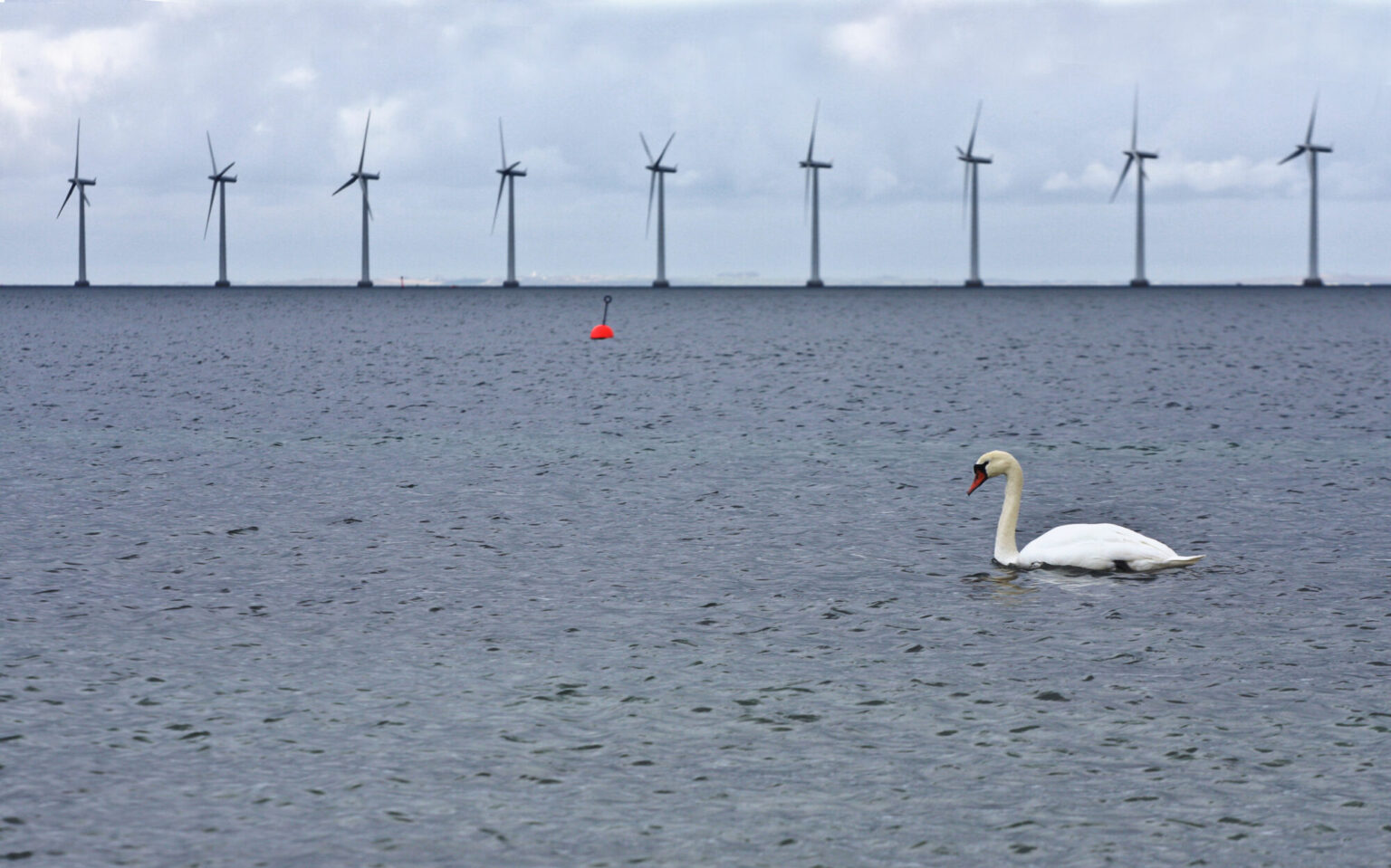
The European wind industry association WindEurope has asked its members to implement a landfill ban for wind turbine blades starting January 1, 2026. Photo: Colourbox
An EU ban is not in place – yet. Nor is a Norwegian ban on landfilling and incineration of this waste on the Ministry of Energy’s agenda.
Addressing the issue through the EU
“The industry is international, and recycling and reuse technologies are mainly developed for a European and global market. Norway largely follows the same waste management regulations as the EU. It is therefore most natural that this challenge is primarily addressed through a common European regulatory framework,” Hoel said.
NTNU researcher Pankaj Ravindra Gode believes that an EU ban could prevent actors from exporting the problems.
“It would create a level playing field, where the rules are the same for everyone and no one can circumvent the system,” added Hoel.
How green is it really?
How green and sustainable is wind power really, when thousands of tonnes of unmanageable waste could be landfilled or incinerated every year going forwards?
“Onshore and offshore wind power is considered a green energy source because it has very low greenhouse gas emissions during operation and a significantly lower overall climate footprint than the fossil-based alternatives. At the same time, it is important to continue working on improving resource use and waste management,” said the Ministry of Energy’s Hoel.
Marthe Michelsen Bottéri at Havvind Norge said an important point for the industry is that much of the climate benefits come from the emissions reductions that renewable energy provides over several decades.
“At the same time, the industry must clearly manage material streams responsibly throughout the entire life cycle,” she said.
Thirteen measures for green decommissioning
- Introduction of material passports. Material passports contain information that recycling and reuse companies need, detailing where different materials and metals are located within the components and in what quantities.
- Keeping parts as parts. Rather than dismantling as much as possible, preserving entire components for repair, refurbishment and reuse aligns better with the principles of a circular economy.
- Collection hubs. Creating circular hubs where blades and other reusable parts from wind turbines are already stored to slash transportation needs.
- Returning waste to the supplier. While the best approach is to prevent waste from being generated in the first place, when waste is generated, the solution should be to return it to the supplier for reuse, recycling, or other repurposing.
- Establishing storage facilities for repaired and rebuilt parts. This supports repair, refurbishment and reproduction of decommissioned parts as a business model.
- Solutions that are financially motivating. Circularity should be given an economic value. Greater incentives for those willing to invest. One measure could be auction schemes.
- Creation of waste classification codes for wind turbine materials.Without a dedicated waste classification code for composite materials, processing becomes bureaucratic and difficult.
- Landfill prohibition. An EU ban on landfilling wind turbine blades has long been called for but has yet to be enacted.
- Finding alternative uses. More waste must be treated as a resource that others can use as a raw material.
- Development of local markets and supporting industry. Support the collection, processing and reuse of more materials close to where turbines are decommissioned.
- Identifying what the market wants. Focus more on developing sustainable products that customers actually want, rather than creating products and hoping the market will be interested.
- Creation of a market within the same company. More targeted reuse where products are sold back to the same company that owned and used the wind turbine blades.
- More material-driven design. The materials, size and design of wind turbine blades determine what needs to be made. If a blade does not align with a particular idea because it is too small, it should not be made bigger. Something else should be made instead.
This fact box was created using AI.
Reference:
Pankaj Ravindra Gode, Øyvind Bjørgum: “Investigating pathways to improve the circular economy adoption for near-end-of-life offshore wind farms” DOI: https://doi.org/10.1016/j.jenvman.2025.127679