How trained community health officers cut Sierra Leone’s maternal deaths by two-thirds
Maternal mortality in Sierra Leone used to be among the highest in the world. A 15-year-old non-profit programme that trains community health officers to do life-saving surgeries has helped slash that risk by two-thirds.
In brief
- Sierra Leone's maternal mortality rate has dropped by two-thirds, with help from CapaCare, a non-profit that has trained 113 community health officers to perform life-saving surgeries like emergency C-sections — and who now accounting for nearly 60% of this specific procedure in the country.
- The approach, called "task-sharing," trains non-physician health officers to perform surgeries typically reserved for doctors — a model backed by the WHO since 2007 and proven safe through a decade of research.
- Sierra Leone's Ministry of Health endorsed the programme after research confirmed its safety, and the national surgical plan now officially describes CapaCare's impact as "transformative."
This summary was drafted by AI and fact-checked and edited by a human journalist.
Fourteen years ago, NTNU surgeon Håkon Bolkan made a prediction about a training programme he and his colleagues had newly begun to expand access to surgery in the West African country of Sierra Leone.
“I believe that if this programme goes on for some years, (the graduates) will become the backbone of surgical care in the district hospitals in Sierra Leone,” he said.
Turns out, he was right.
The effect of the CapaCare trainees (has been) “transformative”.
The non-profit organization he founded, CapaCare, has now trained 113 community health officers to provide life-saving surgeries, such as emergency cesarean sections. A recent academic publication described exactly what this has meant.
“Almost 8 000 out of 14,000 caesarean sections are now done by the group that we have been training,” Bolkan said. “That’s nearly 60 per cent of all caesarean sections done in the country.”
More importantly, “the maternal mortality ratio has nearly been reduced by a factor of three in Sierra Leone, which is one of the sharpest declines in Africa in the last decade,” Bolkan said.
One of the reasons behind this sharp drop is that emergency obstetric care is now available in all hospitals nationwide day and night. Virtually all C-sections in Sierra Leone are emergency surgeries. The ability to provide them has saved many women’s lives.
The approach has been so successful that CapaCare expanded its work to Liberia, starting in 2021.
So what’s the magic?
- You might also like: When the doctor is out
An enormous unmet need
First of all, it’s important to understand how hard it is for people in low and middle income countries to get the surgical help they need.
A landmark assessment by the Lancet Commission in 2015 estimated that roughly 5 billion people worldwide did not have access to safe surgical care. An update from 2025 says the need has only increased in the 10 years since the first assessment was published.
The reasons for this gap in care are many.
There simply aren’t enough doctors and even fewer trained surgeons in Sierra Leone and Liberia.
In both Sierra Leone and Liberia, for example, lengthy civil wars have destroyed hospitals and other infrastructure, making it difficult for those countries to provide health care for their populations.
Both countries suffered from the West African Ebola outbreak in 2014, which was the largest in history.
Perhaps the biggest factor is this: there simply aren’t enough doctors and even fewer trained surgeons in both places.
Sierra Leone, for example, had only 10 surgeons practicing in 2012 in the hospitals CapaCare surveyed. That’s one specialist surgeon for 700 000 people. In contrast, Norway has 67 specialized surgeons per 100 000 people, according to the World Bank.
- You might also like: C-sections by trained health officers a safe alternative
Adopting task- sharing – and proving that it works
A solution to this problem – called task-sharing – had already been tried in East Africa as early as the 1960s.
In 2007, the World Health Organization formally endorsed the approach as a way to address access to HIV antiretroviral treatment in Africa.
Task-sharing involves training health officers to provide services usually provided by medical doctors, including life-saving surgeries, like appendectomies, hernia repairs, and cesarean sections.
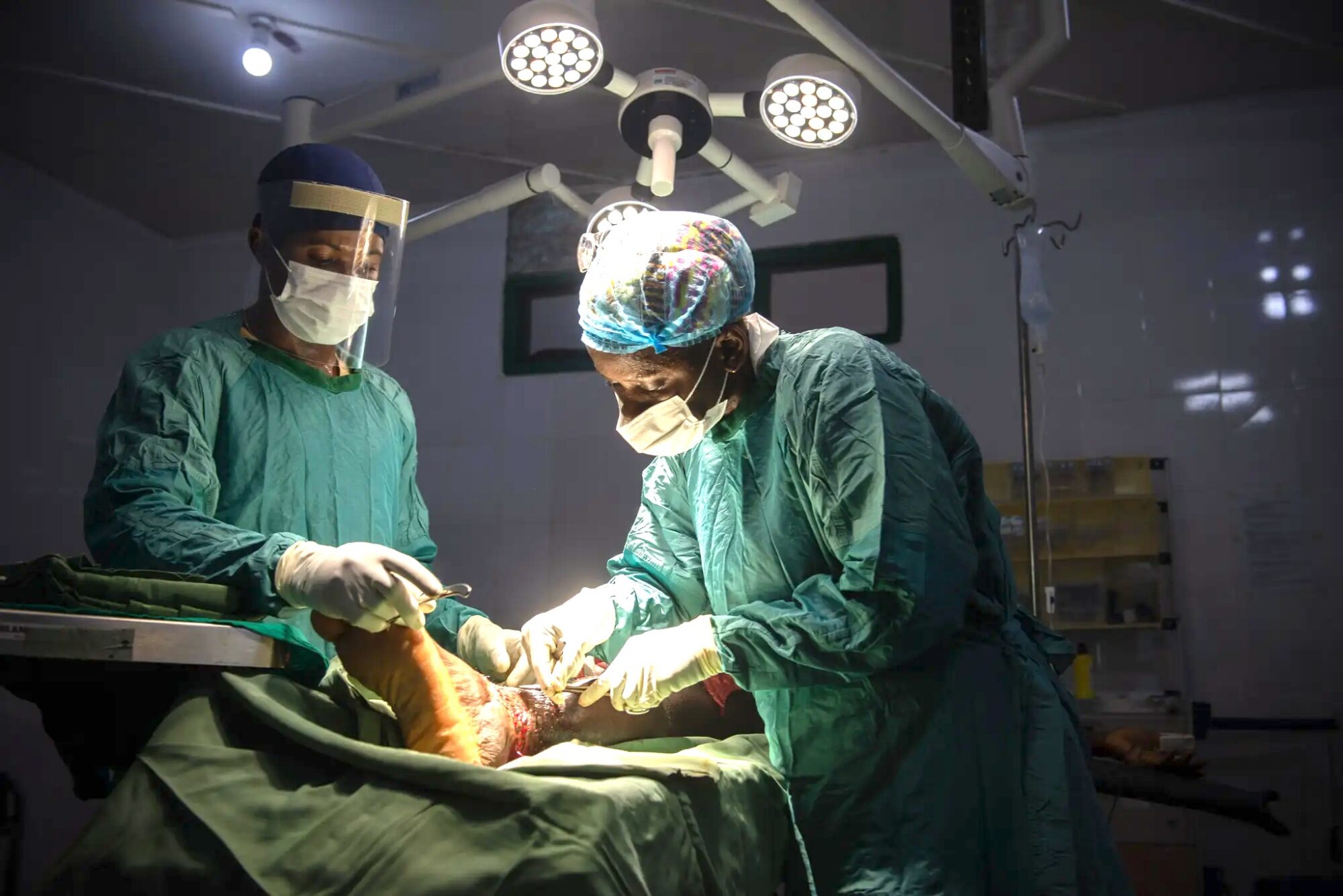
Trained community health officers in Sierra Leone also do surgeries to treat ulcerated wounds. Photo: CapaCare.
That’s the approach Bolkan and his colleagues decided to take – they would take candidates from Sierra Leone’s Community Health Officer programme and give them two years of training to do surgeries. After their training, they were called SACHOs, or Surgical Assistant Community Health Officers.
Is the surgical care provided by the SACHOs as good as that provided by trained surgeons? Was it safe? A series of research articles over the past decade clearly answered that question with a resounding “yes”.
That was the first part of the special sauce that has led to CapaCare’s success.
The second became Bolkan’s PhD project at NTNU. His dissertation documented the surgical need in the country and established a baseline of the kinds of care being provided – or more accurately, not.
What Bolkan and CapaCare really needed to address, however, was the bottom line question: is the surgical care provided by the SACHOs as good as that provided by trained surgeons? Was it safe?
A series of research articles over the past decade clearly answered that question with a resounding “yes”.
Government buy-in
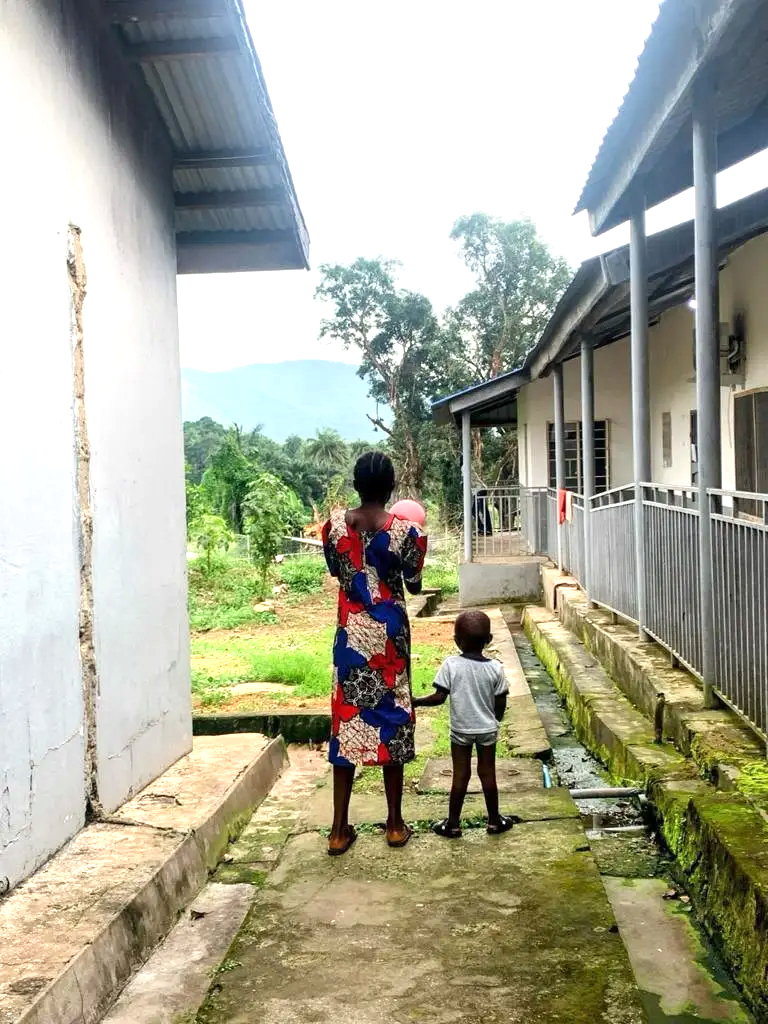
More and more women are surviving birth because of Sierra Leone’s 113 Surgical Assistant Community Health Officers, called SACHOs, who have been trained to do emergency C-sections. The effort has been spearheaded by the non-profit organization CapaCare. Photo: CapaCare
Being able to provide that assurance – that task-sharing was safe, and that there was an unmet need – helped assure the Sierra Leone Ministry of Health that the programme could work for the country.
That, combined with the country’s commitment to training more midwives and increasing ambulance services, has been integral to bringing maternal mortality levels down.
Now, one of the CapaCare graduates has helped write the newest Republic of Sierra Leone National Surgical, Obstetrics and Anaesthesia Plan, which clearly endorses task-sharing training.
The plan describes the effect of the CapaCare trainees as “transformative”.
“By 2023, these non-physician clinicians performed 41% of all surgical procedures nationwide. They became the primary surgical providers in rural areas, accounting for 55.1% of all operations and primary performers of caesarean sections (57.6% nationally), which has contributed to improving access to emergency obstetric care. The total surgical providers (all cadres) more than doubled from 2012 to 2023 (165 in 2012 to 347 in 2023),” the report notes.
That’s progress, but still not enough, the report says.
- You might also like: Trained medical staff can provide safe, effective hernia surgery
Following a different path
About CapaCare
- CapaCare is a non-profit with chapters in Norway, Sierra Leone, Liberia, and the Netherlands.
- Initiated by two Norwegian doctors, it focuses on training paired with research to improve surgical care in West Africa.
- Its flagship programme, launched in 2011 in Sierra Leone, trains community health officers to perform life-saving surgeries; 113 such officers have now been trained there, performing 41% of all surgical procedures nationally by 2023 and over half in rural areas.
- CapaCare expanded to Liberia in 2021, supporting both essential surgical training and postgraduate programmes, while the Netherlands chapter — established in 2020 — provides broader organizational and staffing support across both countries.
- Website: https://www.capacare.org/
As the Sierra Leone project matured, it seemed natural to reach out to its next door neighbour, Liberia, where there is a similar shortage in health care providers.
The first step was to categorize what kinds of services were available and what was the unmet need, the results of which were published in 2020. The survey estimated that the “surgical volume” in 2018 was 462 operations per 100 000 people.
For comparison, the national surgical volume in Sierra Leone grew from 400 to 505 procedures per 100,000 population between 2012 and 2023.
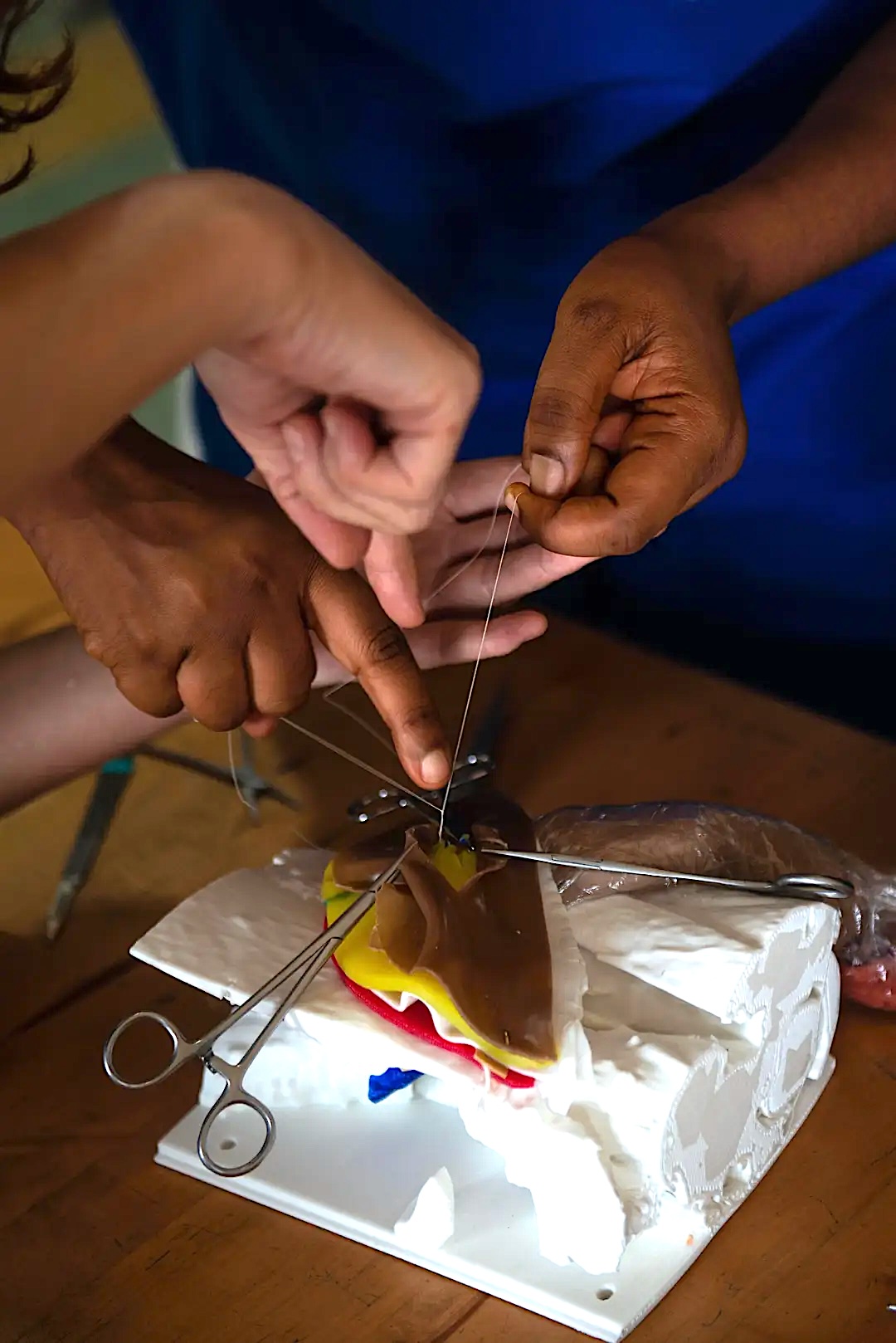
Practicing hernia repair in Liberia. Photo: CapaCare
Worldwide, The Lancet Commission on Global Surgery suggested a benchmark for countries to be able to provide 5000 surgical procedures per 100 000 people.
“When we started the journey in Liberia we were hoping to copy some of the experience from Sierra Leone into Liberia and do more task sharing,” said Alex van Duinen, who has worked extensively in both Sierra Leone and Liberia with CapaCare and is also a postdoctoral fellow at NTNU.
Liberia, it turned out, was much more interested in having more specialist training for its surgeons and obstetricians. That’s why CapaCare is supporting the specialist training there now, van Duinen said.
It also helped Bolkan and van Duinen realize that they needed to expand their specialist training in Sierra Leone.
“That was a surprising twist, actually,” van Duinen said.
“We need to make sure that the system is balanced, and we cannot only lift the lowest levels of surgical providers,” in Sierra Leone, van Duinen said.
Now, CapaCare helps with courses and training for doctors and specialists in Sierra Leone along with its training of community health officers.
“We are also working together with the Ministry of Health and the surgical college in Sierra Leone to raise money to boost the residency training, because they have way too few,” Bolkan said. “They have only, at any time, maybe six, seven in their surgical residencies for a population of 8 million people.”
Challenges remain, but trends are encouraging
One of the ongoing unsolved challenges facing CapaCare is that roughly half of the Community Health Officers they first trained are still without legal recognition and protection.
Later groups trained via CapaCare and through the training programme developed via the Ministry of Health do have that recognition.
“This has created challenges in terms of career development and recognition,” van Duinen said.
In at least one case, one of CapaCare’s early trainees was frustrated enough by the lack of recognition that he decided to go to medical school, Bolkan said.
“So I met him this January and I congratulated him and I asked him, ‘Do you regret to have started with our training? Would you have done things differently?’ And he was very clear. He said, ‘No, I don’t regret anything. Because of the training, you built trust in me, that I believed in myself’,” Bolkan said.
In spite of those challenges, Bolkan is optimistic that Sierra Leone, for one, will be able to achieve an important milestone in the coming years.
“The (UN) Sustainable Development Goals say that a country’s maternal mortality ratio should be at 70 per 100,000 people,” Bolkan said.
When CapaCare started, the maternal mortality ratio in the country was over 1000 per 100,000 people, he said.
“It was around 300 in 2024. If Sierra Leone continues to progress the way they are doing, I wouldn’t be surprised that they will get below 70 by 2030, and nobody was thinking it was even possible to get that close,” he said.
References:
Furre, Mali Eggen; Svengaard, Maria; Øvreås, Elisabeth; Duinen, Aalke Johan van; Ashley, Thomas; Grobusch, Martin P.. (2025) The impact of surgical task-sharing in Sierra Leone: a nationwide longitudinal observational study on surgical workforce and volume, 2012–2023. BMJ Global Health
Logstein, Erika; Torp, Richard Hald; Ashley, Thomas; Kamara, Michael M.; Koroma, Alimamy P.; Dumbuya, Abu Bakarr. (2024) Long-term maternal outcomes 5 years after cesarean section in Sierra Leone: A prospective cohort study. International Journal of Gynecology & Obstetrics
Adde, Håvard Askim; Oghogho, Mark Deenize; Duinen, Aalke Johan van; Grimes, Caris E; Hampaye, Theophilus C; Quaife, Matthew. (2024) The economic burden associated with unmet surgical needs in Liberia: A retrospective macroeconomic analysis based on a nationwide enumeration of surgical procedures. BMJ Open
H A Adde, A J Duinen, M D Oghogho, N K Dunbar, L G Tehmeh, T C Hampaye, Ø Salvesen, T G Weiser, H A Bolkan, Impact of surgical infrastructure and personnel on volume and availability of essential surgical procedures in Liberia, BJS Open, Volume 4, Issue 6, 1246-155.