Boosting mental robustness in Ukrainian soldiers
Modern large-scale warfare imposes extreme psychological stress on soldiers at the front. Ukrainian soldiers are being trained in Norway to help better protect them from this trauma.
The short version
- Researchers at NTNU and the Norwegian Armed Forces have developed ORT (Operational Resilience Training), a training programme that exposes soldiers to realistic, simulated combat stress to strengthen their mental resilience before they face real combat situations.
- A study shows that soldiers who apply the techniques in combat develop greater confidence in their own coping abilities, handle combat stress better, and become better equipped to deal with distressing experiences such as dead and injured people.
- ORT teaches soldiers practical tools such as breathing techniques, attention control, and buddy support, as well as basic skills in recognizing and managing psychological reactions in themselves and others.
- The programme is now mandatory for all soldiers in the Ukrainian National Guard. It is also set to be introduced in the training of Ukrainian soldiers in Poland and in the Norwegian Armed Forces.
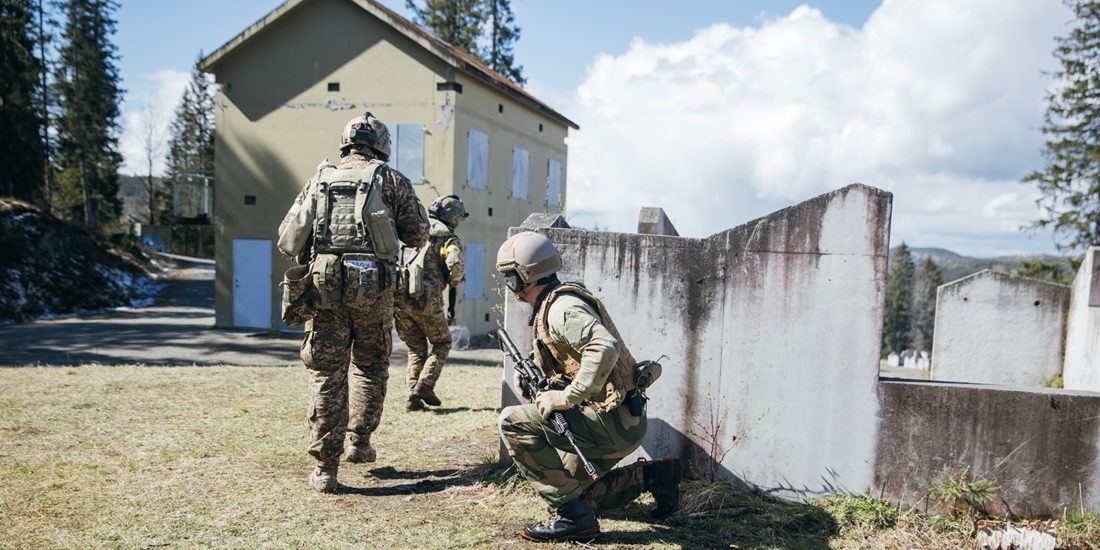
Since 2022, more than 10,000 Ukrainian soldiers have undergone trauma training in Norway. In Trøndelag, Ukrainian medical soldiers have gone through a programme where they have also received training in operational resilience, called ORT (Operational Resilience Training).
“We simulate combat stress with experiences and situations that they may encounter in war, and we try to make them as realistic as possible. You could call it a kind of stress vaccination,” says Andreas Espetvedt Nordstrand.
Nordstrand is head of military mental health at the Norwegian Armed Forces Joint Medical Services, and an associate professor at NTNU’s Department of Psychology. In collaboration with American researchers in the US Army, he has developed a training programme that helps the soldiers to incorporate mental techniques they can use in demanding operations.
“We use different scenarios for different types of stress. It can be moral stress, cognitive stress, or emotional stress. While it seems realistic, it never becomes real. This means that you can go deep into it from a psychological standpoint, while at the same time feeling secure that the experience is ‘sort of’,” Nordstrand said.
Operational Resilience Training (ORT)
Purpose: Train soldiers to recognize stress reactions, handle stress, maintain function during operations and support fellow soldiers in stressful situations.
Techniques: WIN ("What's Important Now") for attention control.
Strategies for positive self-talk and support between soldiers ("buddy-talk")
- Emotion regulation techniques such as grounding
- Breathing techniques
- Grounding: Techniques that help the person focus their attention on the body and their surroundings in the here and now to reduce stress, panic, or feelings of being overwhelmed.
Phased skills:
Preparation: visualization, postponing worries, long-format breathing techniques
Implementation: grounding, focusing on what can be controlled, short-format breathing techniques, self-talk
Recovery: progressive muscle relaxation (PMR), active gratitude, distraction
The ReSTART protocol: Method for helping people with ASR (Acute Stress Reaction).
Acute stress reaction is a reaction in which a person temporarily stops functioning due to extreme stress. It can take the form of freezing reactions, dissociation or agitation.
- Re - Record Acute Stress Reaction - Clarify that it is indeed ASR, by ruling out obvious physical injuries as the cause of the breakdown.
- S - Connect - Mobilize sight, hearing and the tactile (touch) sense. "Squeeze my hand"
- T – Offer community – Few things increase fear as much as the feeling of being alone. "I'm here with you, you're not alone".
- - Clarify facts - By answering questions about concrete facts, you push the brain into logical thinking and planning. "Which department do you belong to? Who is your team leader?"
- R - Re-establish timeline - Provide a description of what has happened, what is happening now, and what is going to happen, to reduce the feeling of confusion.
- T - Back to task - By putting a person to work on a concrete and manageable task, the feeling of loss of control and helplessness is reduced.
Increases confidence in the soldier’s own abilities
The training exposes the soldiers to different scenarios for the different types of stress.
“It can be finding a torture chamber, being subjected to a drone attack, an artillery strike or a moral dilemma such as having to leave civilians in distress to fight,” he said.
Nordstrand has now conducted a study that shows that the skills are put to use when the soldiers are back in combat.
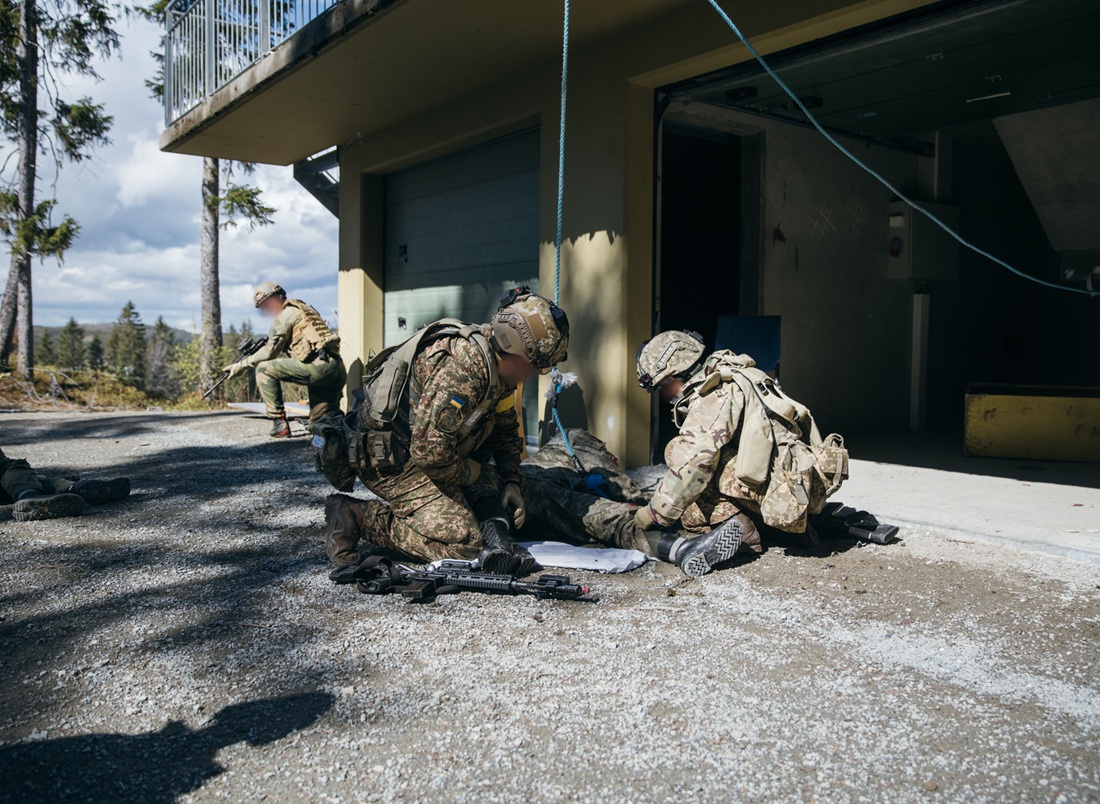
“Medical soldiers are often skilled at dressing wounds and treating gunshot injuries, but they have no training in mental health before they arrive here. We teach them techniques for stress management and how to help the people around them,” says Andreas Espetvedt Nordstrand. He is head of military mental health at the Norwegian Armed Forces Medical Services and associate professor at NTNU’s Department of Psychology. Photo: The Norwegian Armed Forces
“What we see is that the soldiers gain increased confidence that they will master such situations in war. They gain increased confidence that they will be able to handle combat stress, both for themselves and for those around them. They are also able to handle human remains without being so bothered by it, which we simulate with the help of made-up corpse dolls and fermented pig’s blood.
He described a course participant who was one of the first to enter the Ukrainian village of Bucha after the Russians withdrew. Hundreds of residents were killed, including several children. They also found alleged torture chambers where the victims, primarily the elderly and children, bore traces of brutal violence.
“She was a civilian nurse and had no experience in situations like this. It completely destroyed her and she was plagued by trauma for a long time. She suffered from recurring memories, not being able to sleep, fear, losing faith in humanity,” he said.
- You might also like: Soldiers can cope with killing
Served as trauma treatment
This kind of post-traumatic stress is caused by strong, overwhelming memories based on sensory experiences, which the sufferer is unable to control or dampen.
“She was very happy with the stress training she got from us. After the training, there were a lot of emotions, a lot of tears. She was able to get deeply in touch with what she had experienced. Although stress vaccination is not the same as trauma therapy, this is exactly what we want in trauma treatment,” says Nordstrand.
For this soldier, the training became a way to correct what she had experienced at the time, he said.
“Here she is in a completely different situation. She is with other soldiers, has a task to be completed, while at the same time being brought back to what she experienced. The experience with the simulated stress thus became a rewrite of the old trauma experience where she felt completely helpless,” he said.
Training trench psychologists
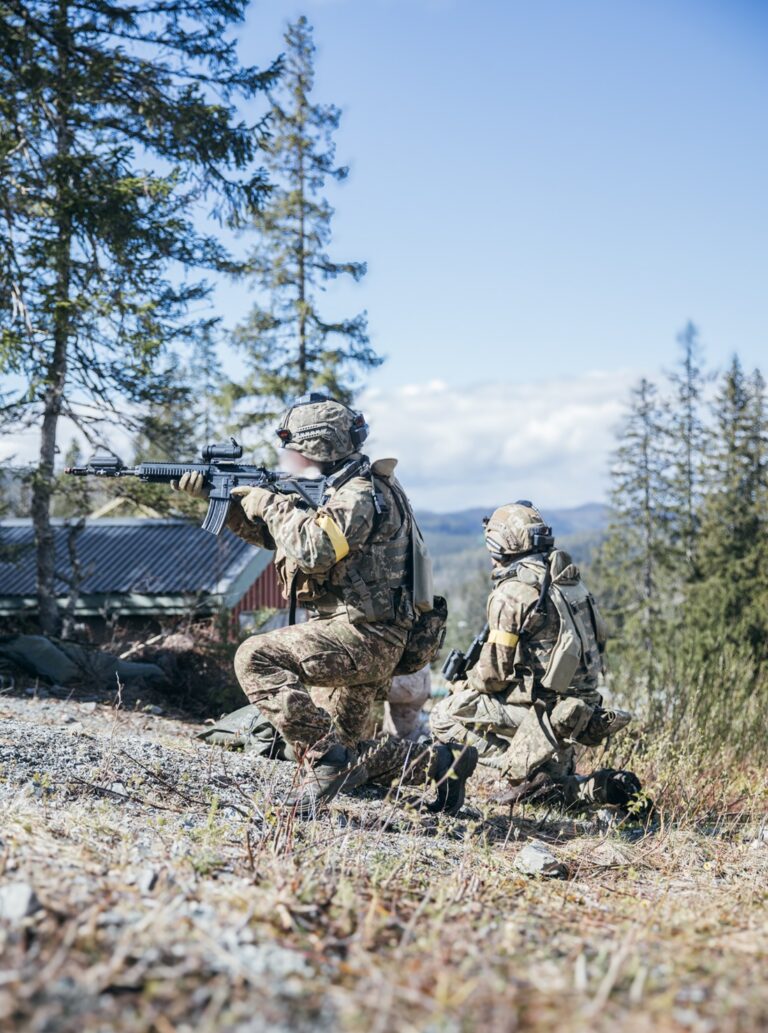
ORT training is now mandatory for soldiers in the Ukrainian National Guard. The programme is also set to become part of the training in the Norwegian Armed Forces. Photo: The Norwegian Armed Forces
Here’s how she reprocessed the experience.
“In the days that followed, she experienced increased self-confidence and less anxiety about returning to service in Ukraine,” he said.
The problem with going into these stressful situations without being mentally prepared is that the brain can be overwhelmed by strong impressions. You have nothing to relate the experiences to. The soldiers learn techniques in the ORT course such as controlling their attention, breathing techniques and helping each other.
The training takes place in three stages, with theory, practice and then realistic stress exercises, a progression the researchers compare to learning to walk: First you have to crawl, then you can walk, and then you can run. The entire course is completed in three days, with two full days of theory, and one day of practical exercises in the field.
Nordstrand calls it educating trench psychologists.
“Military medics are often good at bandaging injuries and treating gunshot wounds, but they have no mental health training before they come here. We teach them techniques for managing stress, and how to help people around them,” Nordstrand said.
- You might also like: Exposure to others’ suffering worse than being shot at
Introduced in the Armed Forces
The soldiers learn to recognize symptoms of various stress reactions during the training.
“We teach them simple conversation techniques, techniques from cognitive behavioural therapy, about suicide risk and simple steps to deal with soldiers with acute stress reactions. They also learn to recognize signs of serious mental health problems, such as psychosis. We teach them simple diagnostics and treatment for mental health problems that can arise in combat,” he said.
Now the ORT program is also being introduced into military training in Ukraine.
“The Ukrainian National Guard has adopted the programme for its 170,000 soldiers, where a day of ORT training is now mandatory for all soldiers. The programme has also been introduced into the Norwegian training of Ukrainian soldiers in Poland,”.
The programme will also become part of the training in the Norwegian Armed Forces.
“We have received the assignment and the funds needed, and we are now in the start-up phase,” Nordstrand said.
Reference:
Nordstrand, A. E., Engen, H. G., & Adler, A. B. (2026). “Crawl, walk, run”: A graded approach to integrating mental skills for psychological resilience in training for large-scale combat operations. Military Psychology, 1–14. https://doi.org/10.1080/08995605.2026.2612680