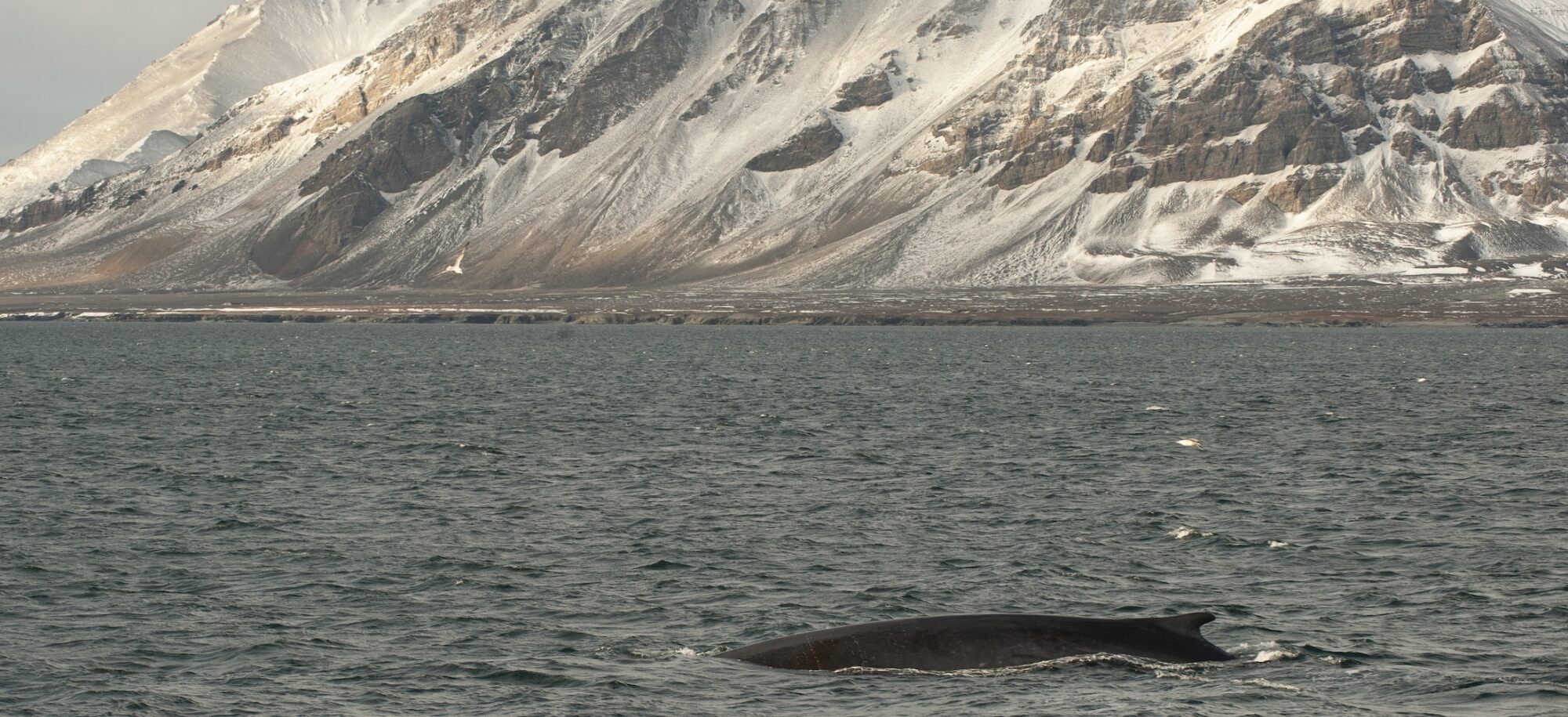
Listening to whales – even when they make no sound
A 100-year-old equation and a fibre-optic cable off the coast of Svalbard led researchers to discover they could detect swimming whales — even if they were completely silent. The discovery broadens the tools that biologists could someday use to detect and monitor these marine giants.
Fibre-optic cables lace the planet’s oceans, carrying everything from telephone conversations to banking information. In 2020, NTNU researchers figured out that those cables can also serve as a passive listening device, allowing them to detect the deep rumbles of whale sounds in the frigid waters off Svalbard.
When we saw this, we knew the next step was to look for whales.
Now researchers have discovered how to use fibre optic cables to “listen” to whales, even when they don’t make any sound. The secret is that whales, like ships, push water ahead of them as they swim – which creates a very low frequency pressure wave that the fibre-optic cables can detect.
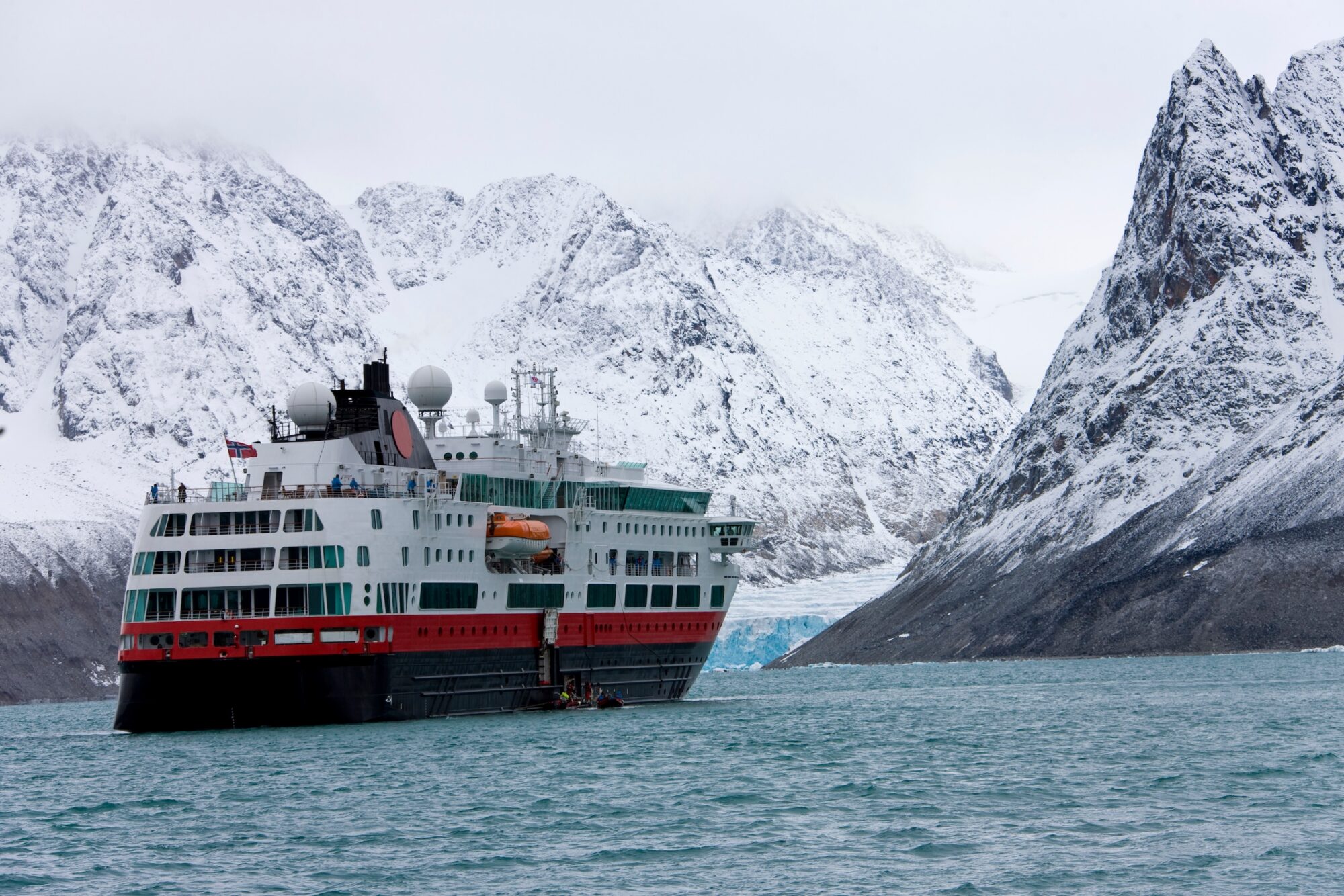
A cruise ship sailing into Svalbard’s Magdalenafjord. Researchers used four different sized ships (not this one) to help them figure out how to use fibre-optic cables to detect silent whales using pressure waves. Photo: Altrendo Images / Shutterstock / NTB
“If the whales are silent, their body movement causes disruptions in the water and the sediments, so that we can detect them, even if they aren’t making any noise,” said Martin Landrø, head of NTNU’s Centre for Geophysical Forecasting and the senior author of a new paper just published in PNAS, the Proceedings of the National Academies of Science.
But no one, including the researchers, had thought to look at these very low frequency waves to detect whales – until now.
“The main challenge in detecting these low frequency signals is that they decay very fast with distance. A big ship is easy to detect as it moves a lot of water, but a whale is much smaller, so that it moves a lot less water. This means that they need to dive into the water column to be detected,” said Robin Andre Rørstadbotnen, the first author of the paper, and a postdoc at the Centre for Geophysical Forecasting.
- You might also like: Listening to Leviathans
Ships and whales
One of the many advantages to the fibre-optic cable network in the waters around Svalbard is that there are a number of ships, both small and large, that cruise these same waters.
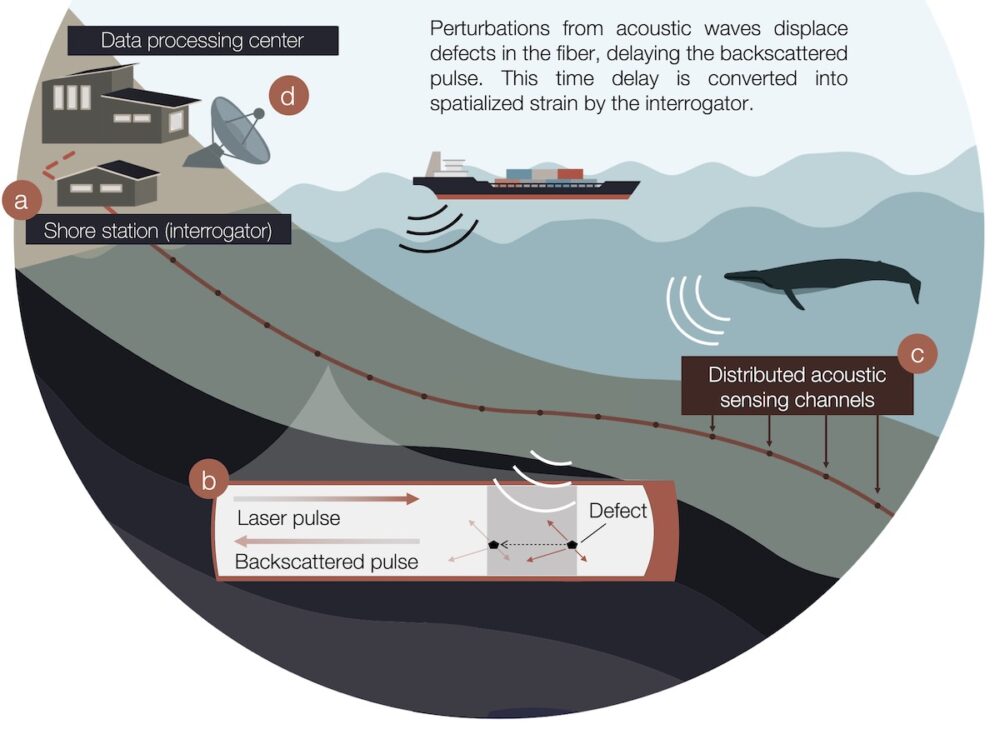
This graphic shows a distributed acoustic sensing system works. The system uses fibre-optic cables and can help researchers detect ships and whales in the waters off of Svalbard. Graphic: Léa Bouffaut
And if you think about, the shape of a ship’s hull isn’t that different from the shape of a whale’s body.
But unlike whales, all ships are required to have what’s called an Automatic Identification System, or AIS. That identifies both the ship itself and where it is travelling, allowing researchers to track the ships as they sail along or across the fibre-optic cables.
The researchers could detect the actual sound – the acoustic signal – of the different ships in the data from the fibre-optic cables, of course. They could also detect how fast the ships were travelling.
That’s the same approach the researchers had previously used to hear whale vocalizations.
This time, however, they realized that they could use the fibre-optic cable to detect the pressure wave generated as the ship moved through the water.
- You might also like: Eavesdropping on whales in the high Arctic
From boiling water to pressure waves
A pressure wave from water movement is much lower frequency than a whale vocalization. It’s also information that the researchers hadn’t looked at before.
“The big surprise was that this fiber could detect this,” Landrø said.
Suddenly they had a way to interpret the low-frequency data because they already had so much information about the different ships.
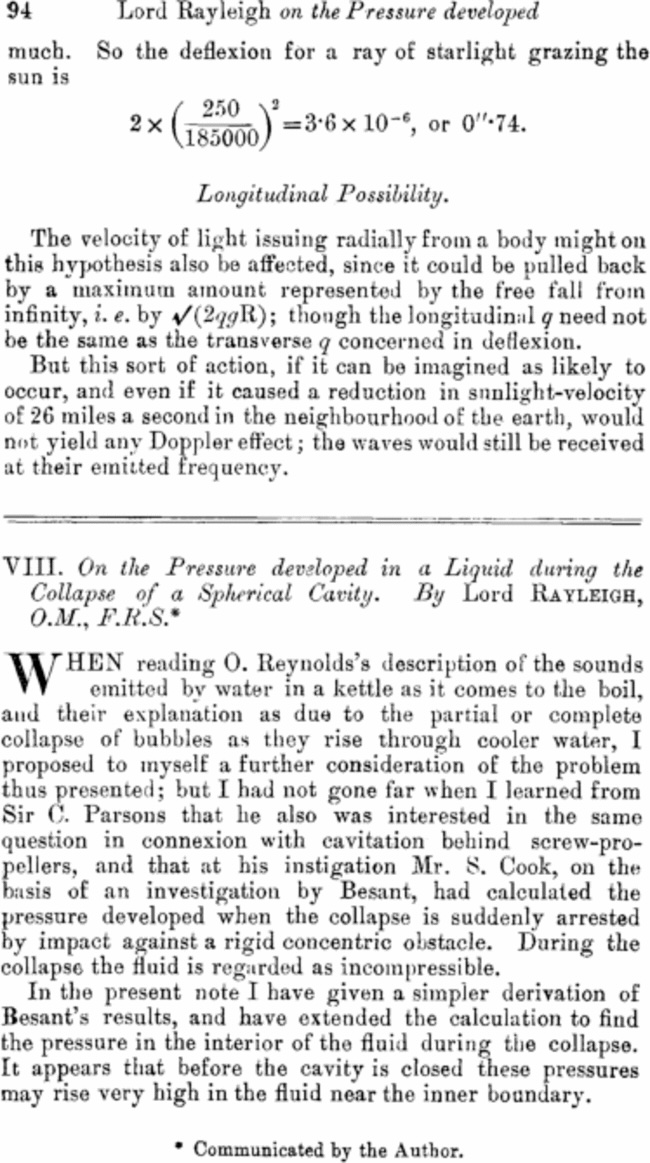
Bubbles in boiling water may not seem to have much in common with pressure waves from swimming whales, but researchers were able to use the equations to interpret their information on swimming whales. Screenshot.
“There are a lot of cruise ships during the summer months in Svalbard, sailing along the fibres we interrogated. By looking at one ship, Le Commandant Charcot, over three cruise seasons, we obtained a lot of very valuable information that could help us better understand these low-frequency signals and also identify aspects that need further research,” Rørstadbotnen said.
They also used a well-known equation published in 1917 by a famous physicist named Lord Rayleigh that described how bubbles in boiling water collapse. That may sound very different than moving ships and whales, but the basic physics applies.
“This is the way we calibrated it,” Landrø said. “We know how fast the ships are moving, we know exactly where they are, because we have the AIS information. So that gives you a way to fine tune the understanding of these low-frequency signals. And that was our major observation, which is new.”
When you think about it, a whale, moving through the water, isn’t that different than a ship, pushing water out of the way as the motor propels the ship forward.
“That opened the possibility that maybe this can be used to detect silent whales,” Landrø said. “When we saw this, we knew the next step was to look for whales.”
A blue whale and a bit of luck
Here’s where chance – call it a little bit of luck – stepped in.
“We were lucky to find a whale, a blue whale, that was vocalizing close to the surface, and thenwhen it stopped vocalizing, it dove down,” Landrø said.
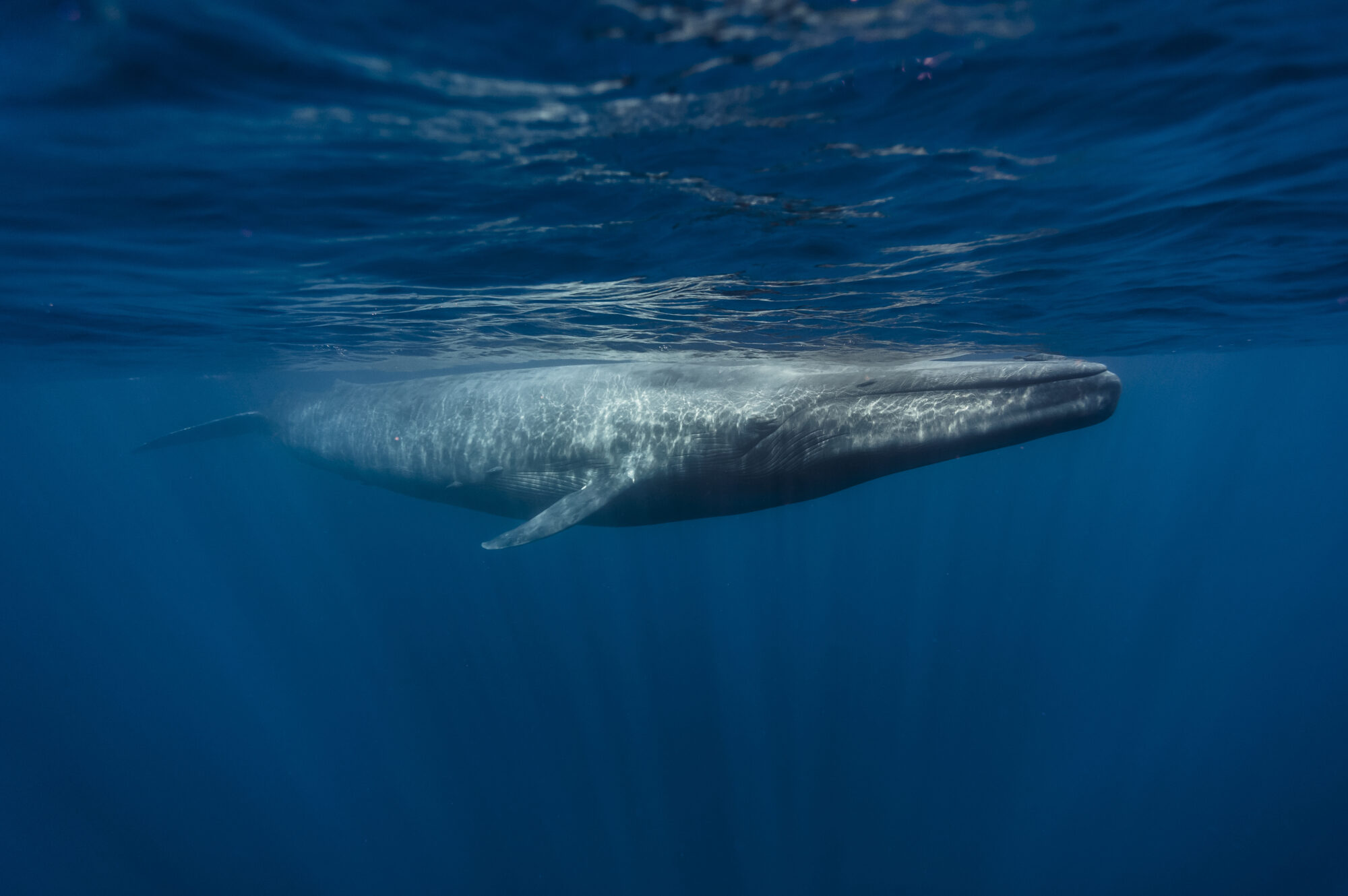
A blue whale seen from below. Blue whales are the largest animal on Earth, but their population was decimated by commercial whaling during the last century. Researchers don’t know the current global population size, but they believe it is between 5,000-15,000 mature individuals, which is just 3-11% of the population size in the early 1920s. Photo: NTB
So first, the researchers could see the blue whale’s vocalizations using the acoustic data from the fibre-optic cables. This was by now a routine way for them to detect whales that made sound.
But now they knew that they should also look at the low-frequency data from the fibre-optic cables to see what the blue whale looked like in those data. And they could interpret what they saw with the help of Rayleigh’s equation.
Suddenly they could follow the track of the whale even as it stopped making sounds, and dove deeper into the ocean.
Another tool for conservation work
Landrø and his colleagues have previously suggested that researchers explore the use of fibre-optic cables for a range of remote sensing applications, from detecting earthquakes and monitoring undersea pipelines for sabotage to linking information from satellites to create an Earth-Ocean-Atmosphere-Space Observatory.
A blue whale seen from below. Blue whales are the largest animal on Earth, but their population was decimated by commercial whaling during the last century. Researchers don’t know the current global population size, but they believe it is between 5,000-15,000 mature individuals, which is just 3-11% of the population size in the early 1920s. Photo: NTB
”This could be a game-changing global observatory for Ocean-Earth sciences,” Landrø said after a paper about how such a system could work was published in Nature Scientific Reports.
The ability to detect silent whales is another step in using the existing fibre-optic network to better understand the planet and its far-flung inhabitants, such as whales.
While some few whale populations are in reasonable shape, most whales were heavily exploited over time. But the very nature of whales – big marine animals that roam the oceans – makes population estimates challenging. Being able to track silent whales could change all that.
Reference:
R.A. Rørstadbotnen, & M. Landrø, Detecting silent whales using seabed fiber-optic cables, Proc. Natl. Acad. Sci. U.S.A. 123 (26) e2603077123, https://doi.org/10.1073/pnas.2603077123 (2026).