Locally produced food for the armed forces is the new preparedness strategy
The armed forces want local food. Farmers want to deliver. But regulations, framework agreements and a lack of logistics are obstacles to getting locally raised food to the soldiers.
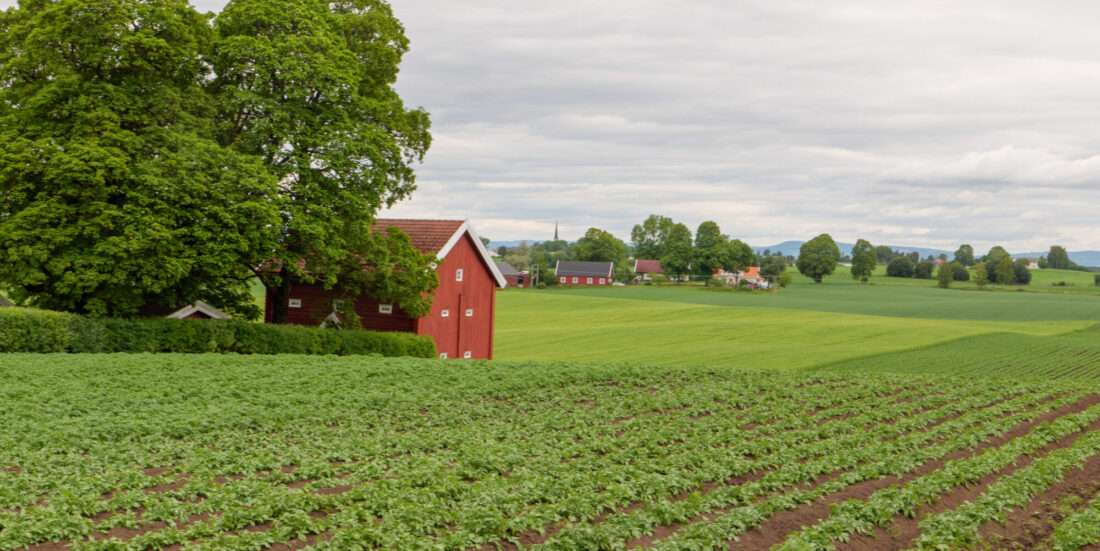
Anita Øren and her colleagues have conducted research on Ørland Main Air Station on the west coast of Norway, and on food production in the traditional district of Fosen in Trøndelag county. Øren is a senior research scientist at SINTEF, an independent research and development organization with headquarters in Norway.
“Even now, with so much focus on total defence, the civilian part of preparedness is easily forgotten,” she says.
Arrangement would support farmers and increase preparedness
The air station has signed a letter of intent with the Trøndelag Farmers’ Union and several other actors, stating that the station would like to use more locally produced food. The aim is to support local farmers by improving local food security and resiliency. Food self-sufficiency also makes it easier for the armed forces to defend the country in the case of an emergency.
About the project "Local food security in a total defence perspective"
Project name: LoMaTo (Norwegian: Lokal matberedskap i et totalforsvarsperspektiv).
The project is based on the letter of intent "From the soil to the soldier's table". Ørland Air Station, Ørland Municipality, the State Administrator of Trøndelag, Trøndelag County Municipality and Trøndelag Farmers' Union entered into the agreement in 2024. The goal is to strengthen food security and preparedness by increasing the use of locally produced food in the Armed Forces.
Partners in the project include Ørland Municipality, SINTEF Digital, SINTEF Ocean, Trøndelag State Administrator, Trøndelag County Municipality, Trøndelag Farmers' Union, Ørland Farmers' Union, MIDSEC (now NORDSEC), Ørland Air Station, and the Defence Coordinator for Trøndelag.
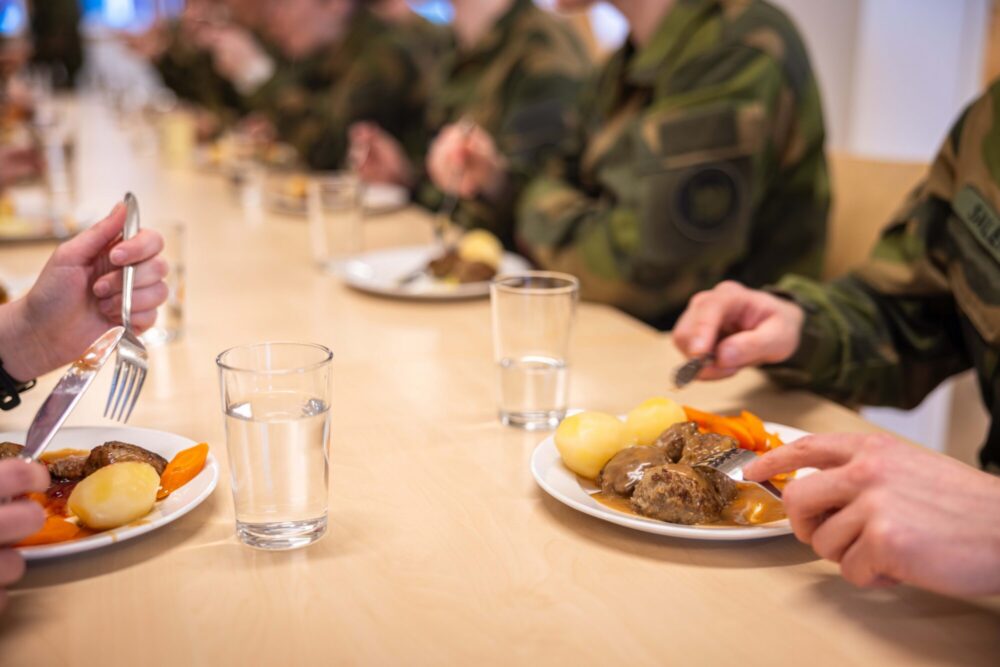
It takes a lot of food to feed Norwegian soldiers. This photo is from the mess hall at Ørland Main Air Station. Photo: Ole Andreas Vekve, Norwegian Armed Forces
“Many of the regulations cannot be changed, but the military departments can influence whom they have agreements with. Farmers also have contractual obligations in the value chain, and these can prevent alternative local agreements,” says Øren.
“Farmers would like to pivot so that they can deliver more food locally, but that means increased costs for them. Who will bear these costs?” she asks.
Don’t dare to invest
Øren points out that many farmers are quitting.
“That’s not a good situation in terms of preparedness,” she says. She describes her research as a preliminary project that only begins to probe these challenges.
“We have to look at the local and regional food system and food production. This is the new strategy for total defence!”
In her interviews with Ørland Air Base, the municipality and the producers, she has heard strong support for the proposed agreement to increase local food preparedness. At the same time, the agreement is perceived as not being a strong enough commitment. As a result, producers do not dare to invest.
The farmers want to have a guarantee of minimum purchases, they want long-term agreements, and they want the same price as they receive when they sell their products to Nortura or Tine, two major Norwegian agricultural cooperatives.
Too small alone
The biggest practical problem is logistics. Ørland lacks the capacity to receive and store meat and vegetables. There also needs to be better transport options from the warehouse and the final short distance to the air station.
At the same time, Ørland Air Station alone is too small to implement a system for using local agricultural products. For example, the air base uses three tonnes of carrots a year. A single producer grows and delivers 600 tonnes.
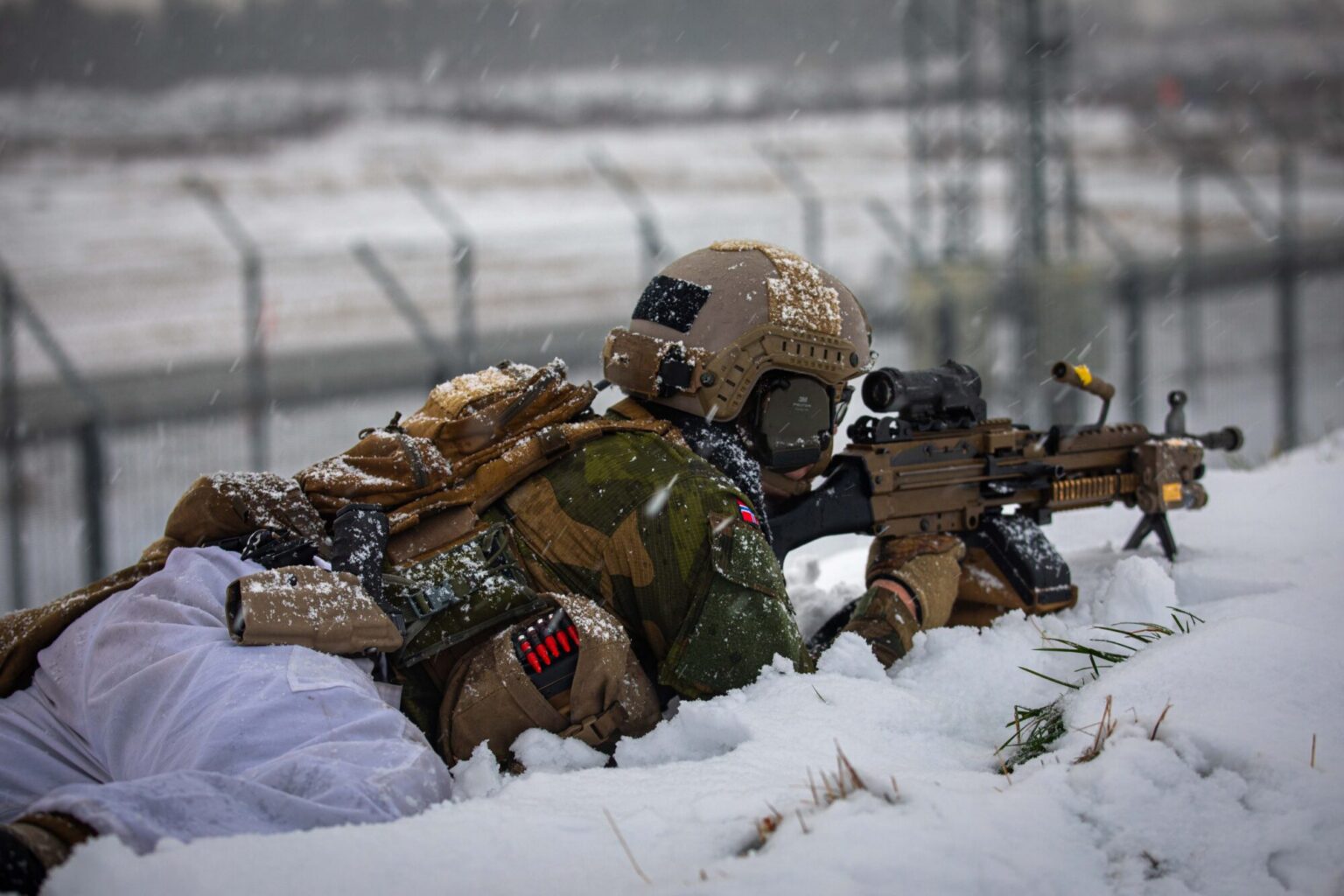
A military unit that is more food self-sufficient is also better positioned to defend the country when needed. Active Operations Troop 1 of the Ørland Base Defence Battalion is shown doing exercises. Photo: Arne Marius Alm, Norwegian Armed Forces
To ensure viability, the air base needs to join forces with municipal kitchens, schools and health institutions in order to be able to buy enough from the farmers to justify the investments they would have to make.
Or maybe, says Øren, what is needed is a local raw material processing facility. Producing food for the entire population of the country in peacetime would create an infrastructure that could be used to produce food for the region in the event of a potential crisis – and provide better food resiliency.
Crooked carrots are just fine, thanks!
There is a lot of waste in vegetable production. Carrots that are not picture perfect and potatoes that are slightly blemished cannot be sold in stores. But they can be used in the military kitchens. If they are going to be used raw, or to make stew or mashed potatoes, they don’t have to be pretty.
The studies that the researchers have done also show that storage, washing and production options, in addition to the framework agreements and regulations, currently make it difficult to facilitate food deliveries. The military is required to follow national framework agreements that do not allow buying from local farmers.
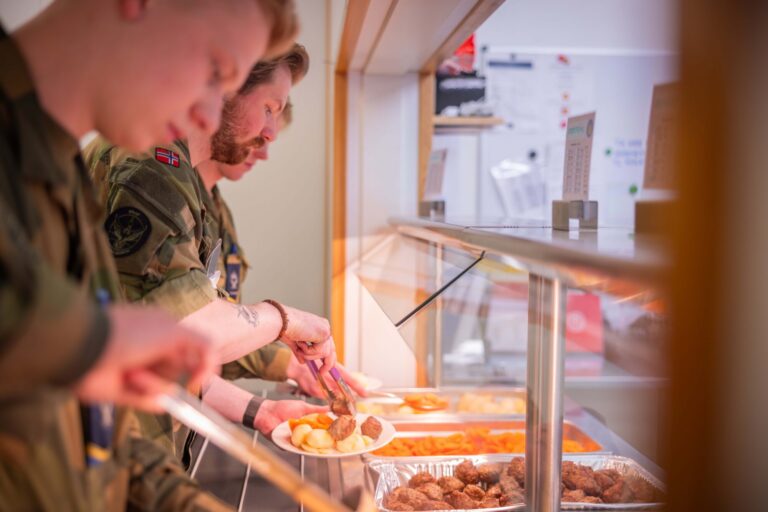
The Norwegian Armed Forces can use some of the vegetables that are not pretty enough to be sold in grocery stores. Here from the mess hall at Ørland Air Station. Photo: Markus Engås, Norwegian Armed Forces
Everyone wants to move forward, but can’t figure out how
The SINTEF report concluded that all the actors are on board with the agreement but they cannot implement it for the time being. Producers, municipalities and defence employees agree that local food strengthens preparedness and the local community. They also concur that the military should eat Norwegian home-style cooking and food of known origin – and that food preparedness must be seen in the context of a total defence concept.
Many actors would like to be part of pilot projects to ensure the local food supply. Producers can readily supply potatoes and carrots or try out slaughtering and processing. But they need to know how much they can plan on delivering, and they need to be paid for the additional work.
“Preparedness costs money. Maybe this study can help us recognize that we have to spend some money on preparedness,” says Øren.
Report:
Fra jord til soldatens bord: Lokal matberedskap i et totalforsvarsperspektiv – Norwegian Research Information Repository (From the soil to the soldier’s table: Local food preparedness from a total defence perspective), in Norwegian.