New emergency towing equipment allows rescue helicopters to fly farther and in worse weather
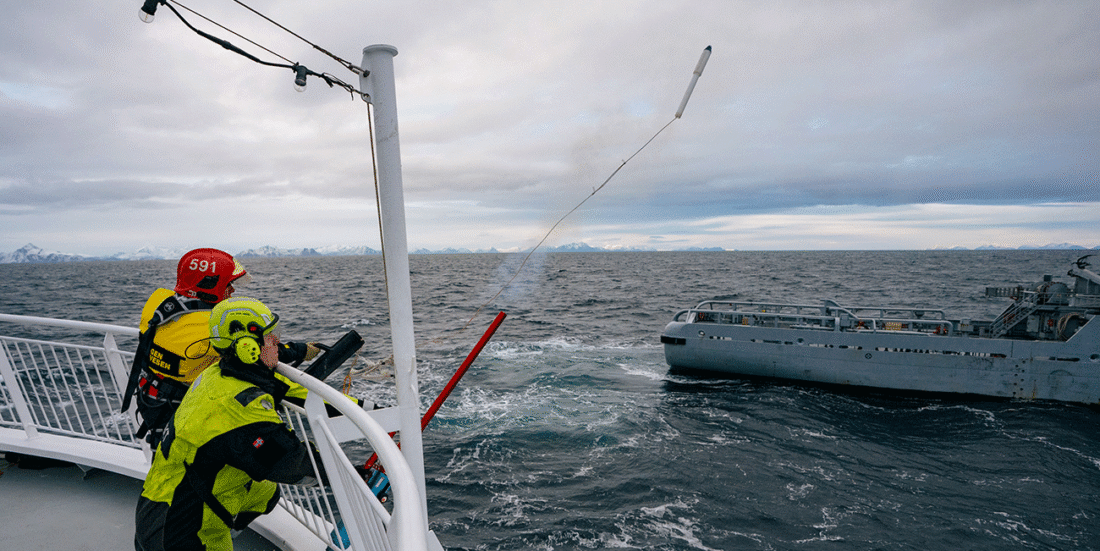
In the Lofoten archipelago off Norway’s northern west coast, a rescue helicopter circles over a cruise ship. Soon, two people and a large bag are lowered onto the deck. Then a line is launched over to the coast guard ship that is right next to it. The cruise ship is ready to be towed. Fortunately, this is only an exercise to test the new equipment and not a real emergency.
Bad weather and challenging rescue conditions are common scenarios when ships need help at sea. Stabilizing the ship and towing it to a safe harbour are paramount. SINTEF and several other partners have now developed new and improved emergency towing gear, which is both lighter and smaller than before.
“We are in the process of establishing a new capability in state preparedness. We will train personnel to board an abandoned vessel and attach a towline. This is expertise that we haven’t had in Norway before, so it is an important step forward,” says Kjetil Aasabø.
Aasabø is head of the department for operations and coordination within the Norwegian Coastal Administration’s environmental preparedness department. He has the professional responsibility for Norway’s towing preparedness.
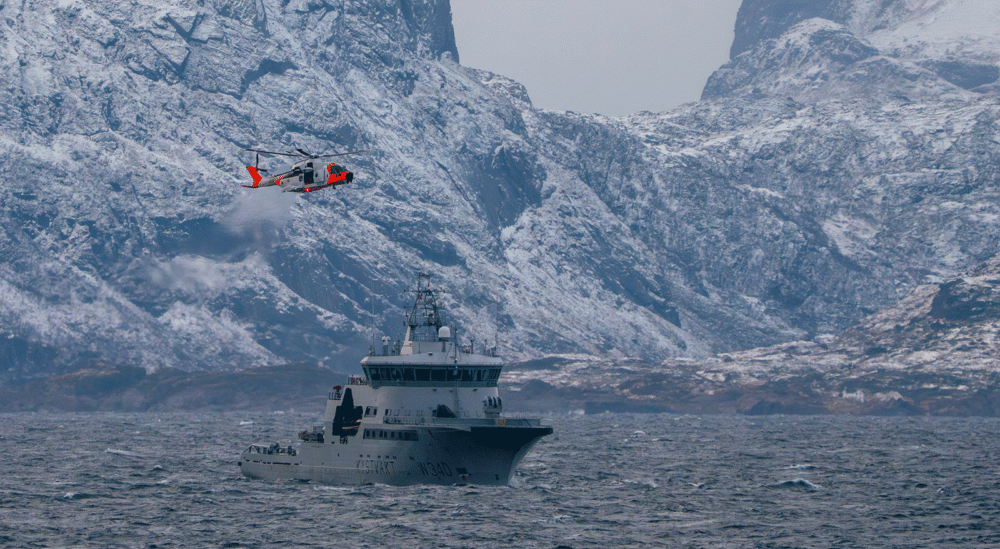
The SAR Queen rescue helicopter and Norwegian Coast Guard ship participated in an exercise off the Lofoten islands in March this year. Photo: Kay Fochtmann
“The new equipment is specially adapted for this purpose. We haven’t had similar equipment before. And, adds Aasabø, rescue operations are much more challenging with the old equipment.
In 2028, new, stricter rules for emergency towing will go into effect. This applies in particular to large ships having more than 20 000 gross tonnage.
Every year, 140 to 170 ships drift in Norwegian waters while waiting to be rescued. The most serious incidents are when ships drift uncontrollably towards land and run aground. A brand new emergency towing system was tested earlier this year off the Lofoten islands.
In the middle of the rescue exercise, a real Mayday message came in. A bulk carrier en route from Russia to Colombia lost engine power and was drifting out into the Norwegian Sea.
Participants in the full-scale exercise included:
- The cruise ship MS Spitsbergen operated by HX Expeditions
- The coast guard ship KV Barentshav, part of the Norwegian Navy
- The Norwegian Armed Forces' 330 Squadron's SAR Queen rescue helicopter.
- Both main rescue centres in Norway – HRS Nord based in Bodø and HRS Sør based in Stavanger
- Traffic control centre in Vardø (NOR VTS)
- The Norwegian Coastal Administration's pollution preparedness in Horten
- RITS force (Rescue at sea) from the Bergen Fire Department
- SINTEF Research Foundation, one of Europe’s largest independent research organizations
- Offshore & Trawl Supply AS
New equipment makes it easier to conduct successful rescues
When a hazardous event occurs, the rescue operation must get underway quickly.
“The equipment to be used must be easy to handle and at the same time able to withstand the extreme forces it’s subjected to,” says senior adviser Ørjan Selvik at SINTEF Ocean, who led the crisis exercise.
Transferring a towline from one vessel to another can be difficult. If the crew has abandoned the at risk ship, that leaves no one on board to receive and secure the towline. Nor is there anywhere to aim the towline if the mooring deck is covered. Or sometimes the ship that has come to the rescue may not have the necessary equipment. Rescue work often takes place in very harsh weather conditions.
When the load is hanging outside, the helicopter cannot fly as far or in as severe weather. The new towing system, by contrast, weighs only 75 kilos and can be taken into the helicopter itself.
In that case, the only way out might be to transport the towline in the helicopter. Emergency towing equipment has so far been extremely heavy and can weigh up to one tonne, making it difficult to transport. Therefore, such towing equipment has been transported in bags under the helicopter.
“When the load is hanging outside, the helicopter cannot fly as far or in as severe weather. The new towing system, by contrast, weighs only 75 kilos and can be taken into the helicopter itself,” says the SINTEF researcher.
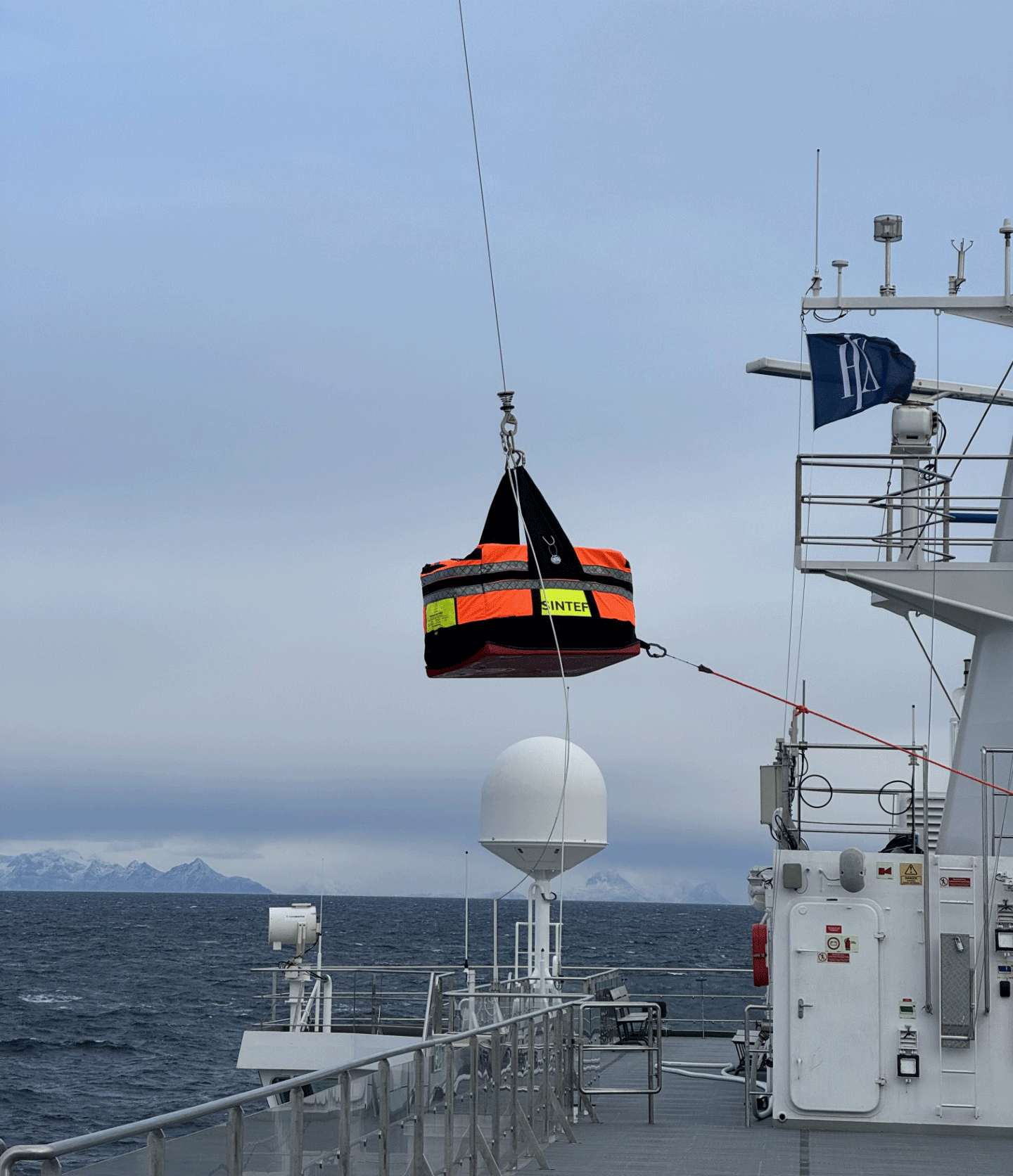
The partners in the EMTOW project have collaborated to develop both new equipment and new handling methods that make it easier to transfer the towing equipment. Photo: Kay Fochtmann
The new equipment consists of a lighter towline and a specially designed bag, a so-called helibag. The towing equipment is packed in the bag to make it easier to transport into the helicopter and carry around the ship.
Challenging operation in tough conditions
The scenario during the rescue exercise in Lofoten: The cruise ship M/S Spitsbergen experiences ‘distress at sea’. The ship is on a seven-day voyage between Tromsø and Lofoten with 220 passengers on board. The Norwegian coast guard ship KV Barentshav is already in place. The SAR Queen rescue helicopter takes the new equipment, circles over the cruise ship, and then the rescuer and equipment are lowered onto the ship.
“When the equipment is safely on deck, the crew carries the helibag to the mooring deck and deploys the towline. The whole setup only takes ten minutes,” says Selvik.
Precious minutes indeed, if it had been a real emergency.
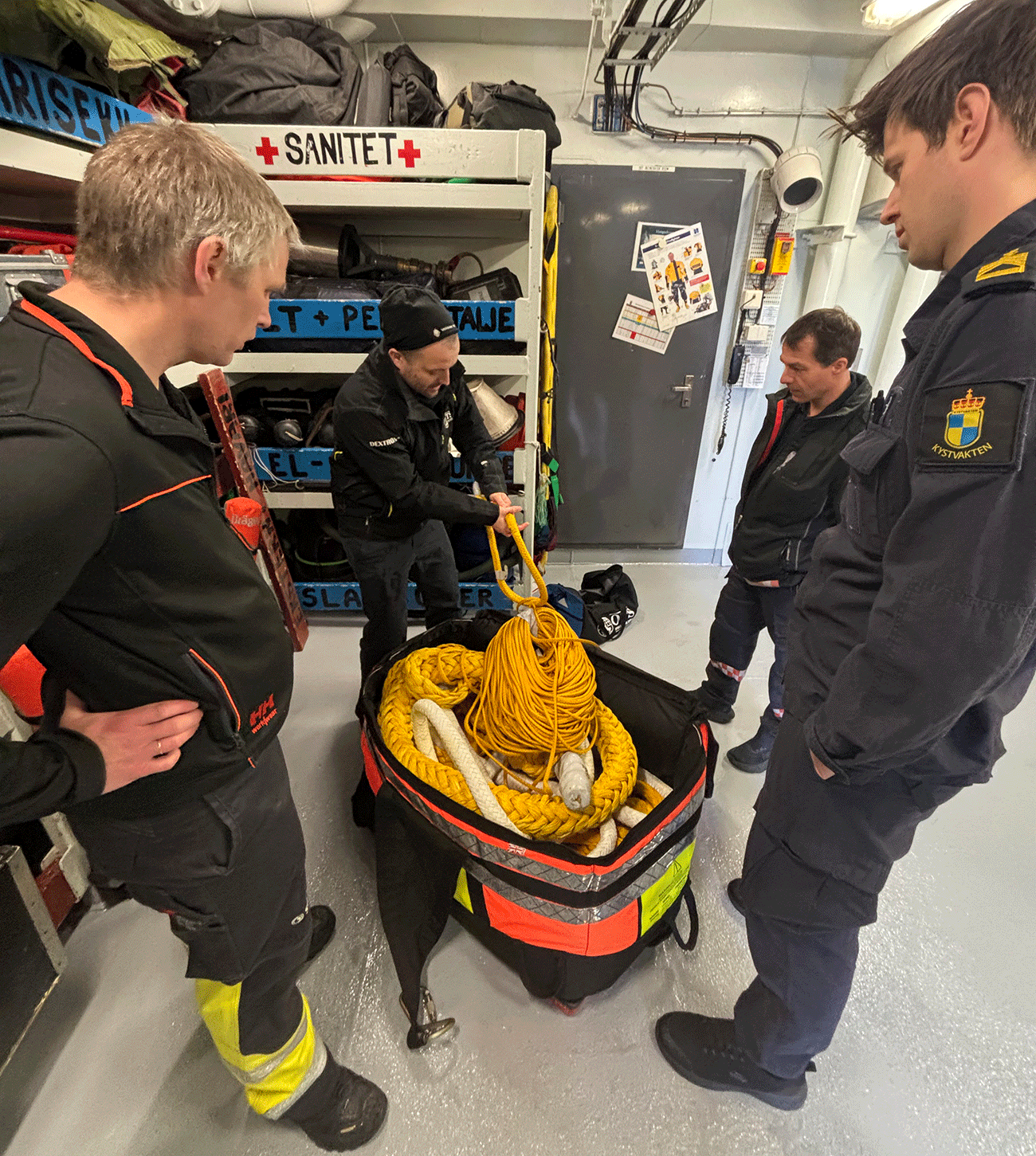
The helibag contains everything that the rescue team needs, and it weighs only 75 kilos. From L-R: Ørjan Selvik, SINTEF; Eirik Homlong, OTS; Cato Bakke Nilsen, Bergen Fire Department and William Terøy, Norwegian Coast Guard. Photo: Eivind Lona.
Concurrently, a real emergency situation is getting serious in another part of Norway. The bulk carrier LMZ Pluto has lost engine power west of the Haltenbanken oil and gas province in the Norwegian Sea. The crew is being evacuated by helicopter, but the ship is left drifting in the waves. The Norwegian Coast Guard is following the situation closely and is continually calculating the ship’s drift path, using a system that was also developed by SINTEF.
When the equipment is safely on deck, the crew carries the helibag to the mooring deck and deploys the towline. The whole setup only takes ten minutes.
Back at the exercise in Lofoten, the air cannon is being prepared to fire the towline from the cruise ship to the Coast Guard ship, which is now ready to tow the cruise ship.
Marius Fjellvær, captain of the M/S Spitsbergen, is following the operation closely.
“It’s absolutely great for us to be part of such a comprehensive exercise, and one that involves so many parties, “says Fjellvær.
It is not unusual to train for possible incidents, but the exercises are often theoretical. But on this day, a full-scale realistic exercise with multiple people involved was being carried out.
Light towing gear that can withstand great forces
The emergency tow must be able to withstand strong forces from ships and the ocean when it has to tow or stabilize a vessel in rough seas weighing many thousands of tonnes. Offshore & Trawl Supply (OTS) outside Ålesund municipality has developed the rope for the towline.
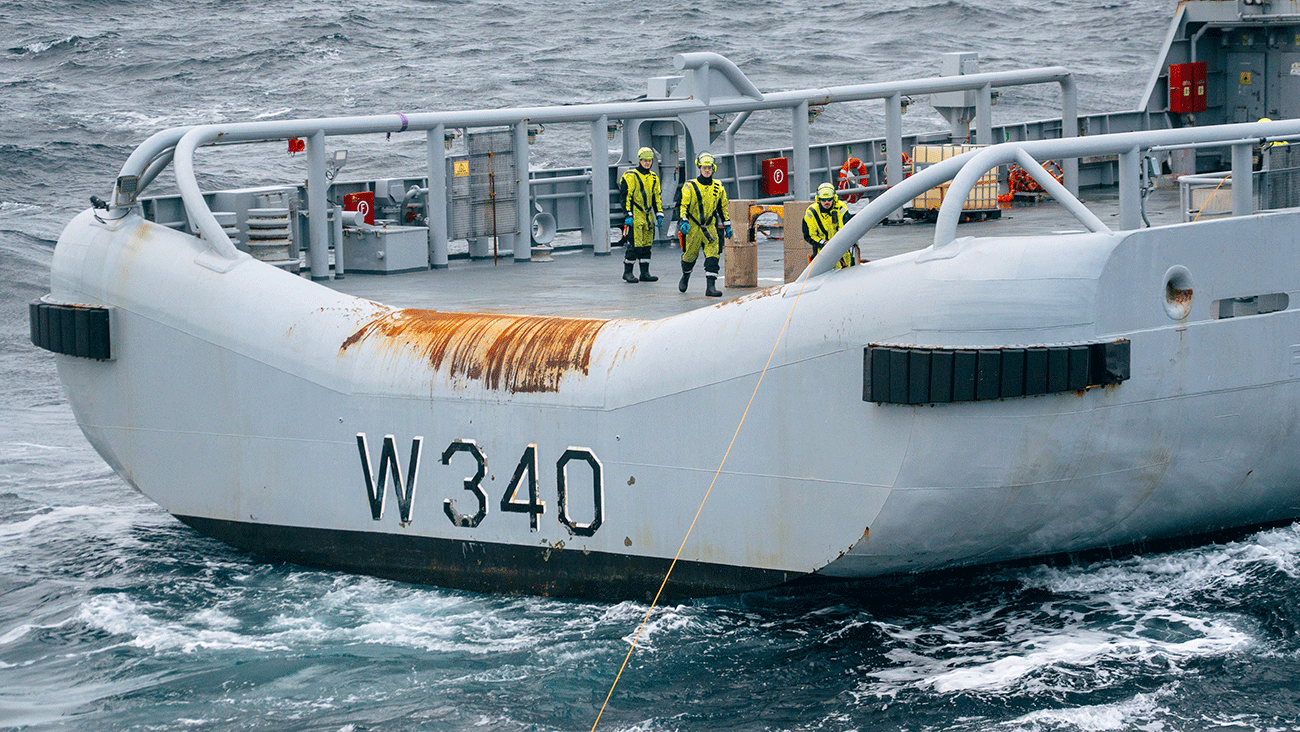
The towline rope is made of a very light and strong fibre, and it is also modular. This makes it easier to load into the helicopter and carry around on the ship, says Eirik Homlong, the chief technical officer at OTS. Photo: Kay Fochtmann
All the individual parts are known technology, but they are being put together in new ways for this purpose, thus providing new solutions. The line can either be shot over to the damaged ship or driven with the help of a sea drone.
“The best innovations are usually intuitive,” says SINTEF’s Ørjan Selvik.
The exercise has several objectives, he says.
“One aspect of the test is seeing how the new towing technology works and figuring out what can be improved further. In addition, everyone needs to practise conducting emergency towing simulations. We need to professionalize the effort,” says Selvik.
New requirements for emergency towing equipment
In 2028, new, stricter rules for emergency towing will go into effect. This applies in particular to large ships having more than 20 000 gross tonnage. They will then be required to have their own dedicated emergency towing system on board. The new rules are the basis for the EMTOW innovation project, funded by the Research Council of Norway and industry partners. SINTEF has been the project manager and Ulstein Design & Solutions AS the project owner. The exercise in Lofoten is part of the project, where new ways of transferring towlines from the salvage vessel, or from the rescue helicopter to ships in distress at sea have been looked at. Ships under 20 000 gross tonnage will remain exempt from having their own emergency towing systems on board.
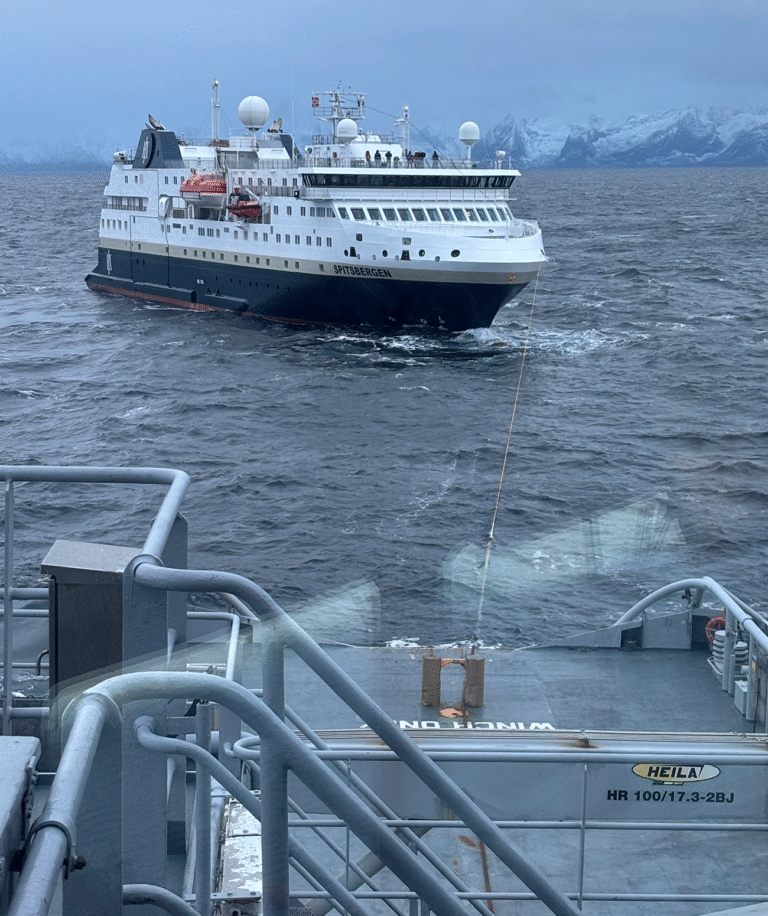
Exercises always provide useful training. And they help prepare crews if something serious occurs. It will contribute to increase the safety for all ships in Norwegian waters, says Selvik. Photo: Eivind Lona
Straight from practice to the real deal
A few days after the exercise, specially trained crews from the Bergen Fire Department are lowered onto the bulk carrier that experienced engine failure out in the Norwegian Sea to connect an emergency tow.
“The crew members who trained on the exercise were the same ones who were lowered onto the LMZ Pluto,” says Aasabø.
The crew attaches a tow to the stern of the LMZ Pluto, which is 190 metres long and loaded with fertilizer. In this way, they gain control of the ship that has been drifting around without a crew and keep it away from installations on the shelf.
The realistic exercise in Lofoten suddenly became the real deal when the real Mayday message appeared.
“It was exactly the type of situation we were practising for,” says Aasabø.
Even though the equipment used during the exercise was not part of the real rescue operation, the crew had trained together and built up a sense of trust among themselves.
“We can see how valuable the new equipment really is. It’s easy to handle and doesn’t take up much space. Now more training sessions need to happen so that rescue personnel know how to use the new equipment,” says Aasabø.