This technology makes it possible to be a seafarer—on land
Uncrewed vessels that navigate themselves and notify operators when they need support from shore-based navigators. However, such ships also require an international regulatory framework. Now, the first version is in place, largely thanks to Norwegian research.
“This is the future of efficient maritime transport, and we are an important step closer to deploying the solution,” says Håvard Nordahl, Senior Research Scientist at SINTEF Ocean.
But what is this really about? Imagine yourself ordering a product. It is shipped in a container and loaded onto a vessel along with many other containers. Today, it’s common for large cargo ships to have a substantial crew on board. But what if the ship were both remotely operated and largely uncrewed?
First of its kind in the world
Technology for autonomous ships already makes it possible to remotely operate uncrewed vessels. This has enabled large offshore ships to be replaced by smaller uncrewed vessels such as Reach Remote 1. It is the world’s first 24-meter uncrewed surface vessel, developed for mapping and inspecting the seabed.
Using this vessel reduces emissions by 90% and crew requirements by 75%. However, since cargo ships must carry freight, remote operations alone will not deliver the same environmental benefits.
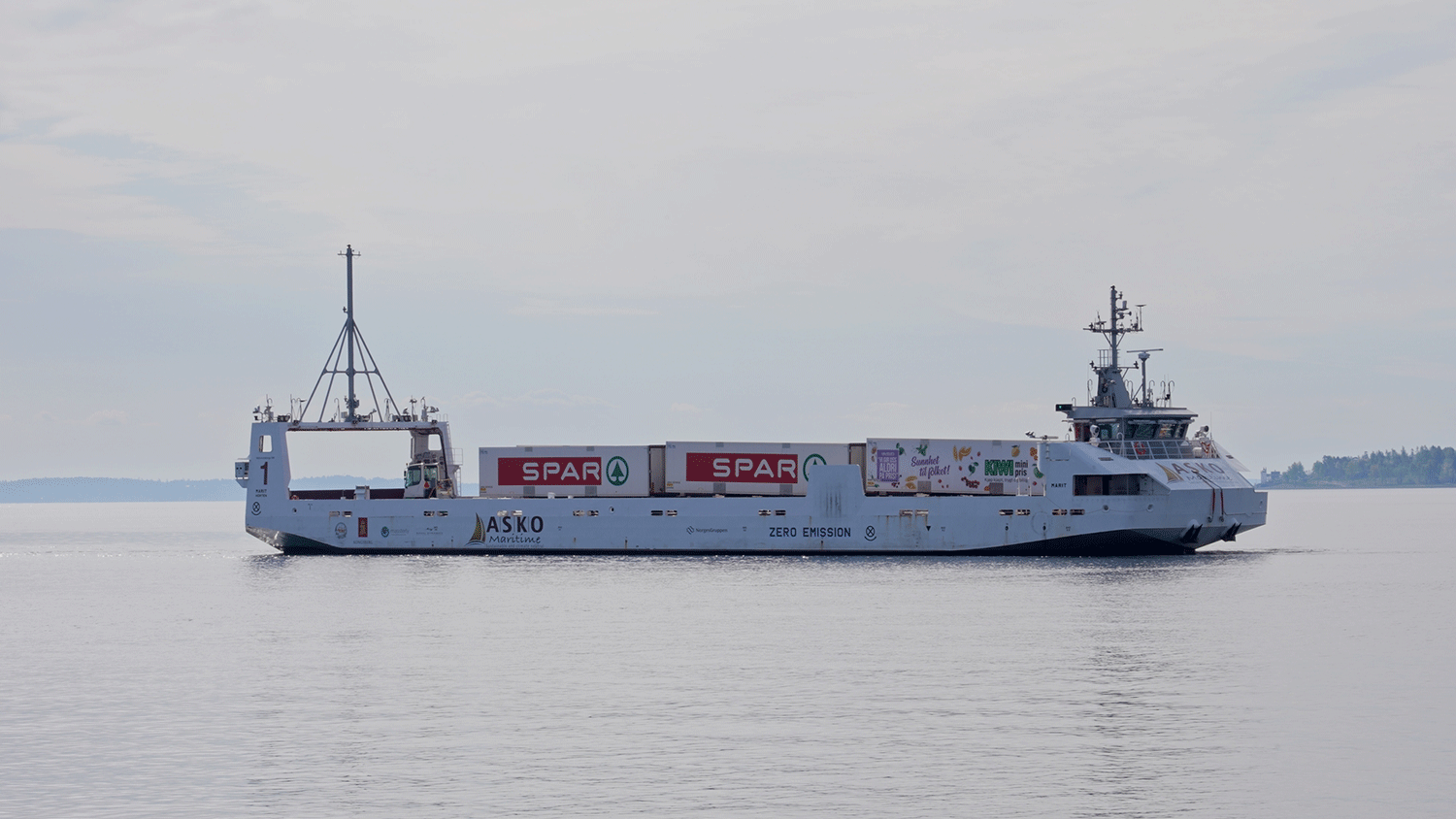
The all-electric Marit is built to cross the Oslofjord without crew on board. As of today, she has two people on board while awaiting final approval. The crew can take control if necessary. Photo: Jørn Stenersen, Kongsberg Maritime.
“What’s needed is to make ships more independent so that one crew can oversee multiple vessels,” says the SINTEF researcher.
More seafarers on land
Both costs and a shortage of qualified seafarers are challenges the maritime industry faces. That’s why technology for autonomous ships has been under development for several years through projects such as Autoship and Ocean. Moving crews ashore offers several advantages:
- It reduces vessel size. Smaller ships mean lower energy consumption and emissions.
- The same bridge crew can oversee more than one vessel, cutting costs and addressing crew shortages.
- Crew members can have a work routine that is more compatible with family life, making the profession more attractive and improving recruitment.
This is good news for an industry struggling with workforce shortages. In 2021, The BIMCO ICS Seafarer Workforce Report estimated a deficit of around 89 000 officers by 2026.
“With more seafarers working from shore, the pool of applicants expands. For example, it may not be possible to work onboard if you use a wheelchair—but the job can be done from a ‘bridge on land,’” says Nordahl.
The SEAMLESS project
SINTEF Ocean and Kongsberg Maritime are collaborating on the SEAMLESS project. The project aims to develop and adapt missing technologies for a fully automated, cost-effective, and robust feeder service for waterborne cargo transport in short-sea shipping and inland waterways.
The project has also contributed to the new voluntary regulatory framework for autonomous shipping, recently adopted by the International Maritime Organization (IMO). The project consists of 26 partners.
Developing fleet management
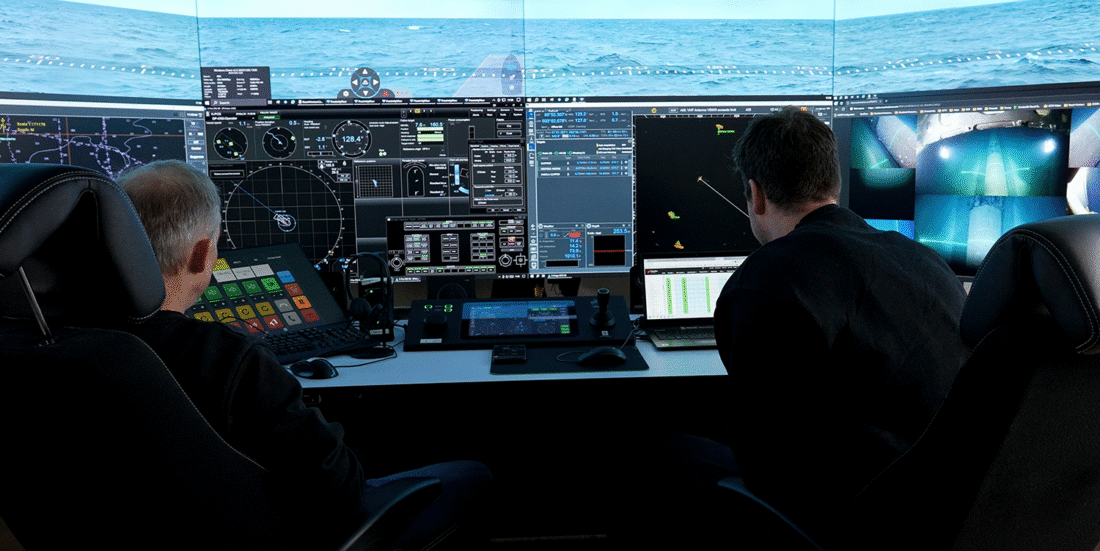
Within the SEAMLESS project, a key focus has been creating effective solutions for information flow between ships and shore-based crews. During normal operations, the crew only sees the most critical information on their screens, enabling them to monitor multiple vessels simultaneously. But if a ship encounters a challenge, the crew is alerted.
“The screens are then reconfigured to give us the same overview we currently have for Reach Remote 1,” says Morten Ingebretsen of Kongsberg Maritime.
If multiple ships encounter issues at the same time, responsibility is transferred to another remote operations crew. In such situations, human judgment is essential.
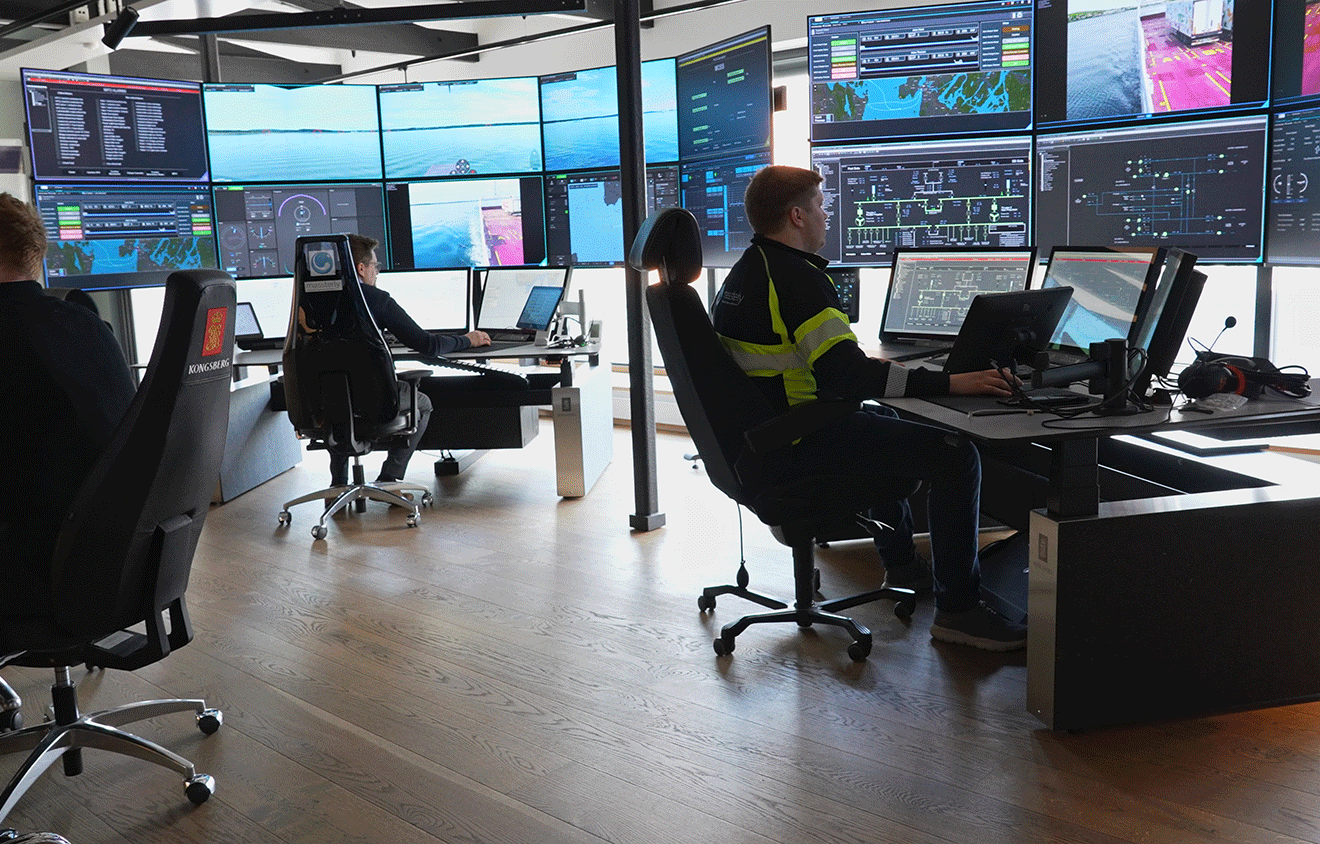
Here, the onshore bridge crew can monitor multiple vessels at the same time. Photo: Jørn Stenersen, Kongsberg Maritime
Approval has been a challenge
Transitioning from crewed to uncrewed shipping is not easy. SINTEF has therefore worked on research-based input for new regulations for autonomous vessels.
“The challenge is that both the technology and the regulations are still immature, and no one has done this before. That’s why we’ve learned a lot through interviews and meetings with the Norwegian Maritime Authority, DNV, Massterly, ASKO Maritime, Reach Subsea, and Kongsberg Maritime,” says Nordahl.
The project has helped partners move significantly forward. Today, three ships are operating without a chief engineer on board. Instead, the chief engineer sits in a remote operations centre and oversees all three vessels.
The next goal is to gain approval to move the navigator ashore, followed by the captain. At that point, the three ships will operate under autonomous fleet management.
“With the International Maritime Organization now adopting the voluntary regulatory framework for autonomous shipping, this is an important step forward. The next phase is to build experience using this framework, which in a few years will evolve into regulations that everyone must follow. So, while we’re not at the finish line yet, this is a major milestone, and we continue to actively contribute to regulations and approval methods,” says Nordahl.
Demonstrating that it works
The SEAMLESS project recently demonstrated in the Oslofjord that managing multiple vessels within a single fleet is feasible in real-world conditions. The exercise, conducted in late May and presented in early June, was crucial in showing both customers and regulatory authorities that this is a realistic solution.
“Seeing the technology in operation is always better than seeing it on paper,” says Ingebretsen of Kongsberg Maritime.
SINTEF acted as technical coordinator, planning and coordinating development leading up to the demonstration.
“The work behind the demonstration has taken several years, with many strong partners involved,” says Nordahl.
So, when you order a product in the future, it will most likely be transported by an autonomous vessel from somewhere in the world—and delivered to wherever you may live.