A radical shift more than a century ago transformed European views on homosexuality
The turn of the 20th century has been referred to as the homosexual breakthrough in Europe. A recent study has analyzed literary texts in which Norwegian nature plays an important role in conveying this perspective.
Around the turn of the 20th century, Europe experienced a growing fascination with same-sex sexualities. Knowledge about non-heteronormative sexual orientation broke through into the European public sphere.
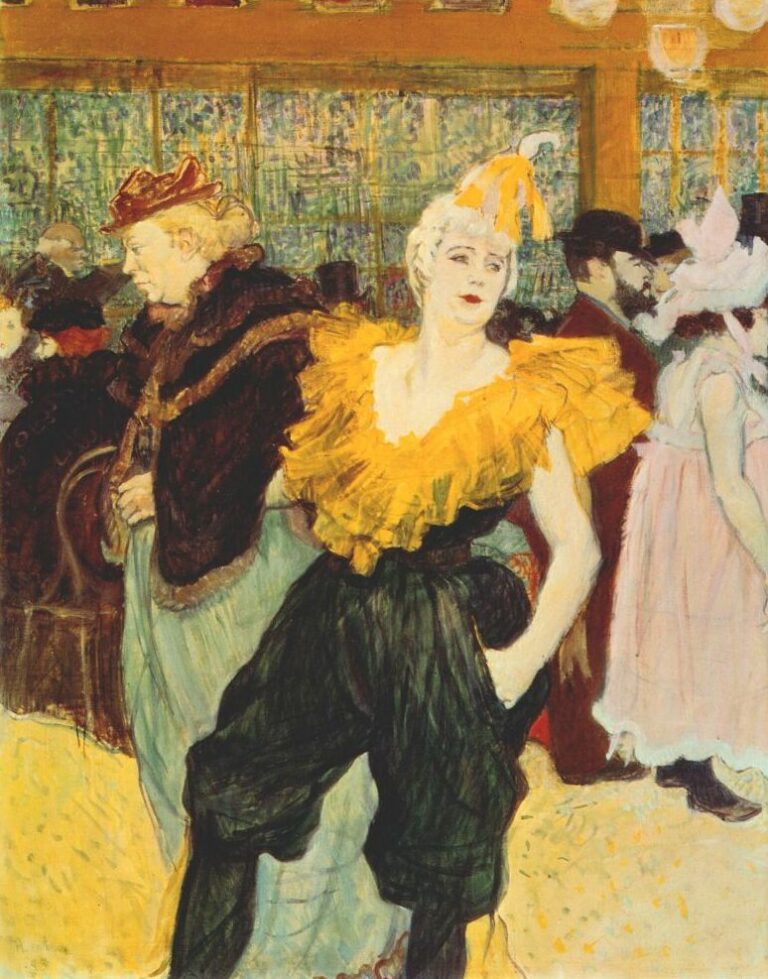
The cabaret venue Moulin Rouge in Paris was a popular meeting place during this period. *“La clown Cha-U-Kao au Moulin Rouge”* (1895) is one of Henri de Toulouse-Lautrec’s paintings from there. License: Public domain
The period spans from the 1890s up to the major backlash in human rights for lesbians and gays in the 1930s.
In Scandinavia, this period has been referred to as the homosexual breakthrough.
Through analyses of three literary texts from this period, Per Esben Svelstad has investigated how Norwegian nature is portrayed and interpreted in stories about desire between people of the same sex. He has focused on how ideas about gender, sexuality and nature are intertwined in European literature.
“The texts are about same-sex love, and important parts of the plots are set in Norway,” said Svelstad, a professor of Norwegian at NTNU’s Department of Teacher Education.
- You might also like: Why opera was liberating for women
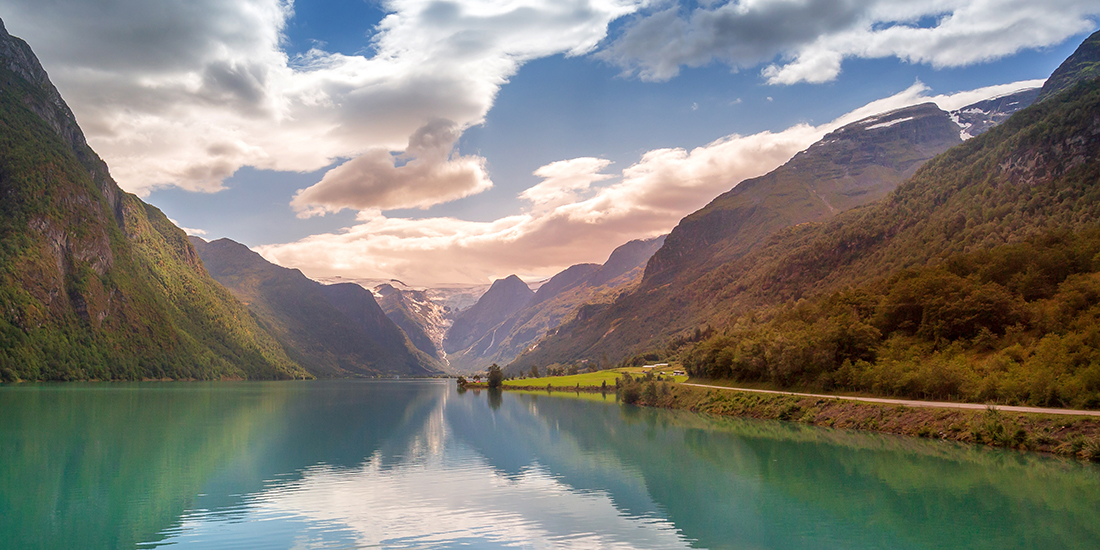
Wild and rugged Norwegian nature
Norwegian nature illustrates and symbolizes several different layers in the three texts. Among other things, nature is used to underscore the drama in the events that take place. The texts convey a perception of nature as uncontrollable, wild and powerful.
However, there is always a duality in the portrayal of Norwegian nature.
“It is not only a representation of the untamed and wild. During this period, the Nordic region was associated with vitality, purity and masculinity. The three authors draw on this notion to portray homoerotic attraction as transgressive and potentially dangerous,” explained Svelstad.
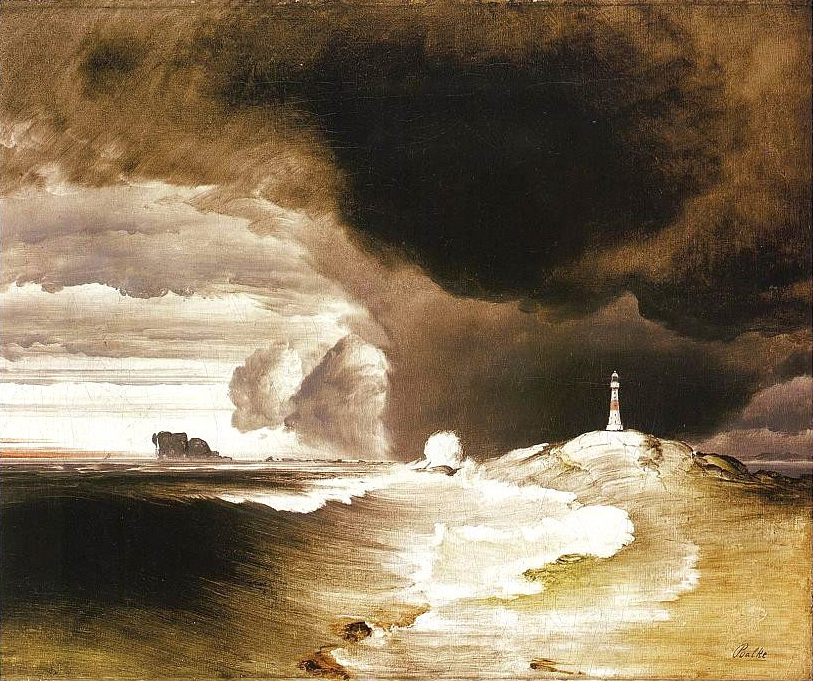
Powerful natural forces in Peder Balke’s “Lighthouse on the Norwegian Coast” from 1855. Belongs to the National Gallery. License: Public domain
Scandinavia was suddenly “in”
Nature is depicted as a symbol of moral profundity, purity and sublimity – in contrast to urban environments. The texts reflect contemporary shifts in perceptions of Scandinavia as an exotic, novel and magnificent travel destination.
In the wake of the Industrial Revolution and urbanization in Europe, there was growing scepticism about urban civilization; it represented disease and degeneration. During this period, Norway and the Nordic countries became popular as a new destination for the European cultural elite.
Svelstad quotes cultural historian Nina Witoszek, who describes the perception of Norway as follows:
“Suddenly the existing moral geography was turned on its head: what was once regarded as a realm of ‘ice tongues, foul air and miasmas’ was now elevated into a region of the sublime: of power, vastness, infinity and magnificence.”
During this period, tourism to Norway and the Nordic region increased. The cultural elite on the continent regarded Norway as a paradise for first-class fishing, hunting, hiking and mountain climbing in pristine surroundings.
“Norway’s status as a privileged destination for nature tourism is reflected in all three texts,” explained Svelstad.
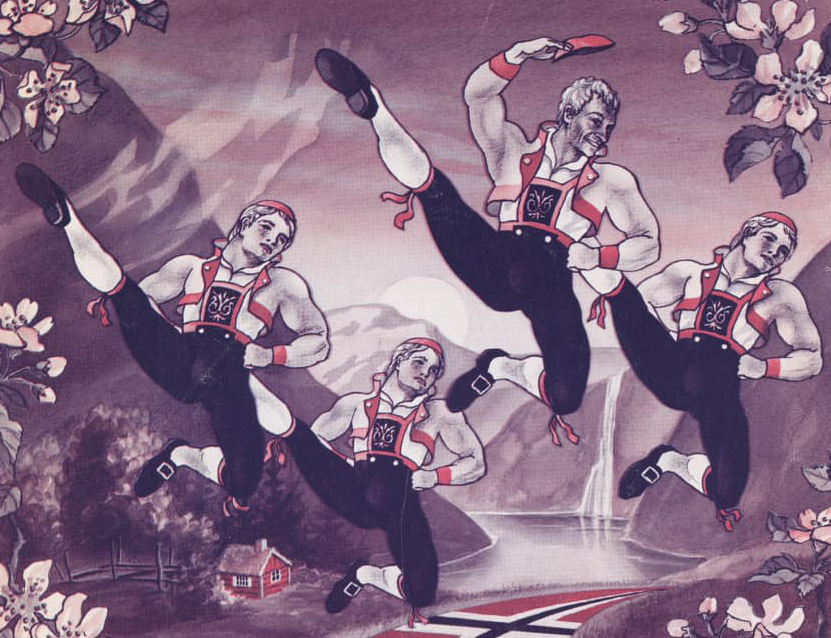
This is the album cover for the band Norske gutter’s debut single from 1980. The cover blends national romanticism and homoeroticism in a statement of queer identity. The band’s frontman, Stein Fosslie, also founded the sexual-political magazine *Supergutt*. Album cover: Hans Petter Harboe. Photo: National Museum / Annar Bjørgli
Image reversal
“At that time, homosexuality was portrayed in much of the public debate as something that was against nature, something unnatural. In some of these texts, however, this image is turned on its head. Homosexuality, or same-sex love, could be defended as something natural and healthy by placing it in the context of wild and untouched natural landscapes,” added the researcher.
These are the three texts:
‘Noodlot’ (1890) by Louis Couperus: A love triangle between two men and a British woman that ends in murder, where a trip to Norway is a key part of the plot.
‘Monsieur Antinoüs et Madame Sapho’ (1899) by Luis d’Herdy: A marriage of convenience in which both wealthy spouses have secret same-sex relationships. In this story, a mistress dies in Norway.
‘Freitod’ (1924), published under the pseudonym ‘L. Omen’: A young boy called Friedrich follows his friend Hanns to Nordkapp, where the latter decides to commit suicide after the loss of his boyfriend. Friedrich feels the urge to follow his friend into death, but ultimately decides against it. Instead, he chooses to channel his sexual drives into working for the betterment of society.
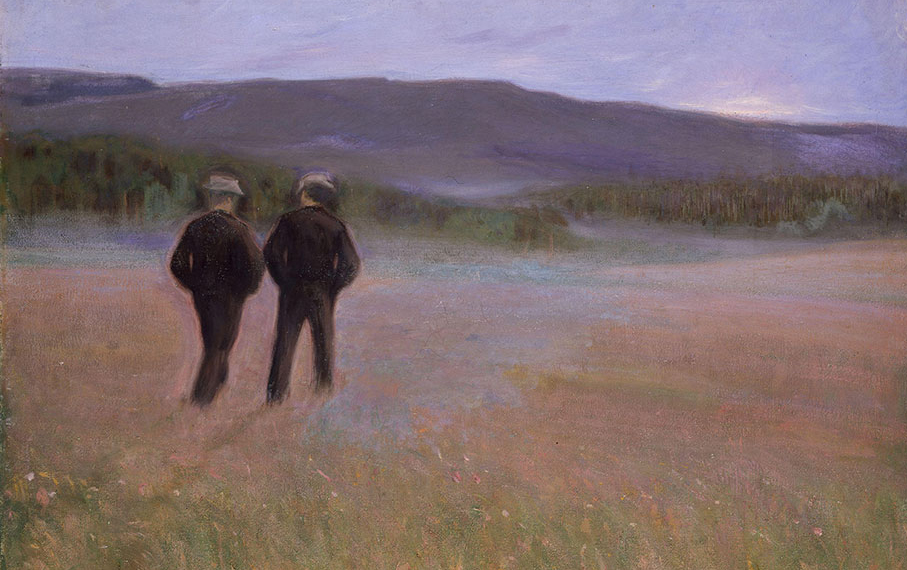
The painting “Summer Evening” from 1893 by Halfdan Egedius was originally titled “The Night Runners” and refers to the custom where boys, late at night after a party, would sneak hopefully into the storehouses where girls slept. The painting has also been interpreted as depicting a relationship between two men, walking in close intimacy, surrounded by a glowing, vibrant outline. Photo: National Museum, J. Lathion
The heyday of rugged men
The beginning of the 20th century marked a golden age for the exploration of wildernesses and untouched landscapes such as the North and South Poles. It was also a time in which there were many scientific discoveries of natural phenomena. The period could be described as the heyday of rugged men, explorers and great scientists.

Per Esben Svelstad. Photo: Vegard Watten
“The wilderness and the Arctic served as arenas for masculine discipline and education. Controlling nature is a very masculine project, and nature is something that the modern, strong man must master,” said Svelstad.
This is an idea that the three authors both engage with and challenge.
They challenge heteronormative society by linking gender, sexuality and nature in ways that reflect and, to some extent, contradict the notion of homosexuality as unnatural.
- You might also like: A translated Latin masterpiece holds its relevance
Dinner at Britannia and sadness in Molde
In the novel ‘Noodlot’, two male friends live an extravagant life together in London. The story, which develops into a love triangle, takes place during a holiday in Norway.
Among other places, they stay at the esteemed Britannia Hotel in Trondheim, and the friends go out on a mountain hike to Geitfjellet in Bymarka. During the hike, they meet the British aristocrat Eve, and as she looks out over the landscape, she exclaims excitedly: “It’s almost like Italy!”
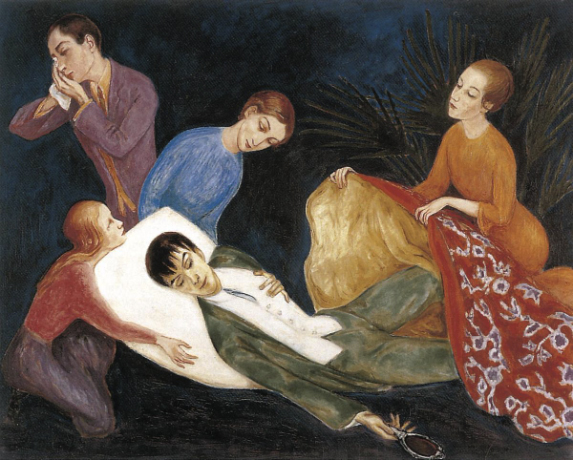
The painting “The Dying Dandy” by Nils von Dardel can illustrate the drama in Noodlot. License: Public domain
Later, the trip continues to Molde, where the atmosphere is far from pleasant.
“This part of the novel does not paint a very pretty picture of Molde and Moldeheia. Everything is dark, wet and dreary. This symbolizes the betrayal and drama between the men,” explained Svelstad.
The erotic love triangle ends in murder.
“In a way, there is something very cold and decadent about the Norwegian nature in this novel. It is not always a healthy place to be, and it brings about death.”
- You might also like: Searching for hidden medieval stories from the island of the Sagas
Contrasting perceptions of homosexuality
“During that period, there were two main views on homosexuality. Many people perceived gay men as feminine and decadent. Others thought gay men were more masculine than other men; that they only sought male company and completely rejected the feminine from their lives,” said Svelstad.
The texts use Norwegian nature to reinforce these different perspectives. In both ‘Noodlot’ and ‘Monsieur Antinoüs et Madame Sapho’, homosexuals are portrayed as breaking gender norms: the homosexual man is feminine, and the homosexual woman is masculine.
“But while the former uses Norwegian nature to portray homosexuals as a threat to society and the institution of marriage, the latter has a more activist tendency, presenting homosexuality as just as natural as heterosexuality,” explained Svelstad.
“Finally, in the anonymously published short story ‘Freitod’, we encounter a view of nature as masculine and untamed, reflecting an alternative perspective of the homosexual man as strong, spiritual and a builder of communities,” added the professor.
The duality of nature
The duality in the portrayal of Norwegian nature is constantly present in the texts, ranging from decadent landscapes to vitalist ideas. Despite their differences, they share a perception of nature as uncontrollable and powerful.
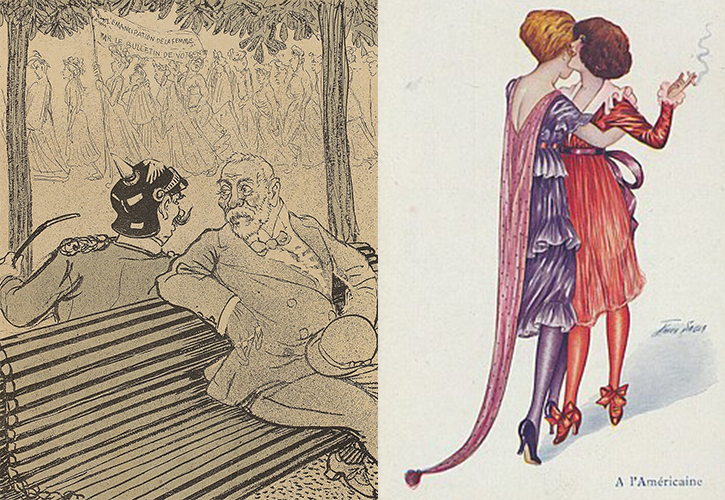
Left: A newspaper illustration of the Harden–Eulenburg affair from 1908, which circulated rumours of homosexual connections within the social circle of German Emperor Wilhelm II. The figures in the drawing are placed in a park in Paris that served as a meeting place for gay men. Public domain. Right: *Women Dancing as a Couple*, a 1930 postcard by Xavier Sager. Public domain
“I combine queer theory and ecocriticism to analyze how Norwegian nature is gendered and sexualized. It shows that homosexuality has historically been perceived both as ‘against nature’ and as a result of excessive culture, creating a double marginalization. Norwegian nature appears as a symbol of the sublime, moral profundity and the untamed, in contrast to urban environments,” Svelstad said.
Reference: The Queer Fatality of Norwegian Nature, Deshima, Arts, Letters et Cultures des pays du nord