Could this simple measure help in the fight against antibiotic resistance?
Antibiotics save lives, but they are also a global health threat. Scientist Noëlie Maurin at SINTEF has an idea that could help solve the problem: Remove antibiotic residues before they are flushed down the drain.
Maurin’s proposal was one of three that emerged victorious from the Norwegian water industry’s annual innovation competition, Thoughts from the Blue Sky. Now the idea is attracting interest as a possible low-cost measure to combat a global health and environmental problem.
Invisible emissions
Most of us don’t think too much about what happens to medications after we take them. But their residues do not disappear.
“Antibiotics are now ubiquitous in the food chain. Overexposure is therefore a major problem,” says the SINTEF researcher.

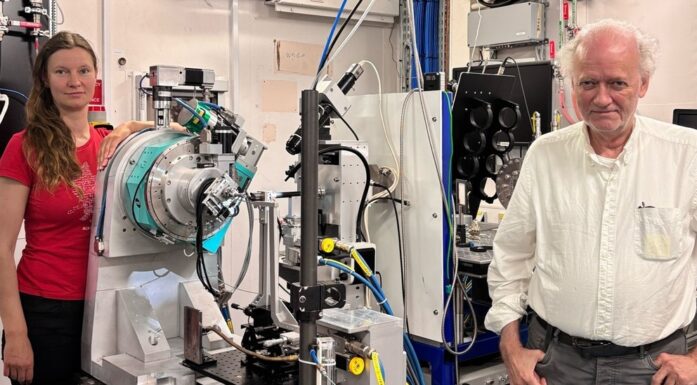
Noëlie Maurin is rethinking how we can combat antibiotic resistance. She has now received the Norwegian water industry’s award for her work. Photo: SINTEF
Every year, an estimated 8 500 tonnes of antibiotics end up in the world’s rivers. That’s close to a third of the total human antibiotic consumption. These emissions result not only in pollution, but also contribute to the development of antibiotic resistance, one of the biggest threats to global health.
Antibiotics are now ubiquitous in the food chain. Overexposure is therefore a major problem.
Our drinking water is also at risk. Measurable concentrations of antibiotics have been found in both tap water and bottled water.
Remove antibiotics at the toilet bowl stage
Attempts to remove drug residues usually occur at wastewater treatment plants. However, by the time the wastewater has arrived there, the concentration of antibiotics in the water has already been significantly reduced.
During a ten-day course of antibiotics, one person excretes about 30 grams of antibiotics that end up going down the drain, but they are flushed out in enormous quantities of water.
“The idea is instead to treat this pollution directly at the source, in the urine, where the concentration is high,” she writes.
That is why she is shifting her attention away from the large treatment plants, and towards the bathroom.
A simple solution
The solution is simple in principle. A small receptacle containing a filter with activated carbon is attached to the toilet. It captures antibiotic residues before they are flushed further and end up much diluted in the treatment plant.
Activated carbon is well known in connection with water purification, because the material effectively binds organic compounds, including drug residues. Purifying water where the residue concentration is high avoids the problem of dilution.
“A solution like this at the source would reduce the dilution effect and increase the degree of purification,” says Maurin.
Can be used anywhere
One of the strengths of Maurin’s idea is that it does not require major investments in infrastructure. “Fourth purification stages” are being discussed in some wastewater treatment plants to remove microscopic contaminants, but such solutions are expensive, technically demanding and take time to implement.
Maurin’s proposal, however, could also work where advanced purification is not available, such as in smaller cities and in countries with limited resources. It could also supplement existing systems.
She points out that the solution could significantly reduce the impact of antibiotics at low cost, and that it could be used anywhere.
She has also thought about how this would work in practice, and suggests that the funding could come from authorities or the pharmaceutical industry.
Maurin suggests that people could pick up the filter at the pharmacy when they go to pick up their antibiotic prescription, and return it to the pharmacy after completing the treatment.”
This moves the purification closer to the source, and the handling responsibility is more directly linked to consumption.
Small steps, big impact
Antibiotic resistance is often described as a “silent pandemic.” Well-known measures such as reducing the use of antibiotics are important, but not enough. The emissions also need to be managed.
Maurin’s contribution shows that solutions don’t have to be complicated to be effective. Sometimes they can be surprisingly simple. And in this case, a cup of activated charcoal can be a small but important step in the fight against one of the biggest health challenges of our time.