How to get people on board with green neighbourhoods
Resident involvement is often described as the weakest link in sustainable urban development. A new study suggests a practical solution to the problem.
Antibiotics save lives, but they are also a global health threat. Scientist Noëlie Maurin at SINTEF has an idea that could help solve the problem: Remove antibiotic residues before they are flushed down the drain.
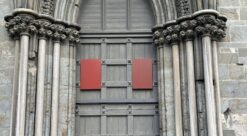
Just like the cathedral itself, the wood that will be used for the new doors may hold secrets. That’s why researchers need to test the oak before the doors are built.
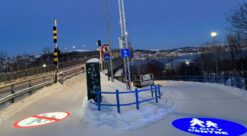
With increased pressure on the Arctic, a secure water supply is becoming a critical part of emergency preparedness in Svalbard. Now researchers are investigating how Longyearbyen’s only source of drinking water can be better secured.
European coastal areas are under increasing pressure. Researchers are investigating ways to reverse this trend and help communities adapt to climate change.
A new tool is helping researchers simulate erosion and climate change, turning data into action.
Premature babies are particularly susceptible to strong sensory impressions and high sound levels from the incubator. Now researchers will look at what can be done to protect children’s hearing and development.
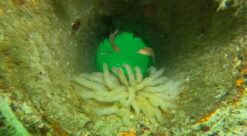
It can take up to 200 years for damaged marine environments to fully recover by just stopping the destruction and leaving the ecosystems to themselves. That is why we must implement active restoration interventions.
Locomotives that run on diesel can be electrified. This would both cut CO2 emissions and significantly reduce overall energy consumption, according to a new study.
It could take up to 200 years for our degraded ocean habitats to fully recover if we just leave them alone. So, we must intervene. The good news is that it works.
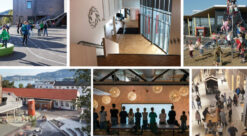
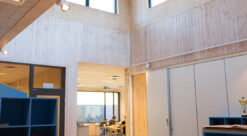
We need to think more about the interaction between architecture, pedagogy and different forms of learning when we plan new schools, researchers say.
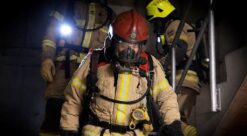
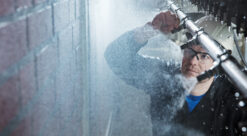
Firefighters do hard physical work while being exposed to great heat strain. Now we know more about what happens to their body temperature during a smoke dive.
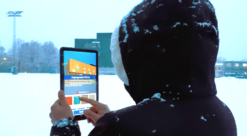
How can we increase our understanding and commitment to environmentally friendly architecture? There is much evidence to suggest that visualisation using AR can help us.
It is essential that Norwegian towns and cities become climate-neutral. But how do we get this done? On the site of the old Oslo airport at Fornebu, researchers are demonstrating how real transformation can be implemented in practice.
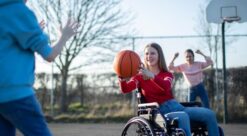
Only one in three Norwegian municipalities monitors accessibility in its schools. The Norwegian Association for the Disabled is demanding urgent action.
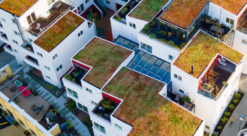
More green roofs and facades will help to create more space for natural habitats in our urban environments. A new set of guidelines has been prepared for those of us looking to green our roofs.
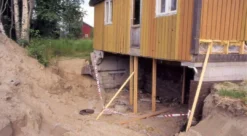
Students, researchers and the building industry are collaborating to adapt our homes to climate change. And they’re identifying solutions that hadn’t been obvious before.
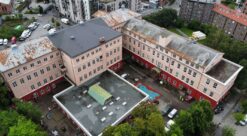
Researchers are testing and protecting old brickwork as their contribution to the renovation of the heritage building Sophies Minde in Oslo. Results indicate that much of this material can be reused.
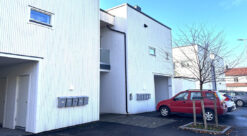
Families who obtained help to purchase their homes improved their lives in many ways. But outcomes were not so positive for those renting as part of affordable housing allocation schemes.
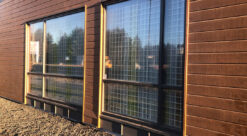
Results from a major study may contribute towards developing windows that can withstand harsher climatic conditions involving heavier rainfall and stronger winds. Because that’s exactly what we can expect in the future.
Was your house damaged following the recent ‘Hans’ extreme weather event? SINTEF can advise you about what you can do to limit the extent of the damage.
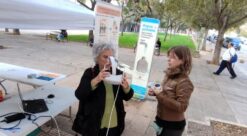
In Palma de Mallorca in Spain, researchers are planning to use VR headsets to encourage resident participation in a community project.
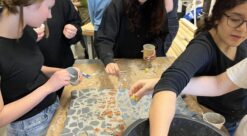
Recycling is the guiding principle behind the new Voldsløkka school and Culture Centre. Pupils are taking part in an art project as their contribution to the research project called ARV.
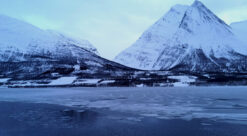
Norwegian fjord and coastal ice represent a potential security threat, as it may cut off entire communities from the outside world.
How to know whether building materials are fit for reuse? A new guide can tell.
Did you know that light is a factor that affects both learning and the psychological development in school children? The right kind of light can boost performance in reading, writing and maths, and suppress restlessness and aggression.
It is difficult to recycle artificial turf and there are no obvious deposit-return systems for these plastics on the market. But researchers are now looking to find a solution to the problem.
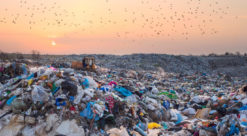
Using non-recyclable plastic waste as an alternative to coal may prevent huge volumes of plastic from being discarded into the oceans – and will also reduce CO2 emissions. This is the conclusion of a recently completed pilot project headed by SINTEF in Vietnam.
What if a concrete building could heat itself – while being built? Research scientists are about to make this dream a reality.
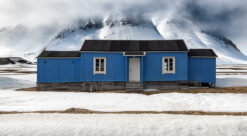
The cultural heritage of Svalbard is unique. It reflects human life and activity in a harsh and fragile environment. Researchers are now working to preserve it for posterity.
New research is showing that a combination of perceived risk and worry determines the forms of transport chosen by pedestrians and cyclists.