Helping the youngest children thrive at school
Passion projects and more physical activity help more children enjoy school more.
Well-being and school results are inter-connected, but some children simply do not enjoy school. So what can we do to make school a happier experience for more children?
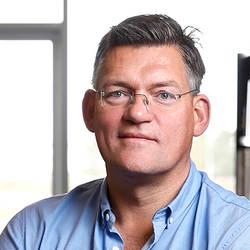
Hermundur Sigmundsson. Photo: NTNU
Professor Hermundur Sigmundsson works at NTNU’s Department of Psychology and has spent many years conducting research on learning and schooling.
He and his colleagues are currently carrying out a project in Vestmannaeyjar in Iceland. Among other things, they have investigated whether more physical activity early in the day and a passion project class at the end of the school day affect how much the youngest children enjoy school.
The researchers therefore gave children in Years 1 to 3 at the primary school in Vestmannaeyjar more physical education and opportunities to choose activities at the end of the school day – something they called the ‘passion project class’.
More physical education = greater well-being
“In Iceland, children in primary and lower secondary school normally have two hours of physical education and one hour of swimming per week. But the children in our study were given two additional hours of physical activity per week,” said Sigmundsson.
That corresponds to around 72 school hours over the course of a school year. The researchers believe that this will increase the children’s well-being.
Recommended daily schedule
Before lunch:
- More frequent physical activity in the morning (2 extra hours in Iceland, 3 in Norway)
- Basic skills for 35-40 min with a 10-15 min break between each class
After lunch:
- The training class (the first class after lunch). Children are given the appropriate challenges in relation to their skill levels in basic subjects. If there are three groups of 16 students, the special education teacher comes. and takes the children who need the most help and support.
- The first year is mainly focused on reading, while reading and math are the focus in the second year.
- The passion class is offered every day in the last class. Students get to choose between 5 to 7 different activities. Just being able to choose is important for well-being, the researchers found, who call it autonomy.
‘Passion project classes’ are even more popular
Increasing physical activity is not the only measure the research group has implemented. Previously, they also introduced ‘passion project classes’.

The youngest children benefit from more physical activity and lessons where they are free to do things they enjoy. Photo: Svava Þ. Hjaltalín
“Physical education and the additional two hours of physical activity are scheduled at the beginning of the day. The pupils also have a passion project class at the end of every school day,” explained Sigmundsson.
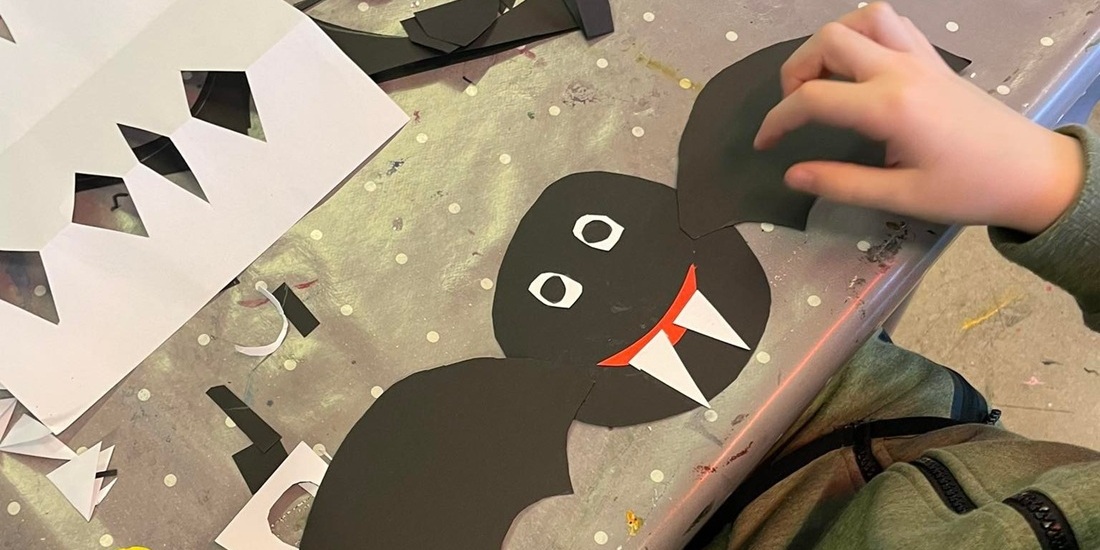
In the passion project class, the pupils can choose among activities such as painting, music, crafts, sewing and knitting, and food and health. On Fridays, the passion project class ends with singing and dancing.
“Physical activity and the passion project class are the subjects the children both enjoy the most and feel they master the best,” said Sigmundsson.
The passion project class is the most popular and gives the greatest sense of mastery among all the school subjects.
This holistic approach, which includes both extra physical activity and the passion project class, seems to be working.
“Our pupils score significantly higher on the question ‘Do you enjoy school?’ than a control group of Norwegian children,” added Sigmundsson.
‘Ignite the Spark’ increased literacy
The programme is part of ‘Kveikjum neistann’ (Ignite the Spark) – an Icelandic educational research project with a holistic approach to schoolwork, developed by Sigmundsson. (See the fact box.)
Light the spark (Tenn Gnisten)
- Light the spark/Kveikjum neistann was launched in the autumn of 2021 in Vestmannaeyjar Primary School. The project is a holistic approach to school that is built on the world's leading researchers such as K. Anders Ericsson (learning, targeted practice and follow-up), Mihaly Csikszentmihaly (fluency, challenges in relation to skills), Heikki Lyytinen and Stanislas Dehaene in relation to reading (phonics, from the simple to the complex).
- The project is a 10-year development and research project with a holistic approach to school work.
It is supported by Vestmannaeyjar Municipality, the Ministry of Education, the University of Iceland and Samtök Atvinnulífsins.
“This is the fifth year at Grunnskóli Vestmannaeyjar school and the third year at Lindaskóli school,” said Sigmundsson.
This study included 146 Icelandic pupils, and 1185 children were included in the Norwegian control group.
Increased well-being is by no means the only good result the researchers have achieved. The children have also become better at reading, which is a foundation for improved performance in many subjects. (See the fact box.)
Reading skills and results
Kveikjum neistann (Ignite the Spark) – Iceland.
Results from Vestmannaeyjar with the READ method:
1st grade (spring 2022):
• 100% break the reading code (can read words)
• 96% read sentences
• 88% read text
2nd grade (spring 2023):
• 83% read and understand text
• Control group: 52% (N=498 children in Iceland)
3rd grade (spring 2024):
• 91–93% read and understand text
• Control group: 64% (N=401 children in Iceland)
“With focused training, good support and assessment, all the children in our project manage to crack the reading code by the end of their first year of school,” concluded Sigmundsson.
- You might also like: Children learn to read faster – given appropriate challenges
Orders from above

The “passion project class” is by far the most popular activity. Photo: Svava Þ. Hjaltalín
Norway’s Minister of Education Kari Nessa Nordtun has called for measures that can increase well-being in primary and lower secondary school, motivate pupils, and include more arts and crafts in the school day.
“This is exactly what we are working on in Ignite the Spark,” said Sigmundsson.
Three schools in Norway have now introduced additional physical activity and passion project classes every day, and two schools are implementing the ‘I CAN/We CAN’ intervention. In addition, the MOT (Show Courage) session implements the ‘I CAN’ programme for 16,000 Year 10 pupils each year. You can read more about it here.
Even though the project in Iceland still has five years left to run, the researchers have already identified several factors that can make the school day both more enjoyable and more effective for the children involved.
Reference: Sigmundsson H. Ignition project in Iceland: Exploring well-being, safety, enjoyment and perceived competence in school subjects in children from 6 to 9 years of age. Acta Psychol (Amst). 2025 Oct;260:105654. doi: 10.1016/j.actpsy.2025.105654. Epub 2025 Oct 9. PMID: 41072296.