Pickpockets and poets – creating elite mindsets in football
New research from NTNU’s Department of Psychology indicates that elite footballers experience lower levels of competitive anxiety than amateur players, despite performing under intense scrutiny.
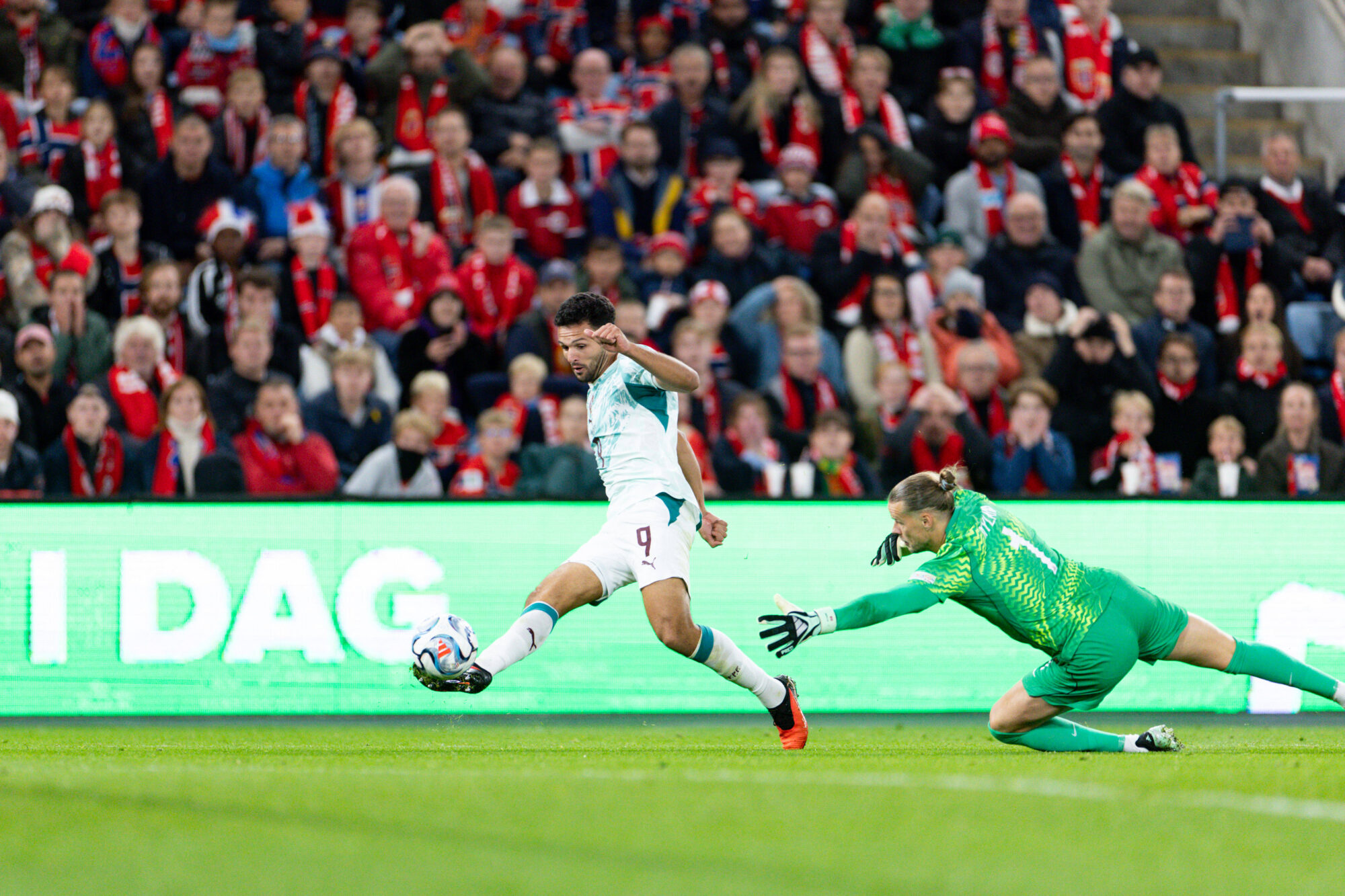
Norwegian goalkeeper Orjan Nyland misjudges his pass, delivering the ball to the feet of Gançalo Ramos. The Portuguese striker chips into an empty net.
A momentary lapse of concentration by an individual and Norway loses the match.
It is easy to imagine this error weighing heavily on Orjan’s mind. But the experienced player has been praised for his reaction, amid a negative backlash in the media.
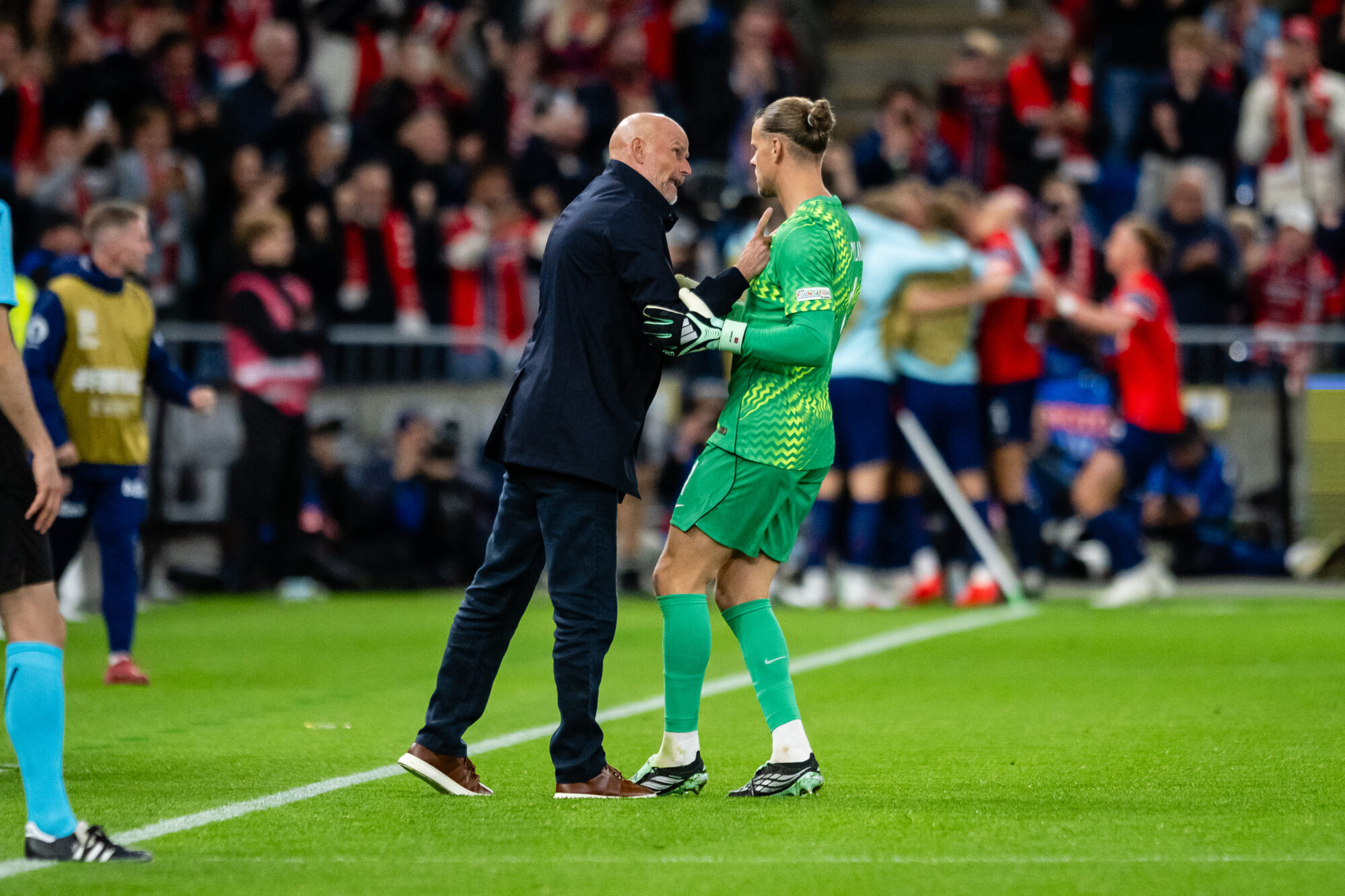
The Norwegian head coach, Ståle Solbakken confronting Nylan during a recent UEFA Nations League match between Norway and Denmark at Ullevaal Stadion in Oslo. Photo: NTB
Elite levels of pressure
“I found it fascinating how calm Nylan stood out in his post-match interview after such an important match,” says clinical psychologist Magnus Ueland Nygaard, who co-authored the research paper.
The goalkeeper’s manager, Ståle Solbakken, was visibly furious with the mistake and many commentators have called for Nylan to be replaced in the upcoming internationals.
“Nylan addressed the fact that mistakes happen, that they are part of football. And if you dwell on them too much you’ll be preoccupied with them,” explains Nygaard.
“Of course we do not know exactly what is happening inside the player’s mind. However, Nyland’s reaction in the interview might be reflective of both the team’s support system and the psychological resilience he has gained from a long career.”
Metacognitive beliefs

Clinical psychologist Magnus Ueland Nygaard used his contacts from playing amateur football. Photo: private.
The researchers surveyed 150 Norwegian football players, men and women, aged between 16 and 40, playing at different levels of the sport.
They were especially interested in metacognitive beliefs: how the players thought about their own thoughts, and what impact this had on their competitive anxiety.
Competitive anxiety refers to an athlete’s emotional reaction to stressful sport situations. Previous studies have shown that it negatively affects performance.
Anxiety manifests itself in physical tension, worry and lack of concentration. It is reported as the most important contributor to inadequate performance in football and is also associated with increased injury risk.
Sports psychologists seek to manage players’ negative expectations about performance, e.g. “I might fail”. But there has been relatively little examination of metacognitive perspectives, such as players worrying about their thought processes and creating negative coping strategies.
Detached mindfulness
“Some aspects of the metacognitive therapy framework are employed in sports psychology settings,” says Nygaard. “For instance, attentional training techniques or what we refer to as detached mindfulness.
“But the aim is more often to improve performance rather than reduce or address the symptoms of psychological disorders.”
These coaching techniques have been widely popularised by mainstream media, including in the TV show, Ted Lasso.

Jason Sudeikis playing the character Ted Lasso. His exaggerated version of psychology-first coaching utilises unusual exercises and rituals. The players come out of their negative head space and perform more instinctively on the pitch. Photo NTB
The fictitious football coach, Ted Lasso, is undoubtedly inspired by real-life managers such as Mikel Arteta who employs pickpockets to keep his Arsenal players mentally alert, and the Norwegian coach Per-Mathias Høgmo, who asked his players to recite poetry to their teammates.
Høgmo’s approach is particularly relevant in this setting, as his mindfulness project specifically challenged players to focus on aspects they could actually control, whether they were “playing in front of three spectators or 50,000”.
Differences between elite and amateur
Nygaard’s research, conducted in collaboration with NTNU professor Audun Havnen, looks specifically at the differences between elite and amateur athletes, and between men and women.
The association between metacognitive beliefs and competitive anxiety was measured by testing three areas:
- Physical/somatic anxiety. Did stress cause tension or physical nervousness in the game?
- Worry. Were the players anxious about not performing well?
- Concentration. Did the worrying result in loosing focus in the game?
The results indicated that players competing at amateur level experienced significantly more competitive anxiety than those playing at elite levels. Greater experience at dealing with pressure is suggested as a possible explanation.
Older players also reported less competitive anxiety than their younger counterparts, while women demonstrated substantially higher levels of competitive anxiety than men (female athletes made up just 23% of the survey).

The results are consistent with previous sports psychology research which shows female athletes to often report higher levels of competitive anxiety. Players of both sexes uses rituals before games to to deal with anxiety. Photo: Colourbox.
Visualisation; the reserve of the elite?
The research suggests that some players might develop a perceived usefulness of worry: “Worrying helps me cope”.
Others find the negativity uncontrollable: “When I start worrying, I cannot stop”.
At the elite end of the sport there are several examples of players who wilfully construct mental situations before games; visualising scenarios and ruminating on how they will react.
“That is my job. That is what I do. I imagine the game,” responded Brazilian striker Ronaldinho in an interview in 2006.
The Portuguese star Cristiano Ronaldo reported something remarkably similar in an interview to WHOOP podcast: “If you visualise before, you will be more prepared for that moment.”
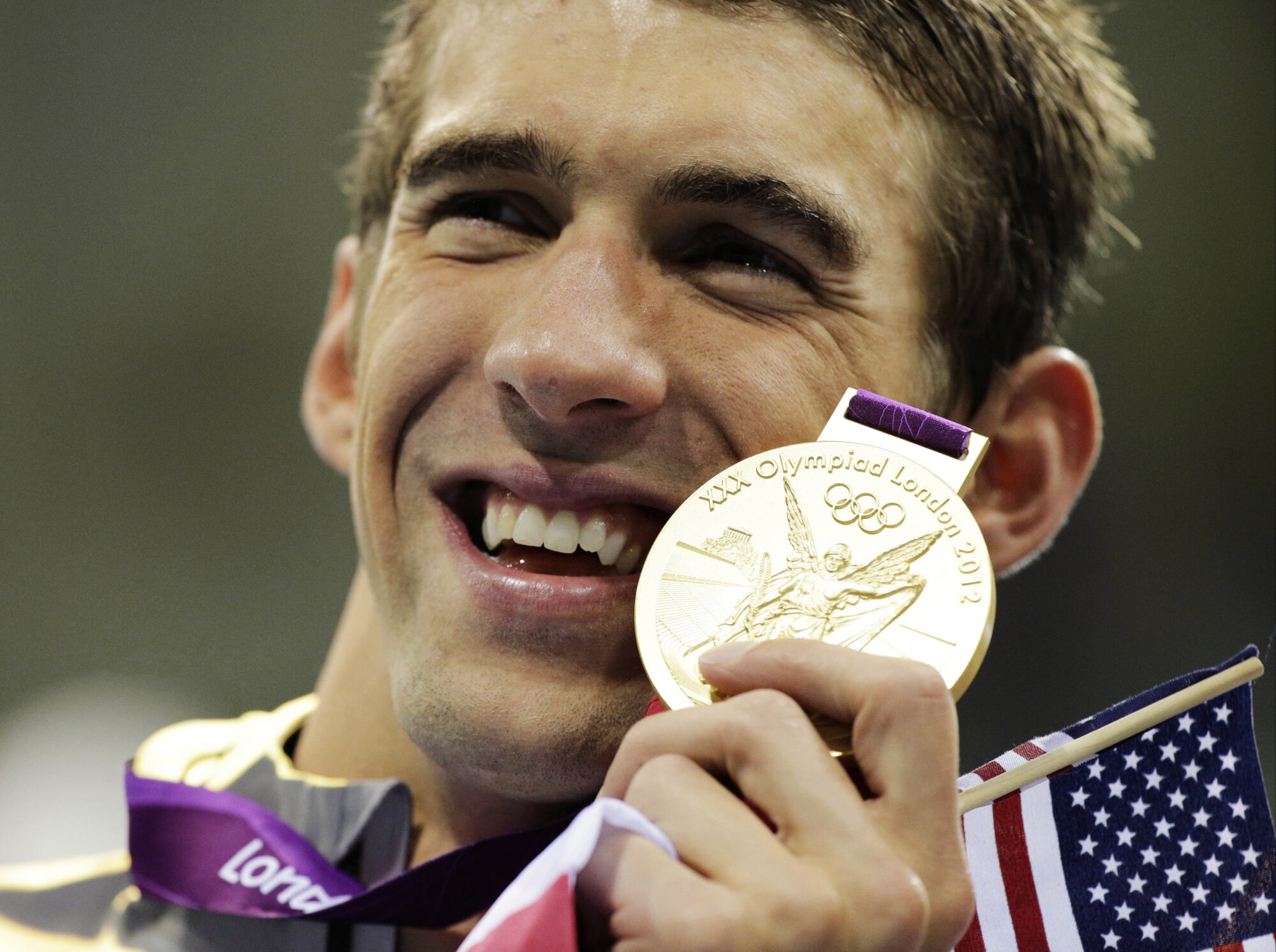
Visualisation is not the reserve of footballers. Swimmer Michael Phelps, the most decorated Olympian in history, is renowned for running multiple versions of his races through his mind before competitions. Photo: Matt Slocum/AP
“Too heavy reliance on visualisation might go on to become a form of detrimental worry or rumination,” warns Nygaard. “In light of the metacognitive model, this can increase the players’ competitive anxiety and reduce performance.”
The researchers differentiate between positive and negative metacognitive beliefs. The positive encompasses the players’ rituals and their belief that worrying is all part of the preparation process.
Their findings demonstrate that this belief might be misplaced, and that at the amateur level it can be detrimental to performance.
Shifting focus and avoiding vicious cycles
“If you have positive metacognitive beliefs about worry, it tells you that worry is beneficial,” explains Audun Havnen, professor in adult clinical psychology at NTNU’s Department of Psychology.

Audun Havnen, professor in adult clinical psychology at NTNU’s Department of Psychology. Photo: Elin Iversen
“You believe that worry is a good thing. It’s a positive thing. It solves your problem.
“But for many people, once they start worrying, they can’t stop. They feel they are unable to get out of it. And that tells us that they might have negative metacognitive beliefs about the perceived uncontrollability of their thinking,” says Havnen.
Some people will become stuck in vicious cycles of negative thinking.
Nygaard and Havnen’s research revealed amateur players were significantly more anxious about their performance than professionals.
Their findings imply that elite players may have developed better coping strategies over time.
“When you worry about how you perform as a parent or at work, you try to foresee things that haven’t happened. You paint lots of negative scenarios,” says Havnen.
“In a way you’re trying to control the future. But if you instead just shift your focus towards the things that you can control, then you can leave those thoughts alone and fix the things that you can do something about.”
“That’s the take-home message from the metacognitive point of view.”
Marginal gains
Football is a game of small margins. A team sport where individual mistakes affect the fortunes of the collective.
There have been many studies about metacognitive models, but until now few studies have applied the model in a sports context.
The authors address the context-dependent demands that can be placed on players at every level of football. Amateur players, and players of all sexes and ages, put pressure on their own performances.
Sportspeople are competitive by nature. The way in which they think about their stress levels may affect how they play, but not all players have access to the same reserves of support or experience to draw upon.
The researchers therefore suggest that interventions should be adapted to athlete’s level of experience. Which implies that the 36-year old Nyland does not require his pocket to be picked ahead of Norway’s match against Wales, in order for it not to be picked during the game.
Research:
Nygaard MU and Havnen A (2026) The relationship between metacognitive beliefs and competitive anxiety among elite and amateur soccer players. Front. Sports Act. Living 8:1880234. doi: 10.3389/fspor.2026.1880234