
Digital pets can benefit health
A Norwegian-developed mobile game could motivate people to take more steps each day.

A Norwegian-developed mobile game could motivate people to take more steps each day.
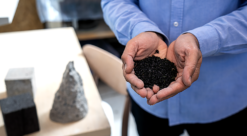
Rubber granules from artificial grass pitches will be phased out, but what do we do with the thousands of tonnes of microplastics that are left? NTNU research shows that they can be used in the production of concrete.
The Norwegian government has decided to phase out the country’s Regional Research Funds. This is incomprehensible to those of us who have watched this initiative function successfully as a springboard for green innovation and transition in many small businesses.

The fourth industrial revolution (Industry 4.0) put automation, digitalisation and robotisation very much in the driving seat. But something was missing. The introduction of Industry 5.0 will hand control back to you and me.
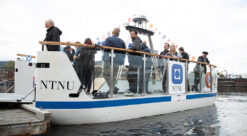
In earlier times, cities like Trondheim and Bergen had a ferryman who rowed people from place to place. They were the taxi drivers of the waterways. Now, a new, future-oriented form of water transport will be available to the public.

The number of abuse cases against children via the internet has increased by almost 50 per cent in five years, according to the Norwegian Broadcasting Corporation. Researchers at NTNU in Gjøvik have developed algorithms that can help detect planned online grooming by analysing conversations.
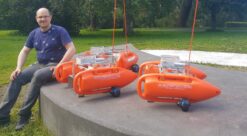
NTNU biology and cybernetics researchers have built a robot that allows them to sample everything from microplastic to salmon lice densities.
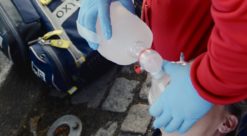
For the first time, heroin overdose nasal sprays have been tested on more than 200 real acute patients.
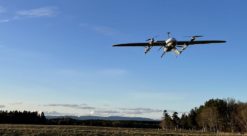
Young entrepreneurs are testing out drone transport of medical samples between two hospitals 100 kilometres apart.

Autonomous vehicles are in demand like never before. At NTNU, researchers have developed a circuit board that can be adapted to different drones with simple steps. Airbus has tested the system on a lunar landing prototype.

The coastline of Norway is peppered with more than a thousand oil wells, most of which will be plugged once they’re no longer profitable. They have to be monitored in case they leak — but keeping an eye on them isn’t easy. A new company offers a different approach that could help.
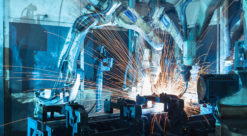
Some Norwegian companies have moved industrial production home from low-cost countries. Could reshoring become a trend?
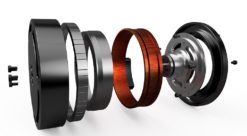
Even electric motors can be made more environmentally friendly. A Norwegian start-up company is on it.

Speaking Norwegian is important for many Norwegian jobs, but conventional language classes may not prepare people with the kinds of words and expressions they need. A new app now provides training in specialized expressions.
Stavanger is Norway’s oil capital. Trondheim could become the country’s capital for seabed mining. It will be an important contribution to the UN’s climate goals.
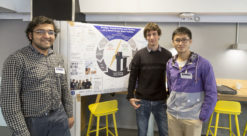
The Nordic Five Tech, an alliance of the leading technical universities in the Nordic countries, celebrated its tenth anniversary this June with a high level summit to plot a strategy for its next decade. There was talk of horses, cars, and swimming robot snakes.
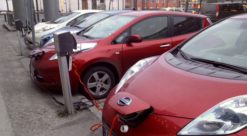
NTNU and Norway’s technological capital—Trondheim—hosted a Climathon to give the city the tools it needs to make ambitious greenhouse gas cuts. The results might be helpful to other cities around the globe that face the same problem.
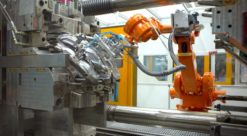
Sensors, data and analyses all help to give advance warning of critical situations developing on production lines. This can reduce downtime by 50 per cent.
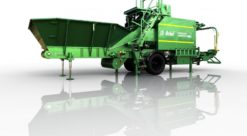
Norwegian manufacturers of agricultural technology are now getting active support from researchers. Such companies will benefit from new applications and exposure to a global market.
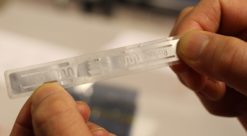
From Finnish hockey players to London double-decker buses to rhino horns, the humble RFID chip is hard at work. New software can help companies harness the power of this tiny technology.

Norwegian companies have been less than successful at developing software abroad. But there are scientific answers to the challenge.