A preference for casual sex increases risk of harassment
Adolescents who are open to casual sex are more often involved in sexual harassment – both as victims and as perpetrators.


Adolescents who are open to casual sex are more often involved in sexual harassment – both as victims and as perpetrators.
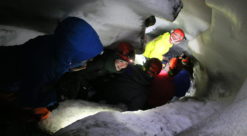
Svalbard’s cold climate means that its glaciers are solid and frozen to the ground. This allows for winter travel into unique ice caves that contain plants and material that froze into the glacial ice as it formed.
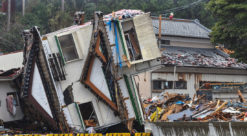
The 11 March 2011 Tohoku-Oki earthquake was the largest and most destructive in the history of Japan. Japanese researchers — and Norwegian partners — are hard at work trying to understand just what made it so devastating.
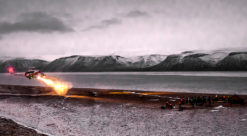
Help is not just a phone call away if you have an accident in the Arctic. That’s why the far northern Norwegian archipelago of Svalbard is establishing an educational and research centre for Arctic safety.
Stephen Hawking will come to Norway this summer as the star speaker at the Starmus Festival, scheduled for 18-23 June in Trondheim.

You might think that polar bears— and the potential for attack— are the biggest danger on the Norwegian island archipelago of Svalbard. But avalanches kill far more people on Svalbard than polar bears ever have.
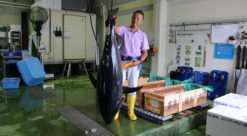
The Japanese eat one in ten of the world’s fish, and 80 per cent of the planet’s prized —and critically threatened — Bluefin tuna. Tuna aquaculture pioneered at Kindai University in Japan offers hope for both fish lovers and the fish.

Women regret saying yes to casual sex much more often than men do. Men – almost exclusively – regret saying no. Why?
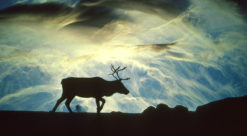
Every schoolchild knows about Rudolph the Reindeer and his magic red nose. But Rudolph’s real-life counterparts really do have a magic nose. The colder it is, the better it is in keeping the animals warm and hydrated.

Advances in our understanding of the developmental history of plants is turning botanical gardens worldwide on end.
By controlling a mix of clay, water and salt, Norwegian and Brazilian researchers have created nanostructures that might help boost oil production, expand the lifespan of certain foods or that could be used in cosmetics or drugs.

Why has ragweed – a highly allergenic plant – been spreading so quickly?
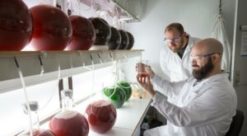
Minute particles of plastic, called microplastics, are everywhere. An international research team is now about to investigate how toxic microplastics are to marine animals such as plankton, crabs and fish, and to find out if such plastics accumulate in the food chain.
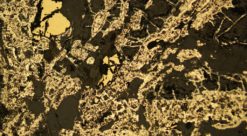
The deep sea contains mineral riches that offers a new frontier for research and exploration — and a new way to employ Norway’s deep sea expertise.
Increasing ocean acidification could double the mortality of newly-hatched cod larvae, a study just published in the American online journal PLOS ONE reports.

Many major European airports are unable to expand. This means that aircraft departures, arrivals and surface movements will have to be speeded up. A Norwegian system designed to make all airport movements more efficient is tested in Hamburg, and at Arlanda in Stockholm and Charles de Gaulle in Paris.
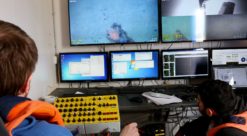
Ocean dumping of munitions from WWII was common in Norway and along the European coast. Some of these bomb dumps offer a natural living laboratory where biologists can study cold-water coral reefs.
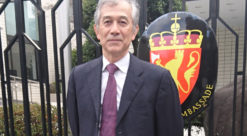
Starting today, Hiroshito Matsumoto will work from a base in Toyko on behalf of NTNU and the University of Bergen to build new research partnerships between Japan and Norway.
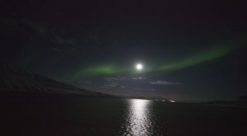
The polar night descends on the arctic archipelago of Svalbard for more than 100 days a year. But even in the depths of this darkness, the oceans are churning with activity.

The Kon-Tiki2 expedition aims to both reinforce and challenge Heyerdahl’s theories – and NTNU will gather unique research material from the major oceans that the expedition crosses

There’s no time to waste in shifting to renewable energy sources if we are to avoid dangerous climate change. That’s especially true when it comes to bioenergy, which causes a temporary increase in CO2 levels that is later removed as replacement biostocks grow.

Methane hydrates can be seen as a potential energy source or as a dangerous source of methane – a greenhouse gas that is 20 times more potent than CO2. With the help of a supercomputer and an interdisciplinary team, scientists have uncovered important details about their stability if they are disturbed by human-induced or natural forces.

Beginning on 30 November, the nations of the world will gather in Paris to discuss a new global agreement on climate change. But what will it take to transform international political will into real action to curb global warming?
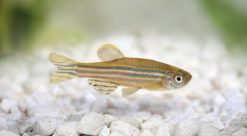
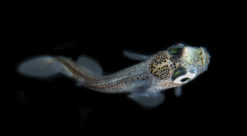
Transparent fish and an ability to work in the dark are key to the research of the newest group at the Kavli Institute for Systems Neuroscience.