Species more likely to die out with rapid climate change
The great tit and other birds can adapt to changes in their food supply as a result of climate change, but they run into trouble if the changes happen too quickly.


The great tit and other birds can adapt to changes in their food supply as a result of climate change, but they run into trouble if the changes happen too quickly.

The launch of a new research centre for robotics will provide increased knowledge about the sea with the help of underwater drones and robots. This could impact Norway’s international role as a major power at sea, says centre director.

Agriculture is eating into areas that are important in protecting some of the most biologically diverse places on the planet. Most of this new agricultural land is being used to grow cattle feed.
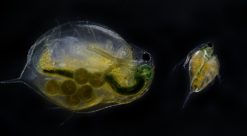
Dopamine can trigger feelings of happiness in humans. Water fleas that are exposed to dopamine-regulating substances apparently gain several advantages.

Quite a lot of people have modified their exercise habits during the pandemic, but that didn’t affect sleep quality for active people.

Have you passed your supposed prime and feel like it takes more to get fired up? The good news is you’re far from alone. And you can do something about it.

Bioplastics contain substances that are as toxic as those in ordinary plastics.

A sizable research consortium coordinated by NTNU and St. Olavs Hospital will analyse large amounts of MRI exam data from around the world. The data will help researchers gain important new understanding about brain injuries in people who have had trauma to the head. The goal is to improve patient health care.
Working at home has given many people the opportunity to arrange their working hours more freely than usual. But has it really given us more freedom?
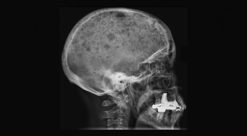
Bone marrow cancer is currently an incurable disease that affects about 400 people in Norway every year. Professor Therese Standal at NTNU has now found an important reason for bone destruction in people with this disease.
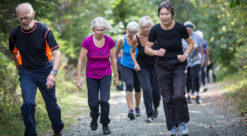
Five years of high-intensity interval training increased quality of life, improved fitness and might very well have extended the lives of participants in the Generation 100 study.

We often associate innovation with someone who invents something completely new. But innovation is also about improving and expanding on existing technology. One hundred and ten years of Norwegian engineering history provides plenty of examples.

New brain research shows that writing by hand helps children learn more and remember better. At the same time, schools are becoming more and more digital, and a European survey shows that Norwegian children spend the most time online of 19 countries in the EU.
Tricia Larose is a cancer researcher who did her PhD and a postdoc at NTNU. But her research interests went beyond studying cancer — to writing about the disease for children.

The larvae of cotton bollworm attack our food. But the adults pollinate plants. So how can we stop them from destroying crops without using poison? Researchers in Trondheim are on the case.
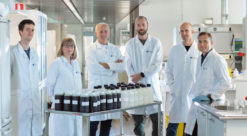
The Norwegian University of Science and Technology (NTNU) has signed agreements to deliver as many as one million COVID-19 test kits to DTU, the Technical University of Denmark, and APS LABS, an Indian biotech company. “It is very positive that this technology can now also be useful internationally,” says Bent Høie, Norway’s Minister of Health and Care Services.

Every third child in the world has too much lead in their body, according to a report from UNICEF and Pure Earth. Norwegian children are also affected.

The new species of nudibranch, Dendronotus yrjargul, is named after the municipality where it was found.

Children who show signs of addiction-like gaming are not more susceptible to mental health problems than their non-gaming peers. Some even experience less anxiety than others.
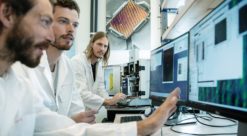
A new discovery is an important step towards smaller, more advanced electronics. And maybe more environmentally friendly gadgets, too.

The coming wave of ageing Westerners could turn into a tsunami, but new technology is available to help. What kind of technology is needed? And do urban and rural areas need the same solutions?
Girls who “like” and comment on what others post on social media develop a worse self-image over time. Posting on your own profile doesn’t have the same effect.
Researchers hope to help with more efficient energy storage to increase the use of renewable energy.

Between 250 and 270 people die each year from heroin or opioid overdoses in Norway. In the EU, thousands die. European users now have a better option available for helping each other.