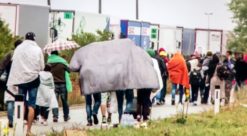
Heart-breaking images of children in refugee camps in Greece and Syria remind us of how war is driving children to flee their homes. Minors are being sent off to foreign countries. But this also happened in Norway’s neighbouring country of Finland during World War II.
NTNU researchers recently figured out a whole new method for testing people for the coronavirus. The university is now producing tests on a continuous basis, under the auspices of the Norwegian Directorate of Health. Currently 100 000 tests a day are being manufactured, with production soon likely to be scaled up dramatically.
Road dust can be a big problem in the winter, especially in northern climes where the use of studded tyres is allowed. Researchers are now studying how the type of stone used in asphalt affects the amount and harmfulness of dusty particulate matter that gets kicked up as studded tyres chew into the asphalt.
Norway’s Ministry of Health and Care Services confirmed Friday that it will roll out coronavirus test kits developed by researchers from NTNU and St Olavs Hospital by the last week of April/early May. The kits will more than triple Norway’s testing capacity during the rollout.
Children’s health declines the longer they live in refugee camps. Many adults are also struggling, with seven out of ten feeling like they have no future.
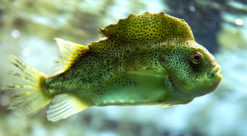
Research shows that even fish farmers have doubts as to whether using cleaner fish is an effective delousing method. “Fish farmers tell us that they want a ban on the use of certain species. They’re also very critical of wild-caught cleaner fish being transported,” says researcher Kristine Størkersen. She is one of the scientists who have been helping the Norwegian Food Safety Authority gain an overview of the situation.
Italy’s budget deficit is skyrocketing. Yet people there are not debating the cost of a human life, or whether the shutdown of the country is worth it.
Governments across the globe are funding record-breaking crisis packages to cope with the economic fallout from the coronavirus pandemic. Is this the time to fund greener, more climate-friendly industries and investments?
Two weeks ago, doctors at St. Olavs Hospital in Trondheim were running out of reagents needed to do COVID-19 tests. They asked colleagues at NTNU to develop a backup solution. Now, Norway is gearing up to use the new approach to test 150,000 people a week after Easter.
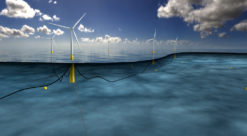
The coastline of Norway is peppered with more than a thousand oil wells, most of which will be plugged once they’re no longer profitable. They have to be monitored in case they leak — but keeping an eye on them isn’t easy. A new company offers a different approach that could help.
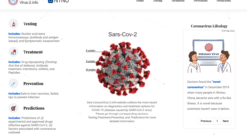
Medical researchers worldwide are racing to find treatments and vaccines to combat the coronavirus pandemic sweeping the globe. A new website offers up-to-date summaries on available and emerging options against COVID-19.
NTNU in Gjøvik has developed a better design for face shields, which are part of the personal protection equipment used by medical professionals. Major production of the new shields – up to 250 per day – is starting on the university’s 3D printers this week.
Restlessness, insomnia, ruminating and aching muscles. Here are one professor’s tips for anyone who is struggling with anxiety and fear due to the coronavirus.
The coronavirus outbreak raised everyone’s awareness of the significance of global supply chains to modern economies. But global supply chains also play an important role in greenhouse gas emissions. How they are managed can either increase or decrease carbon emissions, new research shows.
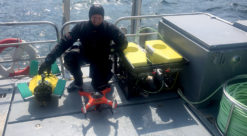
Robotic turtles used for surveillance could help prevent escapes from salmon farms. The “turtle robots” are paving the way for a technology that improves monitoring inside sea cages.
Teachers across the globe are working hard to provide classes online for the millions of students who are homebound because of the Covid-19 pandemic. Kahoot, an online interactive learning platform that has its roots in the Norwegian University of Science and Technology, is offering free premium access to help teachers enrich their online offerings.
If artificial light shines into the Arctic Ocean during the polar night, does it matter? A new paper in Communications Biology says the answer to this is a strong yes.
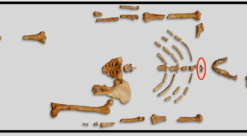
During the time of Darwin, anthropogeny was the study of human origins. Its sub-discipline paleoanthropology has since taken over, which focuses on fossils found in dry parts of Africa. These fossils don’t tell us much about why or where humans actually evolved.
Every now and then, researchers are lucky enough to experience a Eureka moment — when a series of facts suddenly crystallize into a an entirely new pattern. That’s exactly what happened to Birgit Maixner from the NTNU University Museum when she began looking at artefacts and place names.
Children with ADHD play more video games than other kids do, but gaming does not cause or worsen the condition. Nor do electronic games cause anxiety or depression.
The Privacy Statement is about how this website collects and uses visitor information. The statement contains information that you are entitled to when collecting information from our website, and general information about how we treat personal data.The legal owner of the website is the processing officer for the processing of personal data. It is voluntary for those who visit the web sites to provide personal information regarding services such as receiving newsletters and using the sharing and tip services. The treatment basis is the consent of the individual, unless otherwise specified.
1. Web analytics and cookies (cookies)
As an important part of the effort to create a user-friendly website, we look at the user pattern of those who visit the site. To analyze the information, we use the Google Analytics analysis tool.Google Analytics uses cookies (small text files that the site stores on the user's computer), which registers the users' IP address and provides information about the individual user's online movements. Examples of what the statistics give us answers to are; how many people visit different pages, how long the visit lasts, what websites users come from and what browsers are used. None of the cookies allow us to link information about your use of the site to you as an individual.The information collected by Google Analytics is stored on Google servers in the U.S.. The information received is subject to the Google Privacy Policy.An IP address is defined as a personal information because it can be traced back to a particular hardware and thus to an individual. We use Google Analytics's tracking code to anonymize the IP address before the information is stored and processed by Google. Thus, the stored IP address can not be used to identify the individual user.
2. Search
If the webpage has search function, it stores information about what keywords users use in Google Analytics. The purpose of the storage is to improve our information service. The search usage pattern is stored in aggregate form. Only the keyword is saved and they can not be linked to other information about the users, such as the IP addresses.
3. Share / Tips service
The "Share with others" feature can be used to forward links to the site by email, or to share the content of social networking. Tips for tips are not logged with us, but only used to add the tips to the community. However, we can not guarantee that the online community does not log this information. All such services should therefore be used wisely. If you use the email feature, we only use the provided email addresses to resend the message without any form of storage.
4. Newsletter
The website can send out newsletters by email if you have registered to receive this. In order for us to be able to send e-mail, you must register an e-mail address. Mailchimp is the data processor for the newsletter. The e-mail address is stored in a separate database, not shared with others and deleted when you unsubscribe. The e-mail address will also be deleted if we receive feedback that it is not active.
5. Registration, form
The website may have a form for registration, contact form or other form. These forms are available to the public to perform the tasks they are supposed to do.Registration form is for visitors to sign up or register.Contact form is for visitors to easily send a message to the website's contact person.We ask for the name of the sender and contact information for this. Personal information we receive is not used for purposes other than responding to the inquiry.The form is sent as email via Mailgun as a third party solution. The entire submission will be stored at Mailgun for 24 hours. Between 24 hours and 30 days, only mailheader is stored before the submission is deleted after 30 days. The reason for this storage is to confirm whether emails are sent from the website and forwarded to the correct recipient.Once the email is received by the recipient, it is up to the recipient to determine the data processing needs of the email.
6. Page and service functionality
Cookies are used in the operation and presentation of data from websites. Such cookies may contain language code information for languages selected by the user. There may be cookies with information supporting the load balancing of the system, ensuring all users the best possible experience. For services that require login or search, cookies can be used to ensure that the service presents data to the right recipient.