Why there is still hope for our planet
Is it too late to save our planet? Professor Jianguo Liu is the newest winner of The Gunnerus Award in Sustainability Science. He offers us some hope.


Is it too late to save our planet? Professor Jianguo Liu is the newest winner of The Gunnerus Award in Sustainability Science. He offers us some hope.
Today we think of cusk as a bycatch species of little or no value. But our test panel came to quite a different conclusion.

Norwegians are not necessarily being selfish by wanting to go back to the good old days of cheap electricity. Nor do people think it is acceptable to use the situation for some to enrich themselves at the expense of others, says the researcher.
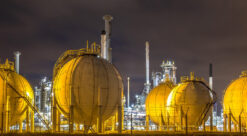
A team of Norwegian researchers has succeeded in producing hydrogen using a far more efficient method than is currently in use. The technology was ready as early as in 2017. The team has also demonstrated that the process can be scaled up for commercial application.
Very soon, there will be enormous numbers of used EV batteries available, but we have yet to work out how we will be organising the reuse of this massive resource.
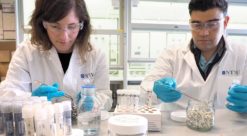
Chemists behave like detectives as they examine sludge from sewage systems. They hope to contribute to better sludge recycling by identifying the contaminants and toxic substances it contains.
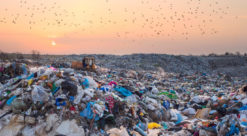
Using non-recyclable plastic waste as an alternative to coal may prevent huge volumes of plastic from being discarded into the oceans – and will also reduce CO2 emissions. This is the conclusion of a recently completed pilot project headed by SINTEF in Vietnam.
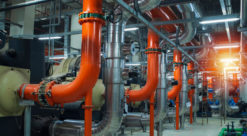
High-temperature heat pumps are no longer simply for idealists. They’re contributing to more than just climate accounting, and industrial companies are standing in line to learn more.
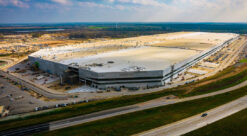
The idea behind batteries is to make the planet greener, but they all start their lives as energy-demanding environmental liabilities. Research scientists at SINTEF have succeeded in making batteries cheaper and simpler using a process that requires much less energy consumption.

What if a concrete building could heat itself – while being built? Research scientists are about to make this dream a reality.
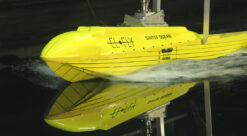
With this seaplane you will be able to take off from Trondheim Fjord or Flesland Airport in Bergen, Norway, and land in the Geiranger Fjord one hour later.
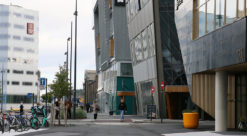
Many buildings with solar cells produce more electricity than they consume themselves, but current legislation prevents surplus power from being sold to neighbouring consumers. A pilot project in Trondheim will be the first in the world to test a system that makes this possible.
The climate will benefit if we shift to using aluminium in more and more construction. Buyers need to look past the procurement costs and consider the total life cycle costs instead.

A new report from the Intergovernmental Panel on Climate Change (IPCC) describes with unnerving detail just what can happen if nations fail to limit greenhouse gas emissions. But rapid international action will keep the worst consequences at bay, the panel said.

Researchers have studied the energy consumption of 140 hotels in Norway and Sweden. The use of CO2 heat pumps could cut energy consumption in these hotels by about 60 per cent.

NTNU has been selected by the European Commission to become partner to the New European Bauhaus initiative. “This will be an important and exciting partnership for us,” says Tor Grande, Pro-Rector for Research.
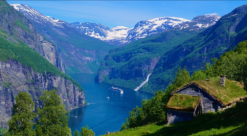
Big things might be happening soon with cruise traffic in the Geiranger fjord. Smaller vessels and adapted green quay facilities could make for a green fjord and offer a solution for preserving the World Heritage site.
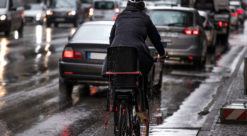
New research is showing that a combination of perceived risk and worry determines the forms of transport chosen by pedestrians and cyclists.
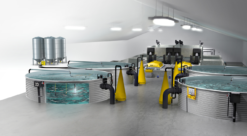
Land-based fish farming offers many benefits to both the fish and the environment. In traditional offshore farms, the fish are vulnerable to sea lice infestation and infectious diseases. Modern land-based aquaculture systems are able to offer local fish products in landlocked countries.

In 2003, the average traffic speed in central London was less than 14 km/h. The congestion charge improved the flow of traffic but also had unwanted effects.
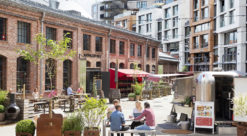
In Norway, apartment blocks are being built as never before, leading to a housing densification that challenges our ability to create habitable spaces – both indoors and out. So, what can we do to guarantee living quality?

More biofuels are needed to counteract climate change. But producing them shouldn’t diminish food production or wilderness areas. The solution may be to grow more grass on recently abandoned cropland.
Is your home office in the living room, or is your whole family working at home? Here’s some good advice to make sure your indoor climate is healthy.
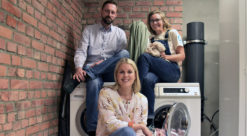
Every time you wash clothes, you are releasing microplastics into the sea, but we know little about the amount and distribution of such material from different types of textile. Research scientists are now working on measuring and capturing microplastics in our laundry.