Zero emissions – a European first
Six norwegian office buildings were erected outside of Oslo around 1980. Two of these have now been rehabilitated and represent northern Europe’s first zero-emission buildings of their type.


Six norwegian office buildings were erected outside of Oslo around 1980. Two of these have now been rehabilitated and represent northern Europe’s first zero-emission buildings of their type.

A new method of producing solar cells could reduce the amount of silicon per unit area by 90 per cent compared to the current standard. With the high prices of pure silicon, this will help cut the cost of solar power.
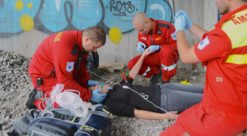
There is a much greater risk of dying from a heroin overdose in Norway than in a car accident. A new nasal spray aims to help save lives and prevent paramedics from being injured by needles used on drug addicts.

2014 NOBEL PRIZE — Nearly all innovations have founder myths, like the apocryphal garage where Steve Jobs and Steve Wozniak are said to have developed the Apple Computer. But two innovative neuroscientists in Trondheim really did start their research in the university equivalent of a garage – a bomb shelter – and then went on to build a world-class laboratory and win the Nobel Prize.

We don’t just want the best. We want the very best.
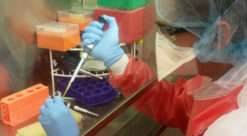
It took almost six months for Egil Lien to get permission from the Federal Bureau of Investigation in the US to study the plague bacteria that, in its time, killed half of Norway’s population. Now, an antibiotic-resistant strain of the bacteria has been found.
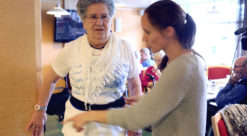
If scientists get their way, we will soon be able to measure grandma’s acceleration. If she has a fall, that is.

Migraine patients can toss away their headache diaries and pull out their smartphones to start tracking headaches. The app offers physicians an important tool in prescribing the correct medications.
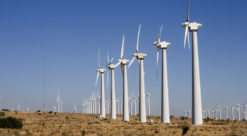
The countries of the world wrapped up preliminary climate talks in Lima, Peru this weekend with an agreement on how the UN’s 194 countries will tackle climate change. The agreement comes in advance of major negotiations scheduled for Paris next year to designed to curb the world’s production of greenhouse gases. In a publication from earlier this year, researchers at NTNU’s Industrial Ecology Programme report that the low-carbon future that would result from curbing greenhouse gas emissions is both feasible from a practical standpoint, and will also substantially reduce air pollution.
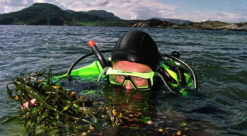
A Norwegian research group has been able to achieve bio-oil yields of 79% from a common kelp. Other researchers working with the same species have yields closer to 20%. The secret is to heat the kelp very quickly and bring it to the right temperature within seconds.

While Facebook wants to make the world’s best online games using the Oculus Rift headset, NTNU researchers are using the same set-up to help teach nurses how to communicate better.
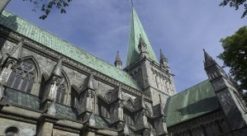
The EU wants people to get more interested in their cultural heritage, and is starting pilot projects in England, Spain and Norway.
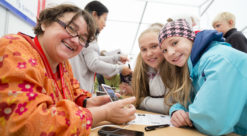
People of all ages get excited hearing stories about their home town’s cultural heritage. And finding them on an app is just about as cool as it gets.
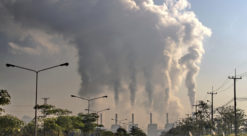
Climate talks in New York this week have offered a glimmer of hope that the world’s political leaders finally understand the need to act to curb global warming. An NTNU researcher says that these actions will have a beneficial side effect: cleaner air in some of the most polluted places on the planet.

A new window on the world of atoms will make future vehicles safer in collisions.
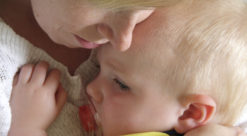
Every year, two million children die of acute respiratory infections. Among the culprits are several different viruses, one of which your child almost certainly has had without you or the doctors ever knowing it.
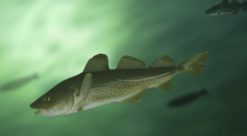
Could human tissue samples be dried for storage, instead of being frozen? Researchers are looking at the salt cod industry for a potential tissue sample drying technology that could save money without sacrificing tissue quality.
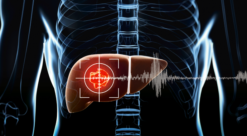
Using nanocapsules containing cancer drugs, researchers have succeeded in attacking tumours with surgical precision. One of the ways to manufacture such capsules is with minute droplets of super glue.
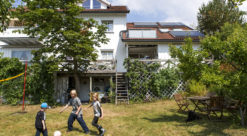
The typical Norwegian owner of a solar heating system is a resourceful man in his mid-fifties. He is technically skilled, interested in energy systems, and wants to save money and protect the environment.
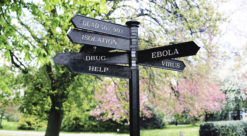
Ebola’s deadly effects on the Sierra Leonean healthcare community not only has repercussions for the delivery of health care now, but on the training of future health care providers involved in an innovative Norwegian surgical training programme.
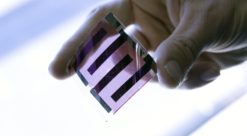
In the future, you may be able to buy solar cells for your roof from a roll, by the metre.

A brand new survey has revealed that education is important for getting the visually impaired into work. This challenges the current situation in which partially sighted students are now exempt from several upper secondary school subjects.
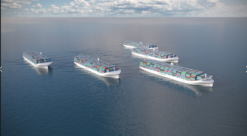
A 400 metre long vessel moves slowly across the dark sea surface. There is no one at the wheel. It is quiet on the bridge. There are no signs of life in the engine room or on deck. A scene from a horror film or science fiction, perhaps? No. This is the bold aim the EU project MUNIN is working to achieve.
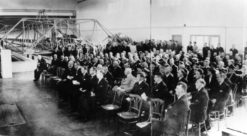
NTH, Norway’s first technical university and one of the main predecessors to NTNU, SINTEF and MARINTEK, opened in Trondheim in 1910. Just three years later its scientists began to think very big – 170 metres big.